Building new nuclear reactors in Arkansas is both "feasible and advisable," according to a legislative study presented last week, but experts say the state would need to invest in preparation and financing to make it a reality.
The findings were shared during a meeting of the Arkansas General Assembly's Joint Energy Committee, following a year-long study conducted by Maryland-based EXCEL Services Corporation. The consulting firm was hired to assess the possibilities for new nuclear power generation in the state under the authority of a 2025 law. Although the Department of Energy and Environment initially was tasked with commissioning the study, the agency was not allocated funding to do so.
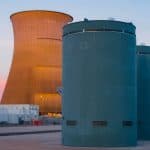
The 533-page report identifies several areas in the state, particularly in central and southwest Arkansas, as potential sites for new nuclear facilities. Pope County, which is already home to Entergy Arkansas's two-reactor nuclear plant, Arkansas Nuclear One, is a key location of interest. Operating since 1974, Arkansas Nuclear One supplies over half of the electricity demanded by Entergy's Arkansas customers annually.
Despite these promising findings, the report highlights significant challenges, including the financial risks of nuclear construction. Current examples include the long-delayed completion of two new reactors at the Vogtle nuclear plant in Georgia, which were seven years behind schedule and $17 billion over budget. "First-of-a-kind" reactors tend to incur such overruns, said Brian Meadors, executive vice president for EXCEL's legislative initiatives. He added, however, that costs often decrease as designs are replicated in future projects.
"Arkansas does not have to choose between building first at triple cost and doing nothing," the report states. Instead, the state could begin preparing for lower-cost projects by securing and permitting potential sites now.
The report also emphasized Arkansas's rising energy demands, driven by data centers, lithium production, and steel manufacturing. With coal plants increasingly going offline, state officials are being urged to consider nuclear energy to meet the growing needs while maintaining reliability and sustainability.
Paul Murphy, managing director of Murphy Energy and Infrastructure Consulting, stressed that government involvement is crucial. "Government support is necessary, and that can take a lot of different forms," Murphy said. He suggested Arkansas could benefit from observing how states like Texas, Utah, and Tennessee have dedicated taxpayer money to nuclear initiatives to support energy development.
Among its recommendations, the report proposed appointing an "atomic development coordinator," a role authorized by Arkansas law in 1957 but never filled. It also suggested passing the "Arkansas Nuclear Competitiveness Act," which would categorize nuclear power as clean energy, expand the atomic coordinator's responsibilities, and establish a Nuclear Energy Development Fund. This fund, financed through state appropriations, federal funding, and private contributions, could support site selection studies, workforce training, and other preparatory initiatives.
The report further recommended counties receptive to nuclear development begin collaborating with the state to identify potential power plant sites and seek Nuclear Regulatory Commission (NRC) approval in advance of construction.
While several lawmakers expressed optimism about the potential for nuclear energy, concerns remain about the financial mechanisms suggested in the report. One controversial proposal involves the creation of a "cost overrun mechanism," which would obligate the state to cover some or all financial overruns for nuclear projects. Rep. Zack Gramlich of Fort Smith called the idea risky. "We could literally bankrupt the state if we want to do some of this stuff," Gramlich said.
Committee co-chair Sen. Mark Johnson of Conway acknowledged the urgency created by surging energy demand, calling this "a different kind of crisis." He also noted shifting public perceptions around nuclear power. "People still have that mushroom cloud in their mind," Johnson said, but added, "They’re starting to get more comfortable with nuclear energy – and I think the public generally is."