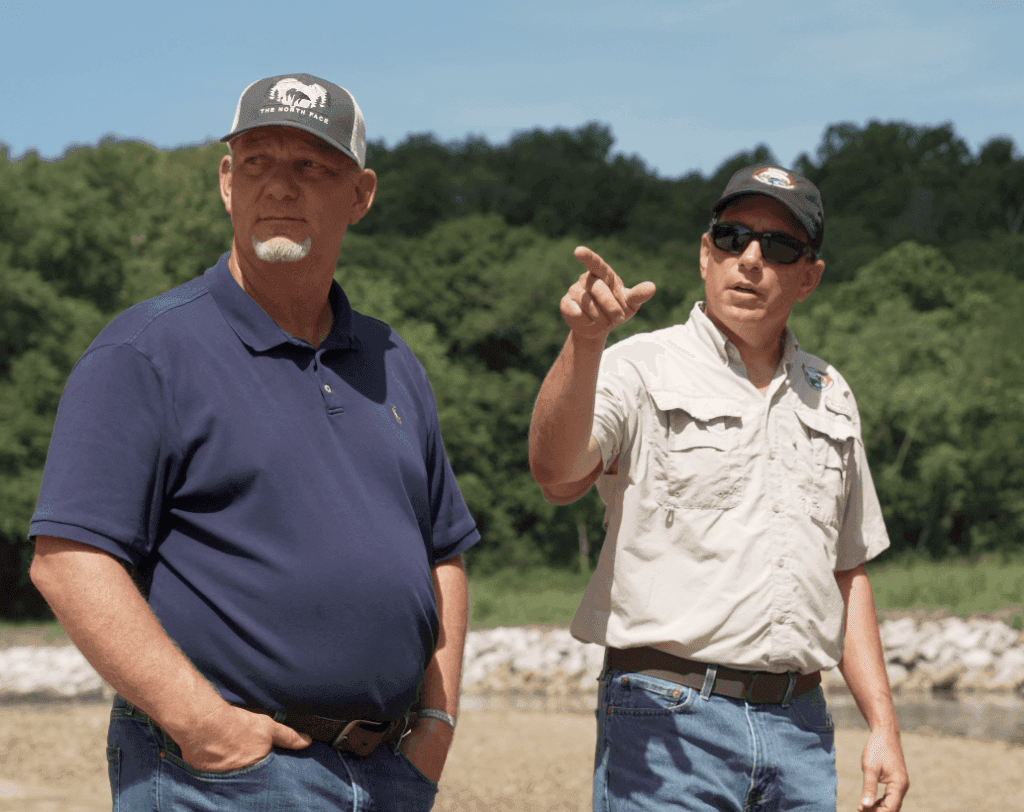
The Arkansas Game and Fish Commission (AGFC) is advancing its Conservation Incentive Program (CIP), an initiative designed to aid private landowners in improving wildlife habitat on their properties. During a recent meeting, AGFC officials highlighted the program's progress and outlined future expansion plans.
According to Garrick Dugger, chief of the AGFC Private Lands Habitat Division, the program is addressing a critical gap in wildlife conservation. “More than 85 percent of the land in Arkansas is privately owned,” Dugger said. “Even if we meet all our goals for public lands, we still wouldn’t have an impact on the majority of the state’s habitat. Private landowners are key to improving wildlife on a population level.”
The program began in 2024 with $3.5 million in funding allocated by the Arkansas General Assembly. Through CIP, landowners receive financial support for approved practices such as prescribed burning, forest thinning, wetland management, and invasive species control. In its first year, CIP funded 585 applications, improving more than 16,000 acres of habitat statewide.
Michelle Furr, AGFC’s program coordinator, noted overwhelming demand during the program’s first year. “We received nearly 1,600 applications across all but one county,” Furr said. “Some practices were fully subscribed in under a month. This emphasized the significant need among Arkansas landowners for this kind of assistance.”
With new funding sources secured, the program entered its second phase (CIP 2.0) in the current fiscal year. This phase was supported by a $2.5 million U.S. Forest Service grant aimed at improving forest health, reducing wildfire risk, and enhancing wildlife habitat. Adjustments were made, limiting the reimbursable practices to invasive tree removal, forest thinning, and prescribed burning. A competitive application process replaced the first-come, first-served approach, prioritizing land near conservation priority areas and underserved communities.
Furr explained that the program processed 1,129 applications in this phase, with funding requests exceeding $12 million. Ultimately, 349 landowners were selected for 380 projects, utilizing every dollar of the $2.5 million grant along with an additional $600,000 from firebreak-specific funds. These projects include initiatives such as 91 miles of firebreak establishment, prescribed burning over 20,000 acres, removal of invasive tree species on 629 acres, and improvements to nearly 6,900 acres of forest to benefit wildlife.
The momentum continues as AGFC prepares for a third round of CIP funding in 2024, bolstered by a $5 million allocation supported by Governor Sarah Huckabee Sanders and approved by the General Assembly. The upcoming iteration will restore eight habitat improvement practices, including the popular feral hog trapping reimbursement program.
“We aim to start processing applications by August and September,” Dugger said. “This allows us to move quickly once funds become available, ensuring landowners can implement these practices as soon as possible.”
The AGFC is also seeking long-term funding through the USDA’s Regional Conservation Partnership Program. If successful, these efforts could potentially double the resources available for private landowners statewide.
Rob Finley, chairman of the AGFC, praised the program’s growth. “Seeing how far this program has come in three years is remarkable,” he said, noting how the new ranking-based application system focuses resources more strategically.
Furr remains optimistic about the program’s impact, citing examples such as Upland pine habitat restoration in southern Arkansas, made possible through previous conservation partnerships. “We’re building a foundation for wildlife habitat enhancement that stretches across the state, benefiting the landowners and wildlife populations alike,” she said.