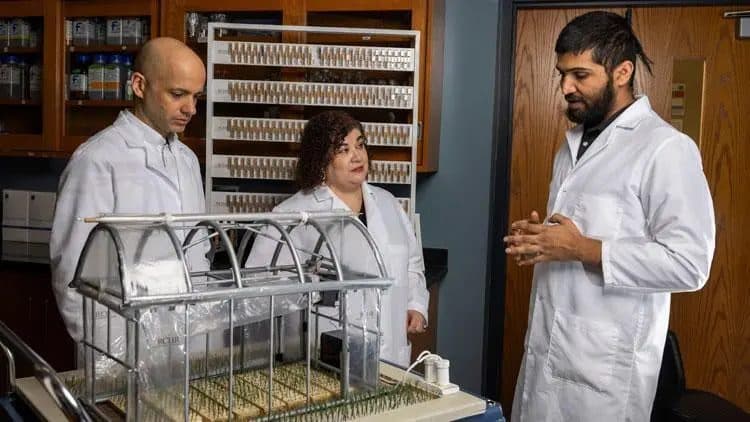
JONESBORO, Ark. — Researchers at Arkansas State University have utilized DNA barcoding techniques to identify commercially sold morning glory seeds, uncovering that seeds marketed under separate names were in fact the same species. The findings were detailed in a study published in the journal *Ethnobotany and Economic Botany,* according to a news release from the university.
Led by Argelia Lorence, a professor of metabolic engineering, and Reinier Gesto-Borroto, manager of the Arkansas Biosciences Institute’s phenomics core, the research focused on the use of DNA barcoding to identify and authenticate plants used in traditional medicine. Morning glories, which belong to the Ipomoea group comprising around 800 species worldwide, have a long history of use in traditional remedies, particularly in Mexico.
The team examined commercially sold seeds from five Ipomoea species and one hybrid, finding that DNA barcoding—an analysis of short, distinctive DNA segments—offered a robust method for identifying specific species, even when the seeds had undergone processing, such as drying or grinding. The researchers also pinpointed genetic markers that are particularly effective in distinguishing medicinal species within the Ipomoea family.
According to Gesto-Borroto, this work supports improved quality control and safety in herbal products by ensuring accurate identification of plant materials. "It has been rewarding to be part of this research, which highlights the importance of accurate plant identification to improve the quality and safety of herbal products," he said.
Lorence, who shares corresponding authorship with Rogelio Pereda-Miranda of the National Autonomous University of Mexico, described the study as a fruit of their longstanding scientific collaboration, which began in 1998. Other contributors to the research include Karina Medina-Jimenez from the Arkansas Biosciences Institute, Adriana Carolina Hernandez-Rojas from the National Autonomous University of Mexico, and Maria Crystal Columba-Palomares of the Autonomous University of the State of Morelos. Columba-Palomares conducted research in Lorence’s laboratory as a Fulbright scholar.
The authors noted that the work builds on traditional plant expertise, incorporating Indigenous knowledge and careful record-keeping. They also suggested that future studies could integrate chemical testing to analyze active compounds in the plants, further enhancing understanding of herbal product quality and safety.
This research provides a tool for producers and regulators to improve the consistency and reliability of medicinal plant-based products.