JONESBORO – New research from Arkansas State University has introduced a reliable method to verify the identity of medicinal plants through DNA barcoding. The study offers a significant advancement for herbal product quality control by reducing the risk of mislabeled or misidentified plant materials.
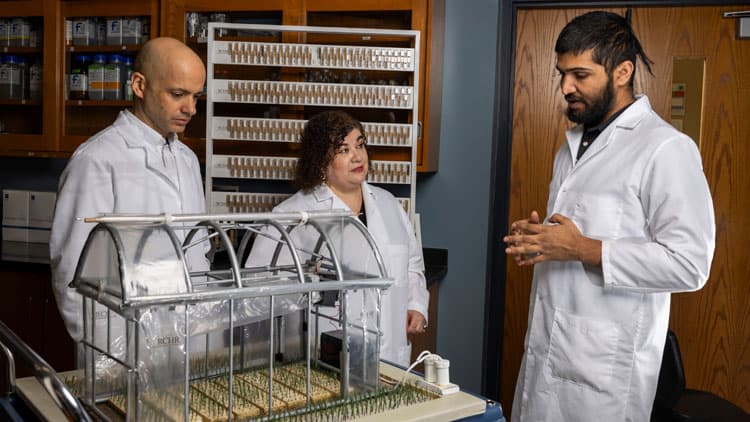
The findings, published in the journal *Ethnobotany and Economic Botany*, were led by Dr. Argelia Lorence, professor of metabolic engineering in the Department of Chemistry and Physics, and Dr. Reinier Gesto-Borroto, manager of the phenomics core at the Arkansas Biosciences Institute (ABI). The study, titled “DNA Barcoding Validation of Medicinal Ipomoea Species from the Morning Glory Family,” also involved Dr. Rogelio Pereda-Miranda of the National Autonomous University of Mexico (UNAM), an expert in the chemistry of the Ipomoea group of plants.
Morning glories, affiliated with the Ipomoea genus, encompass about 800 species globally. Many of these species, particularly in Mexico, have long-standing use in traditional medicine. However, due to their similar appearance, distinguishing between species becomes difficult when the plants are dried, ground, or used as seeds in commercial products.
To address this problem, the research team analyzed seeds from five different Ipomoea species and one hybrid using DNA barcoding. This technique decodes short, unique segments of a plant’s genetic material, functioning similarly to retail barcodes. Their tests revealed instances where seeds sold under different names were actually the same species, underscoring the unreliability of labels alone. The study also identified specific DNA markers best suited for differentiating the medicinal species.
“I am very proud of this work that is the product of the longstanding collaboration between my team and Dr. Pereda-Miranda’s group,” said Lorence, reflecting on a partnership that began in 1998 and spans nearly three decades.
The study emphasizes the value of integrating DNA barcoding with traditional botanical expertise, detailed record-keeping, and respect for Indigenous knowledge. The researchers noted that this combined approach strengthens quality and safety standards for herbal remedies.
“It has been rewarding to be part of this research, which highlights the importance of accurate plant identification to improve the quality and safety of herbal products,” said Gesto-Borroto.
Other contributors to the study included Dr. Karina Medina-Jiménez of ABI, Dr. Adriana Carolina Hernández-Rojas of UNAM, and Dr. María Crystal Columba-Palomares of the Autonomous University of the State of Morelos. Columba-Palomares previously worked in the Lorence Laboratory through the Fulbright program.
Looking ahead, the researchers propose combining DNA barcoding with chemical analysis to determine the active compounds in medicinal plants. Such efforts could provide a more comprehensive understanding of the efficacy and safety of herbal products.