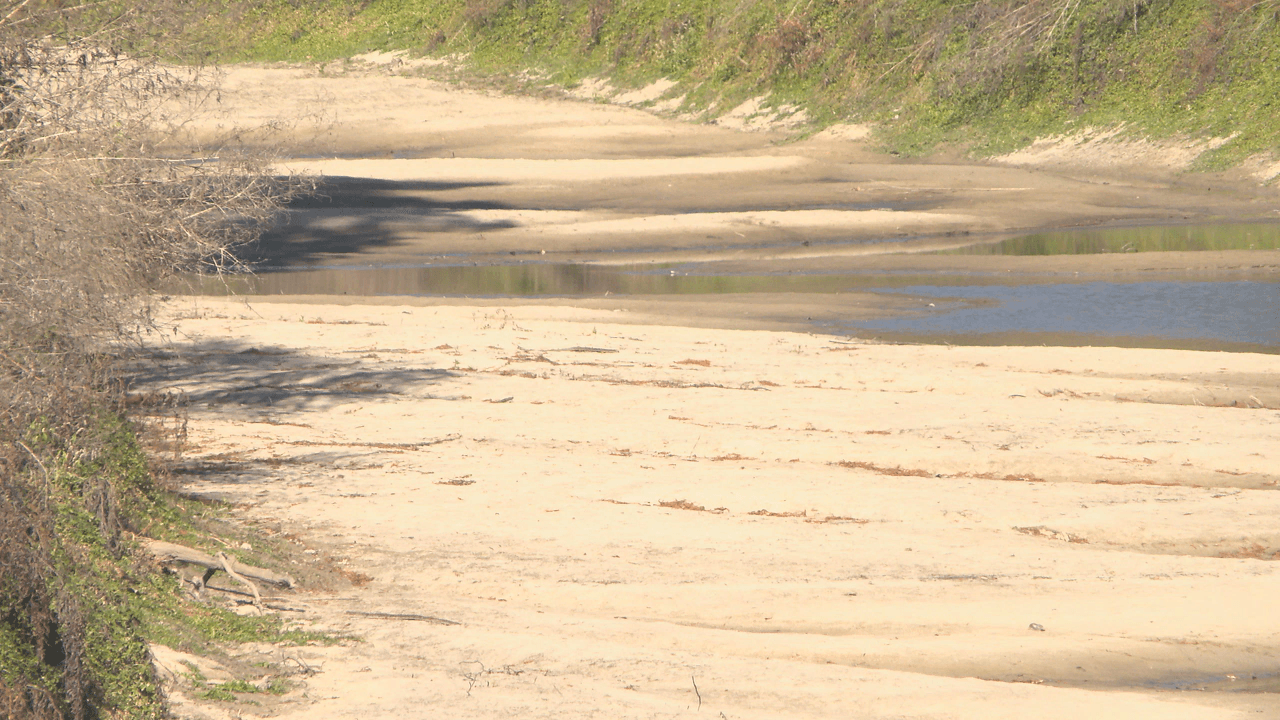
Duck hunters in Arkansas face a challenging start to the season as rivers and wetlands across the state remain critically low due to a prolonged drought.
Randy Zellers, assistant chief of communications for the Arkansas Game and Fish Commission (AGFC), said water across the state is scarce, which could affect the conditions needed to attract migrating ducks. “The best that we can hope for is to get some rain,” Zellers said. “We’ve set the table as far as the food, our moist soil units, the food that’s available for them.”
According to the U.S. Geological Survey, the Cache River near Sedgwick is currently at just over 1.7 feet, down 2.8 feet from six months ago. At the Black River in Pocahontas, levels are less than a tenth of a foot above the baseline gauge, a drop of more than 2.7 feet during the same period. The Cache River near the Hwy. 228 bridge at the Lawrence-Greene county line is particularly impacted, with visible stretches of dry bed.
The drought, which has lasted about 15 months, has left the Arkansas Delta approximately 20 inches behind on rainfall. Compounding the problem, Zellers noted, is a reduction in rice farming in the region. Many farmers have shifted to crops like soybeans, which do not require fields to be flooded. In areas relying on the Cache River to overflow its banks, this change has limited the inundation of fields critical for waterfowl habitat.
“Without water, there are no ducks,” Zellers said, emphasizing the importance of rain to restore conditions. The AGFC typically avoids pumping groundwater for conservation purposes, reserving it instead for cities and farms.
The scarcity of water has implications beyond the state’s popular 60-day duck season. Arkansas is renowned for its high mallard harvests, often surpassing those of the entire Atlantic flyway. Even with lower duck numbers, the state maintains a significant harvest compared to others. However, ongoing dry conditions could disrupt this long-standing trend.
Zellers expressed hope that milder weather delaying waterfowl migrations northward might buy time for conditions in Arkansas to improve. “The bad news is the ducks haven’t come down to Arkansas yet when I want to be able to hunt them,” Zellers said. “The good news is they’re not coming down when it’s dry and they’re not passing up the state and heading straight down to Louisiana.”
Forecasters predict little relief in the near term, leaving hunters and conservationists with a tough start to the season and an uncertain outlook for waterfowl habitat recovery. Statewide, significant rain will be needed to replenish water levels and wetlands. “We need enough water to go over the top of those knee-high mud boots,” Zellers said, referencing the volume needed to restore typical conditions.
Despite the challenges, AGFC officials encouraged hunters to remain optimistic and continue monitoring changing conditions in the coming weeks.