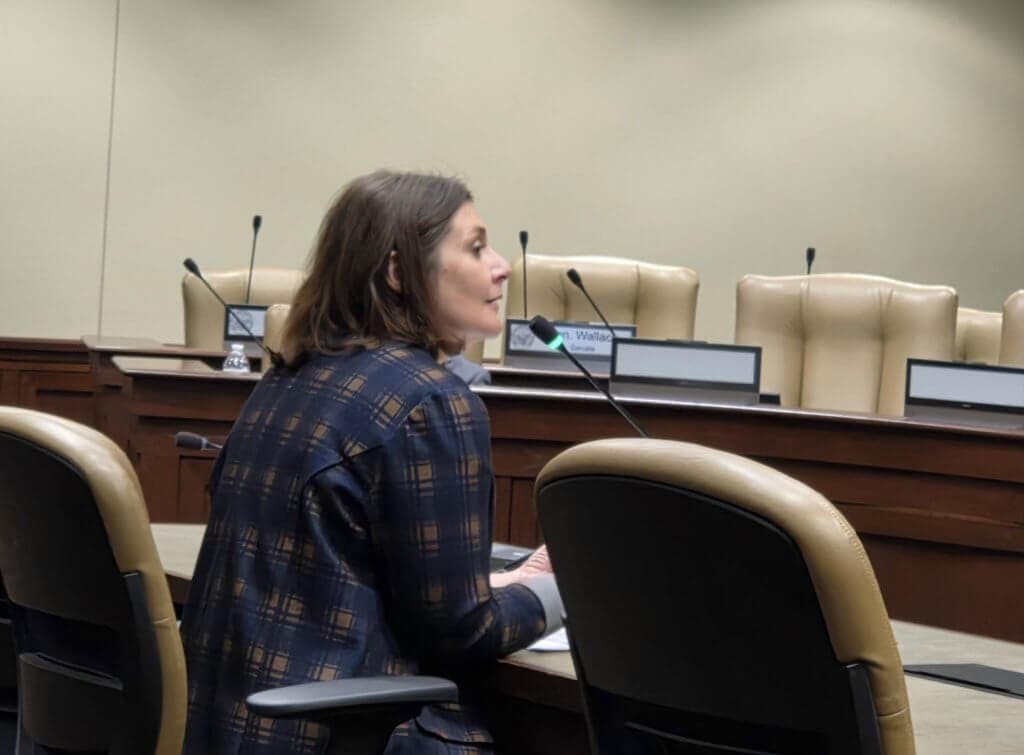
Transitioning nearly 209,000 low-income Arkansans from the current Medicaid expansion program to a new health insurance model will likely take more than six months, according to state officials. Elizabeth Pitman, director of the Division of Medical Services for Arkansas Medicaid, shared this information Tuesday during a meeting of the Human Services subcommittee of the House and Senate Public Health committees.
Arkansas requested a two-year extension of its Medicaid expansion program, known as Arkansas Health and Opportunity for Me (ARHOME), in August after the U.S. Centers for Medicare and Medicaid Services (CMS) verbally denied a longer five-year extension. On Nov. 10, the Trump administration granted a short-term extension, keeping the program operational until June 30, 2027.
Pitman explained that a two-year transition period is necessary to shift the entire Medicaid expansion population to a managed-care program. A transition to a fee-for-service Medicaid model instead would take 12 to 18 months, she added. Pitman underscored that eliminating Medicaid expansion entirely is not viewed as an option by the Department of Human Services (DHS).
Rep. Aaron Pilkington, a Republican and chair of the subcommittee, indicated that creating a revised Medicaid expansion framework will be a key priority during the legislative session beginning in January. Pilkington asked Pitman how many additional staff would be needed to implement a fee-for-service model. While Pitman did not provide a specific answer, she noted that such a shift would involve processing more paperwork, including prior authorizations. "It’s not necessarily adding new processes," Pitman said. "It’s just a matter of scaling those up."
The financial implications of the One Big Beautiful Bill Act—a federal tax and spending measure passed last year—were also discussed. Special Medicaid programs like Arkansas’ hybrid expansion model are required by the act not to exceed projected federal government costs. ARHOME, which was first approved in 2013 as an alternative to expanding Medicaid directly under the Affordable Care Act, uses state Medicaid funds to purchase private health insurance for qualifying residents.
Under this legislation, Arkansas has the option to increase its Medicaid reimbursement rate to Medicare levels. Pitman estimated that switching to a fee-for-service model while covering all 208,837 Medicaid expansion enrollees would save the state between $22 million and $35 million. A managed care model could save between $61 million and $70 million. However, no specific timelines for projected savings were provided.
The discussion also touched on recent changes in provider participation. Centene, currently managing three Medicaid expansion plans covering about 70,000 enrollees, announced its exit from the program in July. Open enrollment for affected enrollees began recently, with coverage set to start under new plans on Jan. 1. Pitman noted that those who fail to select a Blue Cross Blue Shield plan by Sunday will have one assigned to them by DHS.
Beginning next year, Arkansas will also implement work requirements for able-bodied Medicaid enrollees aged 19 to 64 under the One Big Beautiful Bill Act. These requirements will remain in effect regardless of negotiations over Medicaid expansion’s future. To streamline this process, DHS has been assessing enrollee eligibility proactively. For cases where eligibility cannot be definitively determined, the state plans to use a new customer service center. Approved last month under a $48 million, three-year contract, the center will begin reaching out to enrollees via phone, email, or other means starting Jan. 1 to collect any missing information.