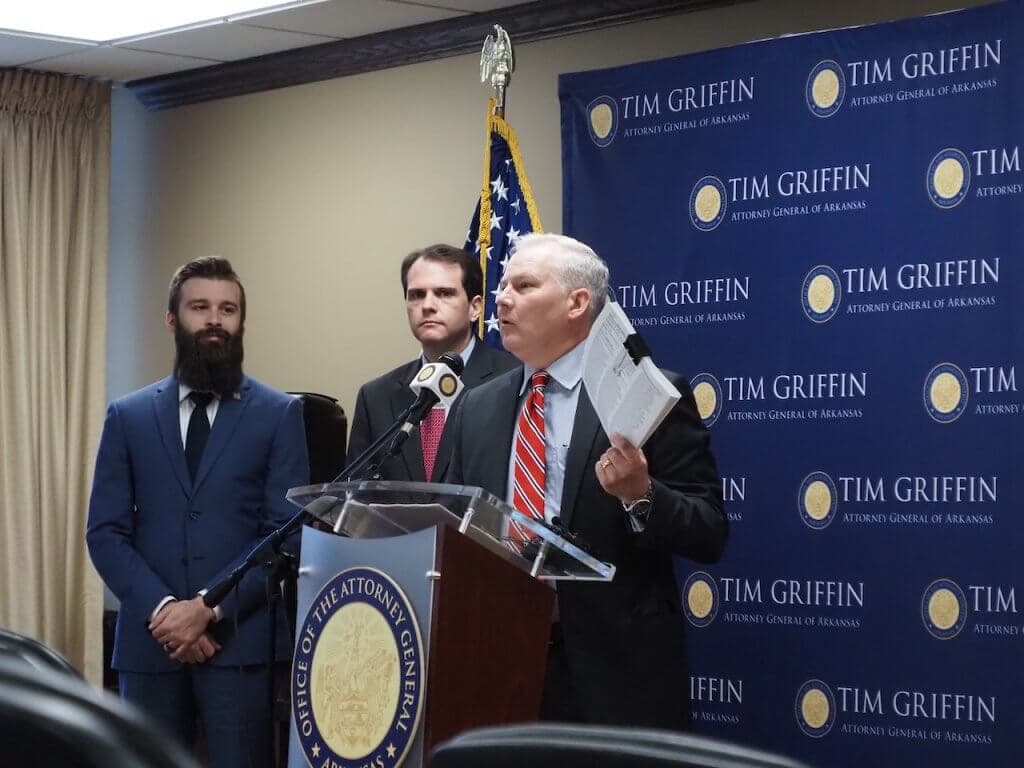
Arkansas Attorney General Tim Griffin has joined 48 attorneys general from across the country in urging the Federal Communications Commission (FCC) to implement stricter rules for its Robocall Mitigation Database, which governs the providers allowed to route calls through the U.S. telephone network.
This week, the coalition filed formal reply comments supporting proposed FCC changes aimed at tightening entry criteria and oversight for the database. Griffin emphasized the dangers posed by robocalls, highlighting their links to scams targeting consumers.
“Nearly every Arkansan has experienced the frustration of unwanted robocalls and text messages. But these calls are more than just a nuisance,” Griffin said. “They are often a gateway for scammers seeking to exploit hardworking Arkansans, steal their personal information and hard-earned money, and rob them of their peace of mind.”
The Robocall Mitigation Database (RMD) is crucial to ensuring telecom providers are following FCC rules aimed at curbing illegal robocalls. As it stands, companies must register with the database to carry call traffic. However, the attorneys general argue the requirements for inclusion are too lenient, allowing bad actors to exploit vulnerabilities in the system.
“The bar to be included on the RMD is currently far too low,” Griffin stated. “These changes will protect more Americans from robocalls because bad actors will no longer find safe haven in a weak federal screening system.”
The attorneys general backed several FCC proposals, including the ability to suspend or remove noncompliant providers, requiring proof of solvency, and increasing the scrutiny of providers’ robocall mitigation plans. Furthermore, they want the FCC to vet and approve every provider filing before calls can be routed, enhance transparency by requiring the disclosure of affiliated entities, and hold providers accountable for filings made on their behalf.
Additional recommendations from the coalition include requiring a 24-hour response to trace requests, making public the filing history of removed companies, and obligating providers to notify their clients of any removal, suspension, or blocking orders. This ensures businesses relying on those providers are aware of potential repercussions.
Griffin is a member of the Anti-Robocall Multistate Task Force, an initiative aimed at combating unlawful robocalls. In 2025, this task force launched “Operation Robocall Roundup,” targeting telecom providers ignoring FCC rules. In its initial phase, warnings were sent to 37 small providers, with at least 16 subsequently ordered by the FCC to address compliance issues or face removal from the RMD. The task force has since expanded its scope, focusing on large intermediate providers and advocating for strengthened FCC rules on call verification and carrier accountability.
In total, the joint letter to the FCC was signed by attorneys general from 46 states, the District of Columbia, American Samoa, and the U.S. Virgin Islands.