The Mountain Home Community and Aquatic Center recorded more than 133,000 visits and approximately 6,000 memberships in its inaugural season, Mayor Hillrey Adams reported during the Mountain Home Area Chamber of Commerce’s State of the City and County Breakfast on Monday.
Presenting his annual State of the City report at Arkansas State University-Mountain Home, Adams noted that memberships peaked over 7,000 during the summer, driven largely by seasonal three-month memberships. Since its Memorial Day weekend opening, the center has quickly become a regional focal point. In October, the Arkansas Recreation and Parks Association named it Facility of the Year.
The center, built after voters approved the $38 million project in March 2021, includes indoor and outdoor pools, meeting spaces, and athletic facilities. Funding came from a temporary half-cent sales tax to cover construction bonds and a permanent quarter-cent tax for parks operations, Adams said. Memberships became available in February ahead of the center’s opening.
“The numbers speak for themselves,” Adams said. “We’ve now had over 133,000 people go through the doors. Mountain Home’s investment has not gone unnoticed.” Adams also highlighted the community center’s role in hosting its first high school swim meet this month, a milestone for the Mountain Home High School swim team, which had never previously competed at home.
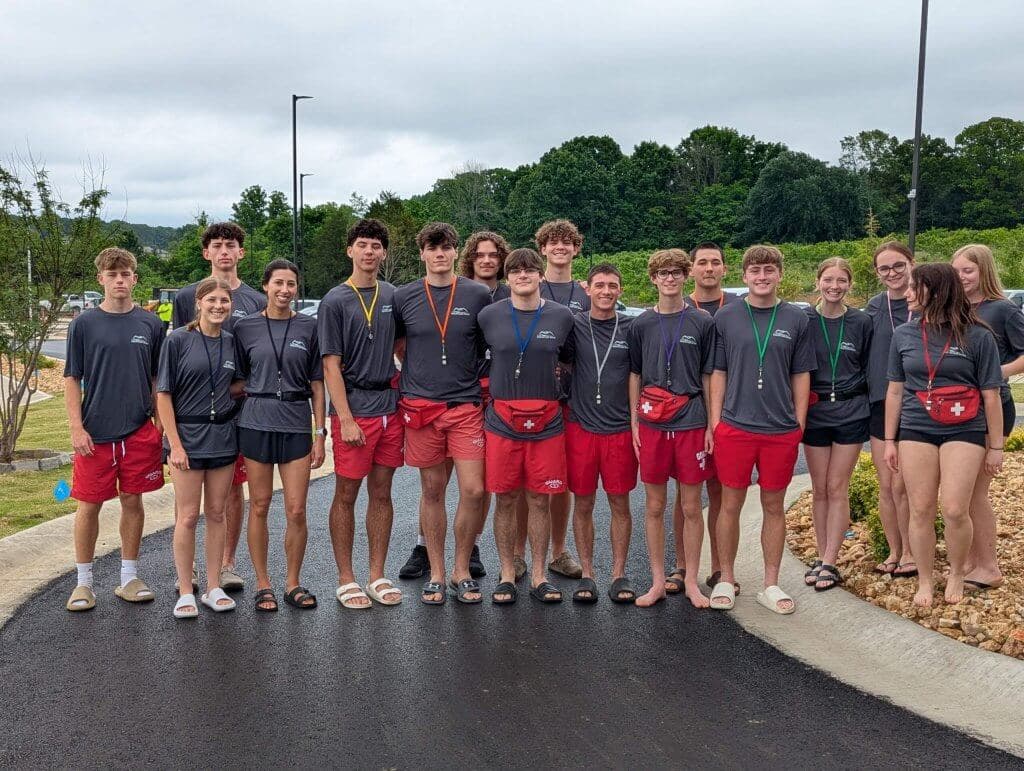
Despite its success, the center faced challenges, including changes to programming in late summer that were met with public frustration. Due to a seasonal lifeguard staffing shortage, the city restricted access to the indoor natatorium to members only in August and shifted outdoor pool hours to evenings on weekdays. These adjustments prompted resident complaints, though Parks and Recreation Director Daniel Baxley explained the necessity of the changes, noting lifeguard staff primarily consisted of high school and college students returning to classes.
The project’s construction and development also required significant municipal investment. Adams underscored the Mountain Home Street Department’s contributions to the center’s parking and drainage work, with more than $2 million allocated for site infrastructure. “A lot of the concrete poured by the city this year went into this site,” Adams said.
During his remarks, Adams addressed a question from the audience about whether a hotel or convention center might follow the new facility. While he stated the city has no such plans, he acknowledged the economic ripple effects seen in other communities, such as Batesville, where the opening of a similar center preceded the arrival of four hotels and a nearby events center. “There’s plenty of opportunity for private investment if someone wants to take that on,” Adams said.
Adams also touched on the impact to the L.C. Sammons Youth Center, which recorded just over 14,000 visits this year compared to 14,257 in 2025. Despite expectations that the new facility would draw visitors away from Sammons, the youth center has maintained steady attendance.
The $38 million facility will continue to evolve and serve the region. As its first year draws to a close, Adams said he remains optimistic about the contributions it can make to the community moving forward.