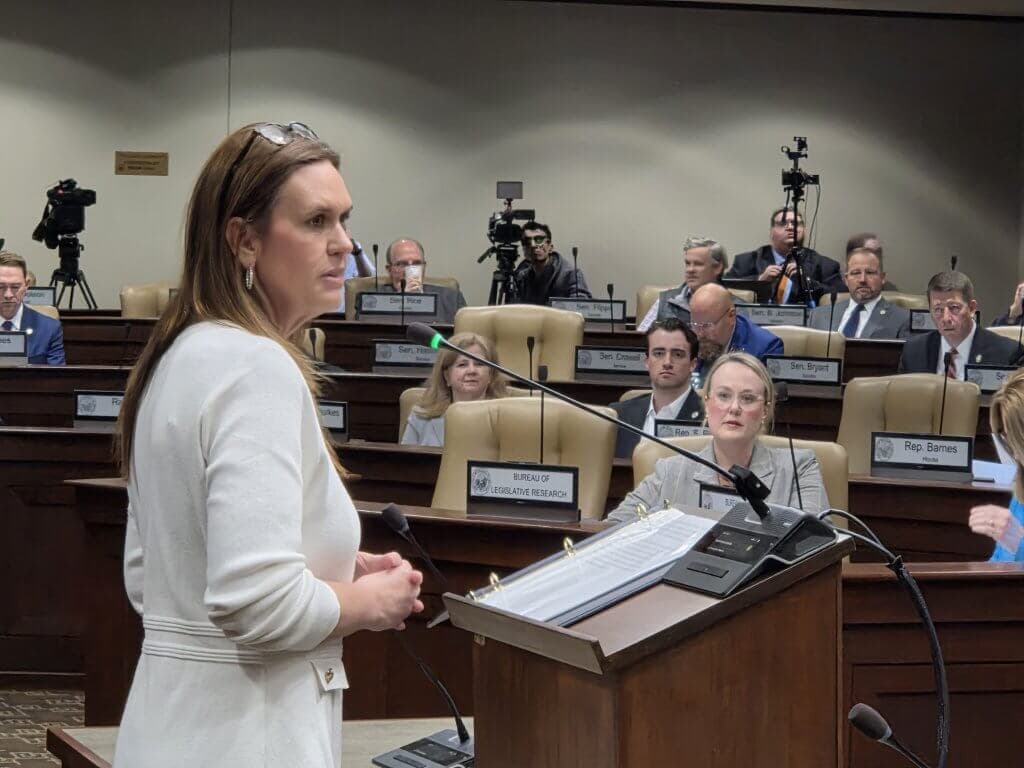
Gov. Sarah Huckabee Sanders has outlined a $7 billion state budget for Arkansas’ next fiscal year, including significant funding increases for education, public health programs, and services for vulnerable populations. The proposal also ties the spending plan to a fifth round of income tax reductions, contingent on approval from the state Legislature.
The proposed budget includes increases such as $70 million for school vouchers, $20 million for early childhood education, $25 million for the Supplemental Nutrition Assistance Program (SNAP), and $150 million for Medicaid. If enacted, the measures would bring Arkansas' General Revenue Budget to $7 billion, up from the $6.7 billion currently allocated for the fiscal year that began July 1. According to Finance and Administration Secretary Jim Hudson, a $449 million surplus is anticipated under the plan, though he cautioned that any future tax cuts would likely reduce that figure.
Gov. Sanders, who was re-elected on Tuesday, described the budget as a reflection of her administration’s values. "Budgets show our priorities: education, public safety, public health, care for our most vulnerable, and tax cuts," she said during Friday’s presentation to lawmakers in Little Rock.
Key elements in the proposed budget include investments in early education and Medicaid. The $20 million for early childhood education builds on the 2023 LEARNS Act, which established the school voucher system for K-12 students. Sanders praised the new funding as a step toward preparing students "from cradle to career." Lawmakers across party lines welcomed the allocation, while some Democrats, such as House Minority Leader Rep. Andrew Collins, argued that the amount falls short of meeting the state’s needs.
Medicaid would receive a $150 million funding boost under Sanders’ plan, plus $275 million in one-time allocations and dedicated funds. These increases are aimed in part at addressing spiking Medicaid claims and longstanding issues such as waitlists for supportive living services for Arkansans with complex disabilities. Earlier this year, the governor announced that the state would use Medicaid funds to reduce waitlists for in-home care. State officials, including Hudson, said they are confident the funding will support Medicaid’s operational needs into 2027.
The SNAP program would see an additional $25 million to account for higher administrative costs imposed by federal law, specifically stemming from the One Big Beautiful Bill Act. Arkansas has also set aside $50 million to prepare for possible penalties under new federal requirements tied to error rates in distributing benefits. Advocacy groups and some lawmakers urged caution on cutting taxes with such budget pressures, pointing out that many low and middle-income residents see minimal benefit from past tax reductions.
Tax policy remains a defining element of Sanders’ administration, which has enacted four tax cut measures that lowered Arkansas’ top income tax rate from 4.9% to 3.7%. Further cuts could reduce state revenue, though Hudson reported that revenues are currently exceeding projections by nearly 10%.
The proposed $70 million increase for school vouchers underlines Sanders’ commitment to the program, which has sparked bipartisan concerns over its rising costs. If approved, the voucher program's total funding for fiscal year 2027 would surpass $379 million.
In other developments, Republican Sen. Jimmy Hickey has been selected as Senate co-chair of the Joint Budget Committee. Hickey, who has previously opposed Sanders on education policy, is expected to weigh in on key funding debates, including the proposed expansion of the school voucher system and Medicaid reform.
Sanders’ budget proposal comes as Arkansas Democrats celebrate flipping 10 state House seats in this week’s election, breaking the Republican supermajority and complicating the path to legislative approval for some of her initiatives. Medicaid, early education funding, and the school voucher program are expected to dominate debates when the Legislature convenes.