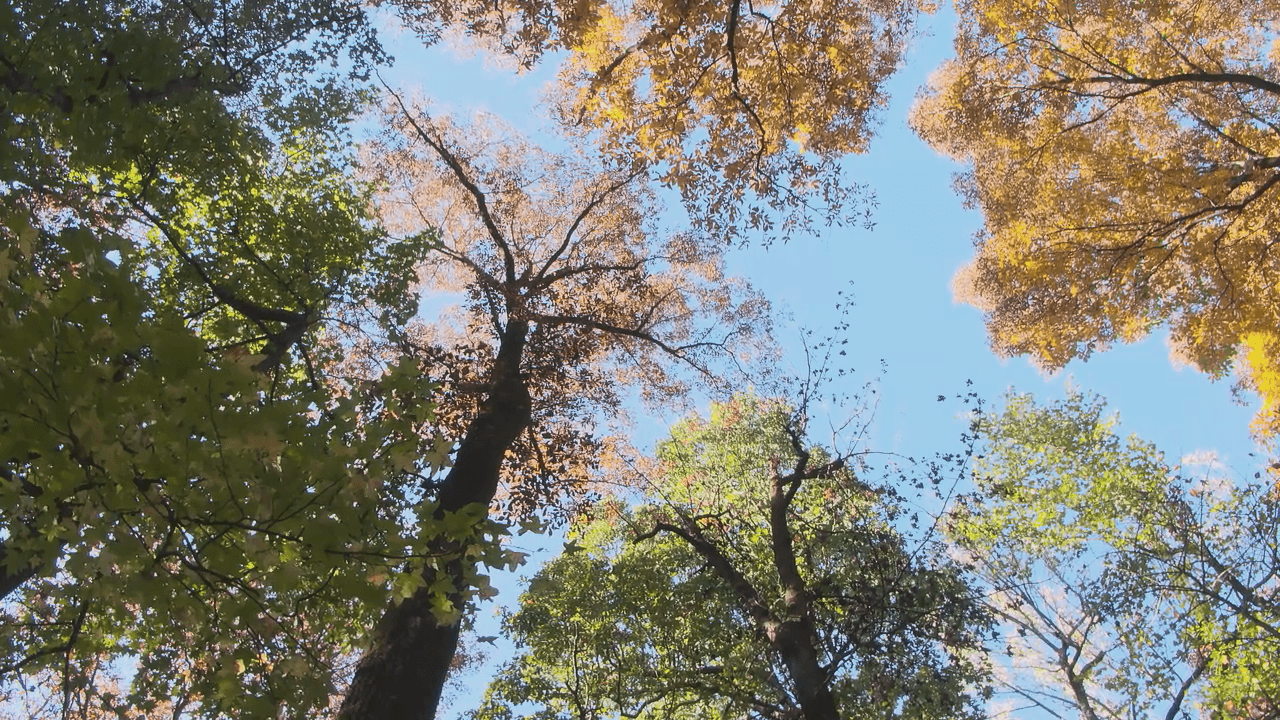
PARAGOULD, Ark. — Crowley’s Ridge State Park hosted a fall foliage hike over the weekend, offering families the chance to experience nature and learn about the seasonal changes despite persistent drought conditions in Northeast Arkansas.
The hike was held on the Spider Creek Trail, a 0.75-mile path that winds through the park. Park interpreter Dustin Hillis guided the group, discussing the history of the park, the native ecosystem, and the interconnected cycles of life in the forest. Hillis emphasized the concept that “when one thing dies, another comes to life.”
Leaves blanketed the trail as hikers observed the shifting colors of fall. While many trees were at their peak for fall foliage, others had already begun their transition into winter dormancy. Hillis pointed out various species along the trail, including oak and hickory trees, which dominate the park’s forest.
Park superintendent Chris Kincaid noted that the successful turnout was encouraging given the area’s drought conditions. “Given that we are in an extreme drought scenario here in Arkansas, I would say that it turned out really well,” Kincaid said.
During the hike, Hillis stopped to discuss the unique characteristics of the forest. At one point, the group observed resurrection ferns growing on a tree near the Spider Creek trailhead. Hillis explained the ferns’ epiphytic relationship with the trees, meaning they are self-sustaining and do not depend on their host for nutrients. These evergreens can continue to thrive even as the tree enters dormancy.
Kincaid praised the educational aspect of the event, emphasizing the role of interpreters in helping visitors connect with both the natural and historical elements of Arkansas state parks. “They also interpret the natural aspects, which of course is what today is all about,” Kincaid said.
Crowley’s Ridge State Park, located near Paragould, offers a range of trails and activities for visitors throughout the year, with fall being a particularly popular time to explore the unique ridge ecosystem.
The event served as a reminder of nature’s resilience and the beauty of Arkansas’ changing seasons, even in challenging conditions.