Arkansas Republicans suffered significant losses in Tuesday’s elections, losing their supermajority in the state House of Representatives for the first time in a decade. The shift comes as Democrats picked up at least 10 seats in the House and one in the Senate, where Republicans retain a supermajority. Key gains were concentrated in Benton, Washington, and Pulaski counties.
Although statewide and federal offices remain controlled by Republican incumbents, Democrats gained traction across the state in both legislative races and in U.S. Senate and gubernatorial contests. This growing support, while insufficient to flip leadership at the highest levels, signals a shift in Arkansas politics.
The loss of the House supermajority introduces new challenges for Republicans, particularly in passing budget appropriations, which require a three-fourths vote. Without the 75 votes needed to approve such measures, Republican lawmakers will have to work with Democrats to move forward on key spending bills. These include funding decisions for Medicaid expansion, school voucher programs, and other major initiatives in Governor Sarah Huckabee Sanders’ conservative policy agenda.
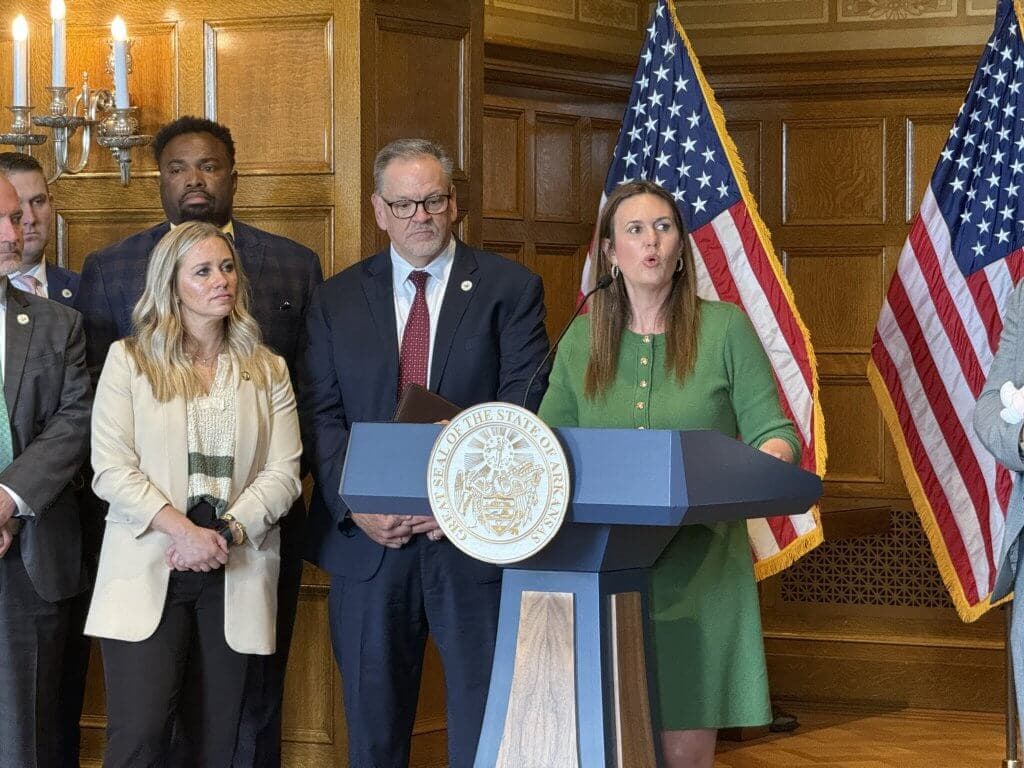
Governor Sanders, who has faced bipartisan criticism over the costs associated with her voucher program and plans for a new state prison, stated her willingness to collaborate with legislators from both parties when "priorities align."
House Speaker Brian Evans acknowledged the changed dynamic, noting that collaboration on significant issues such as Medicaid and maternal health would define discussions in the upcoming legislative session. “The makeup of the House will be a little different in 2027 compared to what it was in 2025,” Evans said. “What we have here is 100 people who represent 100 diverse districts across the state, and we all know what the issues in our state are.”
While stressing the solid Republican majority for non-appropriations legislation, Evans also pointed to voter dissatisfaction on both sides of the aisle as a factor behind the election results. “We saw people all across the country that are not happy, whether they’re Republicans, Democrats, or independents. They took their voice to the polls and they looked for change,” he said.
Former Governor Asa Hutchinson, a Republican, also weighed in on the results, urging his party to refocus its political strategy on Arkansas priorities rather than national issues. He attributed the election outcomes in part to the negative influence of former President Donald Trump, whose unpopularity, Hutchinson said, had downstream effects on races at all levels.
The losses, Hutchinson added, mean the Legislature must adopt a bipartisan approach to accomplish policy goals. “It’s going to be a different type of session,” he said.
Republican strategist Robert Coon also linked the GOP decline in traditionally conservative northwest Arkansas to population growth and an increase in independent voters who appear less tied to the state GOP, as well as widespread voter dissatisfaction with national politics. While cautioning Democrats about the risks of overextending their influence, Coon noted that affordability issues and the economy remain central concerns for voters.
The implications of losing the supermajority will likely shape how the Legislature addresses key topics in the 2027 session. Party leaders on both sides have expressed a need for cooperation to navigate Arkansas’ new political landscape.