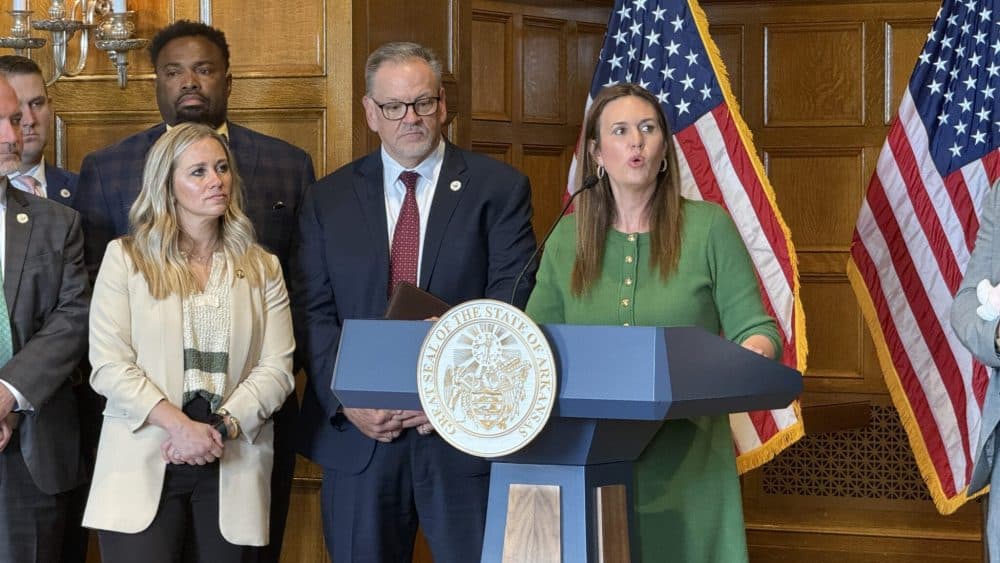
Republicans in Arkansas experienced significant setbacks in Tuesday’s election, losing their supermajority in the state House of Representatives for the first time in a decade. The outcome, part of a broader shift in voting patterns across several key states, represents a new dynamic in the Arkansas General Assembly.
Democrats gained at least 10 seats in the 100-member House, with the biggest increases concentrated in Benton, Washington, and Pulaski counties. While Republicans still hold overall majorities in both chambers, the loss of the supermajority in the House will force the party to seek bipartisan cooperation, particularly on budget measures. Arkansas law requires appropriations bills, which determine state spending, to pass with a three-fourths majority—75 votes in the House.
The results are expected to shape discussions around key legislative priorities, including Arkansas’ Medicaid expansion program, school voucher funding, and other budget-related initiatives. Gov. Sarah Huckabee Sanders, a Republican, acknowledged the shifting landscape in a statement, saying she looks forward to working with both parties "when priorities align.”
Sanders’ administration has already faced bipartisan scrutiny for the rising costs of the school voucher program she championed in her first term, as well as her proposal to fund the construction of a new state prison. These issues—and others tied to taxpayer spending—are likely to dominate next year’s legislative session.
House Speaker Brian Evans, a Republican from Cabot, downplayed the losses, emphasizing that Arkansas remains a conservative state. “The makeup of the House will be a little different in 2027 compared to what it was in January of 2025,” Evans said. "That could change some of the dynamics of the session. What we have here is 100 people who represent 100 diverse districts across the state.” He pointed to Medicaid and maternal health as potential areas for bipartisan cooperation on “good policy.”
Former Gov. Asa Hutchinson, a Republican and Sanders’ predecessor, urged the state GOP to take heed of the losses. Hutchinson, who ran for president in 2024, attributed the results in part to national politics, particularly the unpopularity of former President Donald Trump. “The national implications of Donald Trump’s negatives impacted it all the way down to the justice of the peace level in our state,” Hutchinson said. Effective fiscal policy during next year’s session, he added, will require bipartisan contributions.
Political analysts noted that shifts in traditionally Republican strongholds like northwest Arkansas played a significant role. Republican campaign strategist Robert Coon attributed these changes to population growth and an increasing number of independent voters. “When the president is immensely unpopular, and that’s what people are paying attention to, that is going to have an effect downstream,” Coon said. He also cautioned Democrats against overextending their newfound leverage.
Despite Tuesday’s gains, Democrats still face a political landscape where Republicans hold large majorities in both the House and Senate, and have retained control of all statewide and federal offices. The results, however, signal growing frustration among voters across the state, including in rural areas traditionally dominated by Republicans, as economic concerns continue to shape voting behavior.
The final certified results of the election are expected in the coming days, but the immediate implications for Arkansas’ next legislative session are already clear: Republicans will need Democratic votes to advance spending bills, marking a new chapter in state politics.