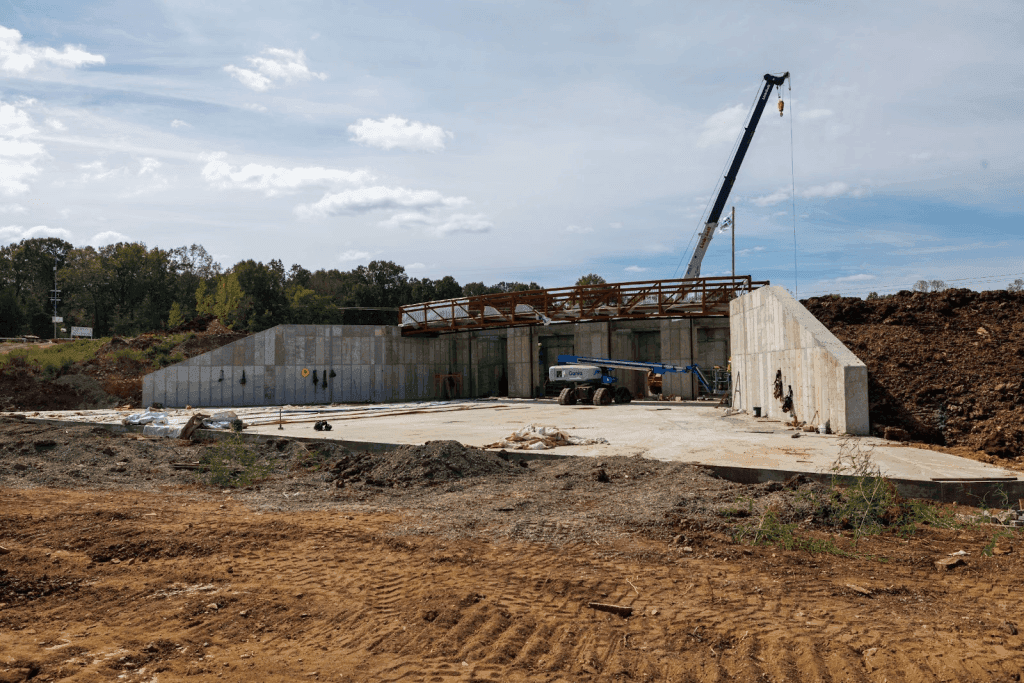
The Arkansas Game and Fish Commission (AGFC) will close the gates at the auxiliary structure of the dam at Craig D. Campbell Lake Conway Reservoir on December 2, marking the beginning of the lake's refilling process. The timeline was announced Monday evening during a public meeting held at the Mayflower High School Cafeteria, attended by approximately 170 local residents and stakeholders.
Nick Feltz, regional fisheries supervisor at the AGFC’s Mayflower office, informed attendees that significant progress has been made on the lake's ongoing renovation project. While the project has several years of work remaining, all tasks requiring a drained lake have been completed. "We just passed three years into the planned five-year renovation project, and with the drought helping to keep the lakebed dry, any potential gains have been realized," Feltz explained. "We are slightly ahead of schedule and will allow lakeside landowners an additional month to wrap up construction, repairs, or shoreline improvements before we close the gates."
The refilling process will depend heavily on rainfall, with Feltz emphasizing that the lake historically fills quickly after rain in the right areas. Residents were advised to finalize any remaining projects along the shoreline as significant rain could accelerate refilling.
Since draining the lake, contractors and AGFC teams have focused on several habitat improvements. These include renovating nearly 28 miles of boat lanes and adding woody structures to serve as fish habitats. The structures provide baitfish with cover, enhance feeding opportunities for game fish, and create hotspots for anglers.
Feltz also highlighted the broader ecological benefits of the project. "Nature has done much of the work for us," he stated, pointing to vegetation growth throughout the lakebed. The growth of cypress trees, grasses, and other plants will serve as critical nursery habitats for baitfish and game fish when the lake refills, contributing valuable nutrients to the food chain as the vegetation decomposes.
The AGFC has already initiated fish stocking efforts to restore aquatic life. Around 200,000 golden shiners were released into the lake last week, and more forage species like fathead minnows, bluegill, and redear sunfish are slated for release this winter. Predator species including bass, catfish, and crappie will likely be introduced six to eight months later to give the forage base time to establish.
Additional improvements have been made at the lake's public access points. Work has included upgrades to parking areas, boat ramps, and fishing piers, as well as modifications to shoreline areas popular among anglers. "We’ve deepened some areas near the banks to enhance fishing opportunities, though larger dredging projects and island constructions are prohibited due to federal wetland regulations," Feltz explained.
Despite progress, some construction—including the final marking of boat lanes—will continue after the lake refills. Large utility poles have been installed as preliminary markers, but additional work will occur once the lake rises and AGFC staff can complete their assessments by boat. Approximately 50 poles remain to be driven into sections south of Highway 89 and the Gold Creek area west of Interstate 40.
The Lake Conway renovation project, first announced as a five-year initiative, is among the AGFC’s largest undertakings to date. AGFC plans to closely monitor the lake’s recovery and ecological response in the years ahead to ensure long-term success.