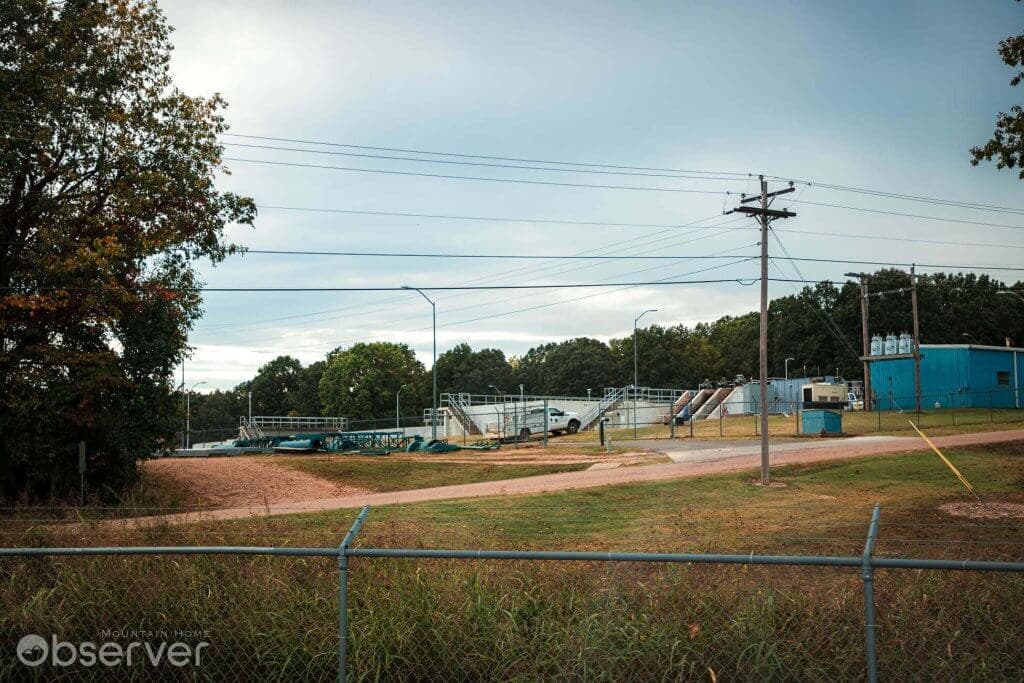
Arkansas voters will decide on a November ballot measure asking the state to issue up to $500 million in bonds to finance improvements to water and wastewater infrastructure. Supporters say the measure, referred to as Issue 4, addresses a critical need in Arkansas’ aging systems, while critics have voiced concerns about the cost of borrowing and accountability over how funds would be used.
Issue 4 is one of four proposed measures referred to voters by the majority-Republican Arkansas Legislature, though it is the only one that does not require a constitutional amendment. The proposal stems from legislation sponsored by Republican Sen. Bart Hester and Rep. Howard Beaty and was approved by the General Assembly in 2025.
If passed, the measure would authorize the Arkansas Natural Resources Commission to issue general obligation bonds to fund or refinance projects related to water and wastewater systems, flood control, irrigation, wetlands, and aquatic resources. The proposal caps bond issuances for irrigation facilities at $165 million and prohibits more than $60 million from being issued during any two-year period without additional legislative approval.
Communities across Arkansas have struggled to maintain safe and reliable water systems for years. In some areas, including Helena-West Helena, residents have lost access to basic water services. According to Chris Harris, CEO of the Arkansas Rural Water Association, updating the state water plan has highlighted a staggering $20 billion in needs for utility improvements. "A lot of them are at the end of their lifespan, and it’s going to take a massive amount of money to even begin to start replacing some of this," Harris said.
Harris also leads The Committee for Water Infrastructure Now for Arkansas, one of two ballot question committees supporting Issue 4. Financial disclosures show the group raised $83,000 since forming in March, spending nearly half on polling. Another group, Water Infrastructure for AR, also supports the measure but has not yet raised funds.
Proponents argue the bond program won't increase taxes, as utilities receiving loans would repay them with ratepayer funds. These repayments would also fund administrative costs and potentially secure additional federal funding for other projects. Harris noted the program aligns with a framework established in 1980, which voters last updated in 2008 to approve $300 million in bonds. Inflation and increased infrastructure demands, he said, prompted this latest proposal.
Despite its supporters, the measure has drawn scrutiny. Critics have raised concerns about the broad language used in the proposal, questioning which entities might benefit from taxpayer-backed bonds. For instance, the University of Arkansas Division of Agriculture’s Public Policy Center noted that data center developments, which require substantial water usage, have been controversial in some communities over environmental and cost concerns.
Harris rejected the idea that Issue 4 was aimed at benefiting projects like data centers but acknowledged the potential for misuse. "You can’t stop a bad actor, but that’s not what this is designed to be used for," he said.
Other opponents have pointed to Arkansas’ significant reserves and expressed concerns about borrowing at a time of higher interest rates. Harris argued that reserves alone cannot meet the infrastructure needs statewide.
The League of Women Voters of Arkansas has taken a neutral stance on Issue 4, citing their alignment with national priorities on water quality but concerns over public input and accountability. "That’s why we decided not to take a position because those two pieces of it were in conflict with our national guidance," said the group’s Executive Director Kristin Foster.
If approved, Issue 4 would take effect on July 1, marking the start of the new fiscal year.