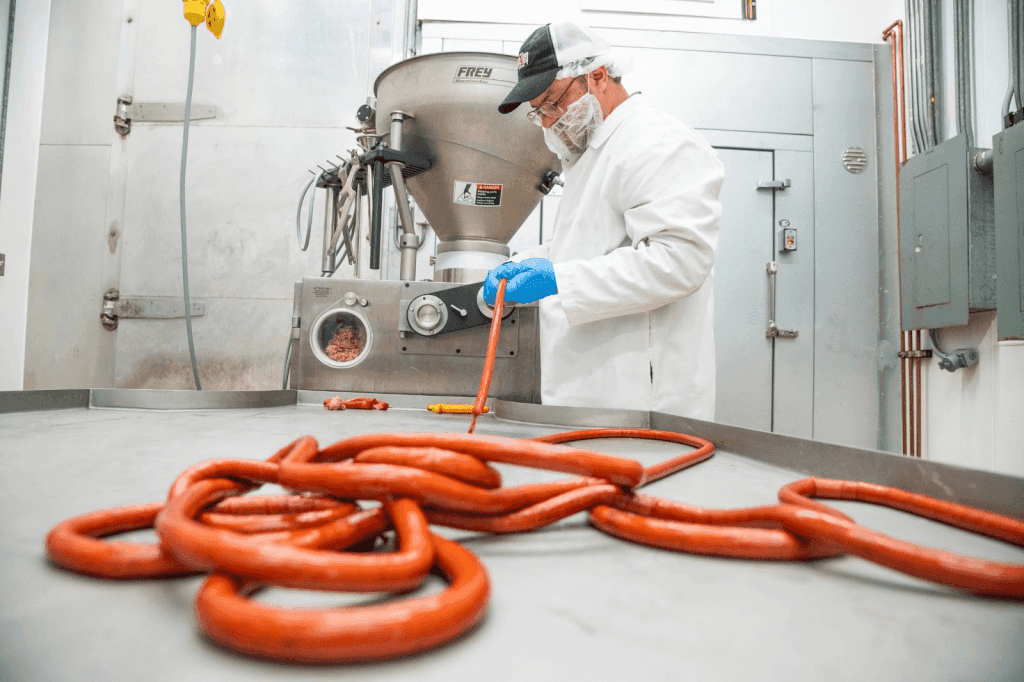
Arkansas State University, in partnership with Arkansas Hunters Feeding the Hungry (AHFH) and the Arkansas Farm Bureau, unveiled a $750,000 expansion to its College of Agriculture Meat Market and Lab on Wednesday. The project, funded by a grant from the Arkansas Office of Skills Development, focuses on producing shelf-stable venison snack sticks to combat food insecurity across the state.
According to AHFH Executive Director Ronnie Ritter, the protein-packed snack sticks are a critical component of school weekend backpack programs for children living in food-insecure households. “I get a call nearly every week from a new school asking for these sticks to add to their backpack programs,” Ritter said. “They can get cereals and canned goods, but shelf-stable meat is an extremely hard need to fill.” In some cases, the snack sticks may be the only meat these children receive over weekends and school holidays when meal programs are unavailable.
Last year, AHFH distributed 172,000 snack sticks, with 128,000 of those sourced from deer donated by hunting clubs enrolled in the Arkansas Game and Fish Commission’s (AGFC) Deer Management Assistance Program (DMAP). Jeremy Brown, DMAP coordinator, noted that the partnership with hunters not only supports food-insecure communities but also fosters healthier deer populations by balancing herd numbers. “To maintain a healthy, productive herd, they have to keep the buck-to-doe ratio close to a 1-to-1 balance,” Brown said. "Clubs that work with our biologists often need to harvest more does than their members want to process and keep."
Previously, AHFH relied on an out-of-state facility to process many of the snack sticks, which are difficult to produce in the high volumes required. The new equipment at Arkansas State is expected to change that. Corey Readnour, director of the university’s meat lab, said the upgraded facility could produce nearly 200,000 snack sticks annually, provided there is sufficient storage for donated venison. Students working in the lab will process and package the sticks, gaining hands-on experience while contributing to a cause that directly serves Arkansas communities.
Liam McGregor, an Arkansas State student employed in the lab, said the program gives meaning to his work and education. “Knowing how much it would help the community and give back was a big reason I wanted to take the job," McGregor said. “I didn’t know all the specifics at first, but I knew it was a great cause, so I’m proud to be a part of it.”
The demand for the program continues to grow, with Ritter expecting production to exceed last year’s numbers. “We’re hoping to produce 200,000 this year, and we’re already ahead of last year’s deer club donations,” he said. However, challenges remain in covering processing costs and boosting storage capacity, both of which the university’s expansion is expected to alleviate.
Arkansas Hunters Feeding the Hungry encourages hunters to contribute by donating deer through the program and making financial contributions when purchasing hunting licenses. More information about AHFH and its operations can be found at www.arkansashunters.org.