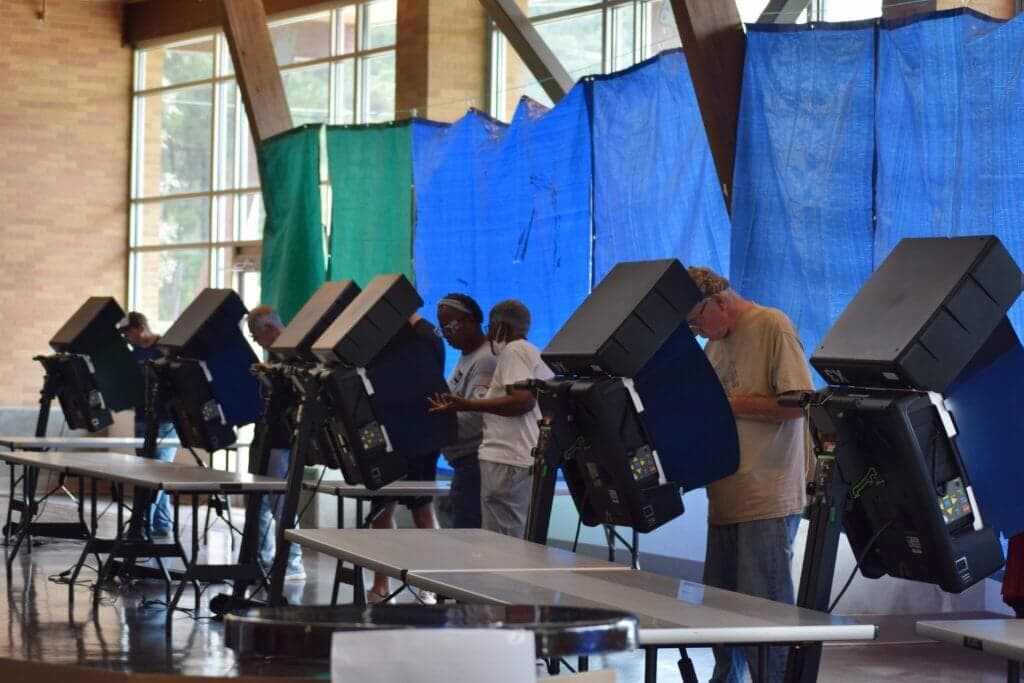
Arkansas voters are set to weigh in on Issue 1, a proposed constitutional amendment that seeks to explicitly bar noncitizens from voting in state and local elections. The measure, titled the "Citizens Only Voting Amendment,” aims to solidify voting restrictions already outlined in federal and state law.
Currently, Arkansas’ constitution states that U.S. citizens who reside in the state, are at least 18 years old, and are legally registered to vote may cast ballots in elections. Supporters of the measure, however, contend that the existing language could allow for potential loopholes if local governments sought to extend voting rights to noncitizens.
The amendment was referred to the November ballot after approval by the Arkansas General Assembly through a resolution sponsored by Rep. David Ray and Sen. John Payton, both Republicans. While highlighting examples from Washington, D.C., and municipalities in California, Maryland, and Vermont where noncitizens are permitted to vote in certain local elections, Ray described the amendment as a preemptive safeguard.
“Americans should decide the future of America,” Ray said during a press conference last month at the state Capitol. “That’s what I believe, and that’s what the vast majority of Arkansans believe.”
Federal law already prohibits noncitizens from voting in federal elections. Proponents of Issue 1 argue the amendment is necessary to prevent similar allowances in Arkansas at the state and local level. They say the change offers reassurance to constituents concerned about illegal immigration, according to analysis by the Public Policy Center at the University of Arkansas Division of Agriculture.
Critics of the proposal, however, contend it is unnecessary and carries negative implications for immigrant communities. Holly Dickson, executive director of the American Civil Liberties Union of Arkansas, said the measure sends a divisive message. “Issue 1 is about whether Arkansas will send a hateful, un-American message that immigrants aren’t welcome here,” Dickson wrote in a statement.
The nonpartisan League of Women Voters of Arkansas has also come out in opposition. Executive Director Kristin Foster argued there is no evidence of efforts to allow noncitizens to vote in Arkansas, rendering the measure redundant. Some opponents also fear its passage could open the door for stricter proof-of-citizenship laws in the future, potentially creating voting barriers for eligible voters.
Ray has acknowledged that no Arkansas towns or cities currently have plans to allow noncitizen voting but maintains that the amendment is a preventative measure. “Our constitution is a floor rather than a ceiling,” he explained, suggesting that without Issue 1, there would be no clear prohibition on future expansions of voter eligibility at the local level.
Nationwide, Arkansas is one of six states considering similar measures or laws this year. Municipalities in nearly two dozen U.S. cities, including Washington, have extended voting rights in local elections to noncitizens, such as parents of citizen children in school board races. Arkansas has a significant immigrant population, including the country’s largest concentration of Marshallese people, many of whom lack citizenship despite being legally permitted to live and work in the U.S. under an international compact.
If Issue 1 passes, the amendment would take effect on January 1. Voters can read the full text of the proposed measure on the Secretary of State’s website.