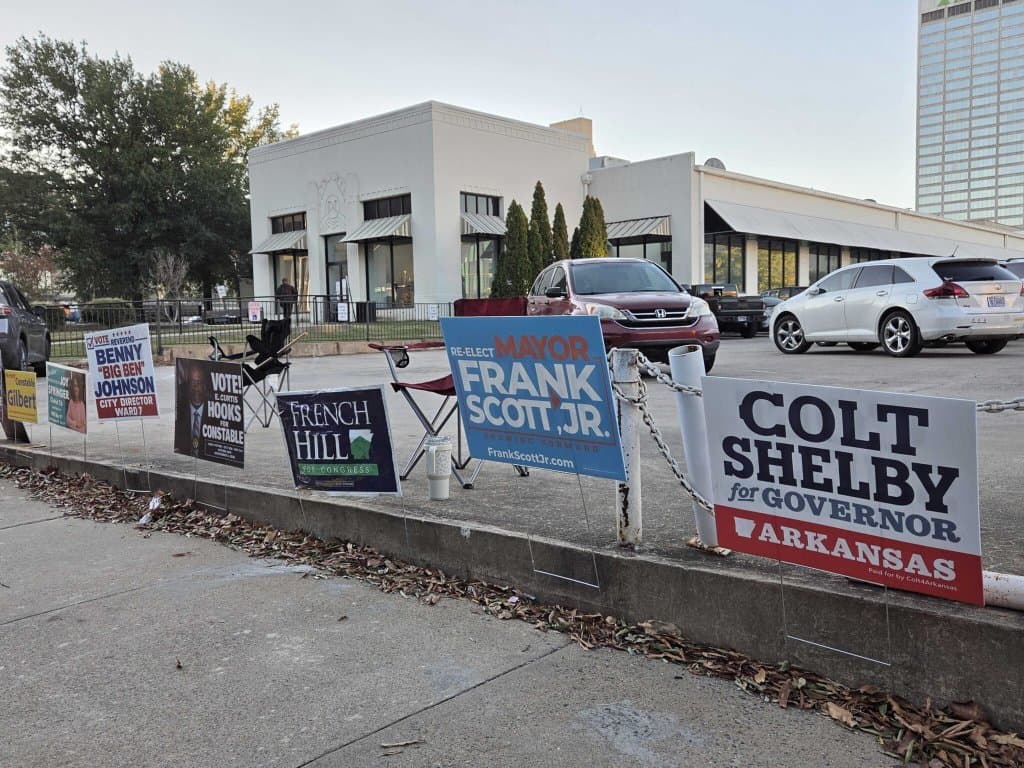
The U.S. Department of Justice (DOJ) is deploying election monitors to Washington and Pulaski counties on Election Day, a decision that has sparked resistance from local election officials who say federal observers will not be allowed inside polling locations. The two counties are Arkansas’ most populous and among its most politically diverse areas.
The Washington County Election Commission voted against allowing monitors inside polling sites, citing a lack of advanced notice from federal authorities. Pulaski County’s Election Commission plans to discuss the matter in a public meeting on Thursday evening, according to Amanda Dickens, the county's election coordinator. The DOJ is expected to station four to six plainclothes monitors at each county's polling places, positioned at least 100 feet from voting locations, according to Dickens. They will reportedly not intervene in the election process and will only engage voters to inquire about their experiences if necessary.
Washington County Commissioner Matt Mendenhall expressed frustration over the timing of the notice from the DOJ. “It’s got to be planned, and your lack of planning is not our emergency,” Mendenhall remarked. He added that the county demonstrated the integrity of its election process during a recount of the Republican secretary of state primary runoff earlier this year.
Arkansas Republican leadership, including Gov. Sarah Huckabee Sanders, has signaled unease with federal involvement. Her spokesperson, Sam Dubke, stated this week that the administration would ensure elections are secure and free from “undue influence or intimidation.” Secretary of State Cole Jester, however, said his office had no objection to DOJ observers, emphasizing the importance of transparency to maintain public trust.
The Justice Department’s authority to monitor elections is tied to enforcement of federal voting rights laws, but local election officials must permit monitors to enter polling sites. The DOJ recently announced plans to send monitors to all 50 states during the election period.
Concerns about the DOJ’s decision to focus on these two specific Arkansas counties have been raised by Wendell Griffen and Dana Deree, Democratic candidates for county judge in Pulaski and Washington counties, respectively. In a joint statement, they described the area’s racial and political diversity and called on the DOJ to disclose how locations for monitoring are selected. Washington County is home to a significant Marshallese population, while Pulaski County has large Hispanic and Black communities.
Beth Coger, a member of the Washington County Quorum Court, highlighted how the federal plans could affect voting behaviors among immigrants and naturalized citizens. "Imagine how the presence of federal officials at polling places might be perceived," Coger said. Civil rights groups have echoed such concerns, noting ongoing tensions with federal immigration enforcement activity in the area.
Some residents spoke positively about the fairness of local elections during the Washington County Election Commission’s public meeting. Herschel Hartford shared that voting accommodations in the county have always met his needs. "We do this because all of us are neighbors, not because federal overseers are watching over our shoulders," Hartford said.
The progressive group For AR People has urged Pulaski County residents to attend Thursday’s election commission meeting, stressing the importance of protecting Arkansas’ constitutional authority over its own elections. The group’s statement framed the DOJ’s involvement as potential government overreach.
As of Monday, nearly 280,000 Arkansans had participated in early voting. The Justice Department has not disclosed specific reasons for selecting Washington and Pulaski counties, and it remains unclear whether similar measures are being taken in other counties of varying racial or political profiles.