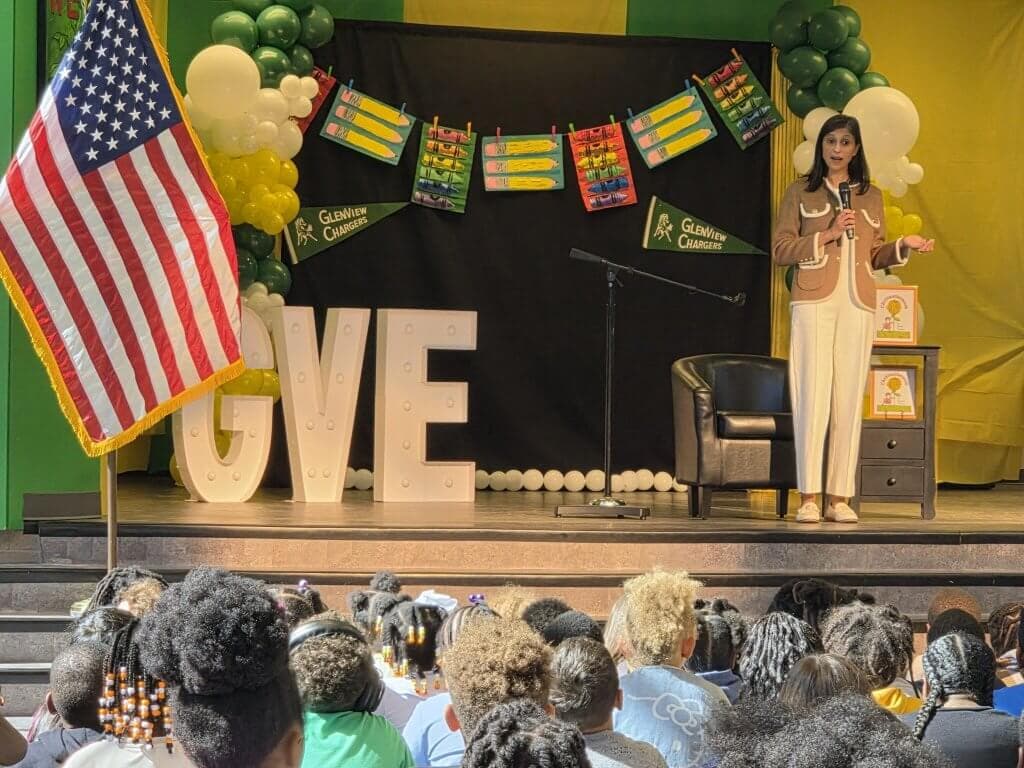
Second Lady Usha Vance visited Glenview Elementary School in North Little Rock on Tuesday to promote literacy education, reading to students and participating in discussions with state leaders. As part of her efforts to encourage childhood reading, Vance read the children’s book *Chrysanthemum*—a favorite of her daughter—to the elementary students.
“I came all the way from Washington, D.C., because I heard what amazing work all of you do every day in the classroom, and I wanted to see it for myself,” Vance told the gathered students.
Vance has spent the past two years promoting reading through a summer literacy challenge. Her stop at Glenview Elementary included a roundtable discussion highlighting Arkansas’ ongoing efforts to improve student literacy, particularly through initiatives established under the LEARNS Act.
The 2023 LEARNS Act, a sweeping education reform law, requires literacy screenings for students in kindergarten through third grade and deploys literacy coaches to assist teachers in schools rated “D” or “F” by the Arkansas Department of Education. Public schools are graded based on students’ performance on state assessments and progress in core academic areas.
State Education Secretary Jacob Oliva praised the North Little Rock School District for its recent improvements under the new literacy-focused initiatives. The district raised its school performance rating from an “F” last year to a “C” this year.
“What we know matters is if we build the right systems and invest in high-quality teachers, get them great leaders, provide the right robust support, and get the systems aligned, we’re going to see great results,” Oliva said.
The roundtable also included Governor Sarah Huckabee Sanders, First Gentleman Bryan Sanders, State Board of Education members, North Little Rock School District Superintendent Gregory Pilewski, and State Representative Keith Brooks, chair of the Arkansas House Education Committee. Brooks served as a lead sponsor of the LEARNS Act, which Governor Sanders signed into law.
Most of the discussion was closed to the press, though participants reiterated their commitment to strengthening literacy outcomes across the state.
Public officials continue to emphasize literacy as a cornerstone of educational reform in Arkansas, citing its critical role in shaping academic success statewide.