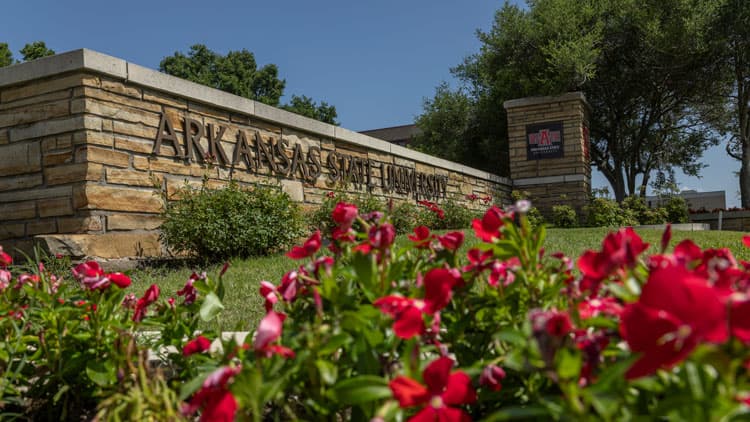
Arkansas State University has joined the National Intercollegiate Mutual Aid Agreement (NIMAA), paving the way for enhanced emergency support. The agreement enables participating colleges and universities to share resources before, during, and after emergencies or special events.
NIMAA, established in 2015 by the International Association of Emergency Managers' Universities and Colleges Caucus, includes 154 higher education institutions across the country. Arkansas State is the first university in the state to participate, according to Wyatt Reed, the university’s emergency operations and occupational safety specialist.
“I am proud to say that we are the first institution of higher education in the State of Arkansas to join this compact. This is a major step towards continuing to build a network of relationships with outside entities that can assist A-State in a time of need and vice versa,” Reed said.
The arrangement allows members to request or provide resources and personnel during emergencies. Reed emphasized its importance, especially when local agencies may face limits in their ability to offer assistance.
“Many disasters that affect us will also affect them, and they have a large jurisdiction to cover even excluding A-State. As a result, those agencies may not always have the staffing and resources to support us to the extent or duration needed,” Reed said. “In the same ways that they would look to agencies outside of the county for assistance, we can use this to look for support outside of agencies that are immediately conjoined to us.”
The agreement can also be activated during planned events or in anticipation of potential incidents. Reed noted that a key advantage of the network is access to personnel familiar with the unique challenges of college campuses.
“Universities are unique and complex, and an individual with experience in navigating that landscape is a great benefit in a time of need,” he added.
While A-State already maintains strong partnerships with city and county emergency agencies, the agreement provides an additional tool for securing aid when needed. Importantly, NIMAA also enables A-State to assist other universities, promoting collaboration and learning through shared exercises and incident management operations.
“We can also utilize this as part of exercises (and be utilized in other institutions’ exercises), and gain experience and knowledge while supporting incident management operations to evaluate and shape our own planning,” Reed said.
By joining NIMAA, A-State aims to further its mission of fostering a community-based emergency management program to support its campus and others in times of crisis.