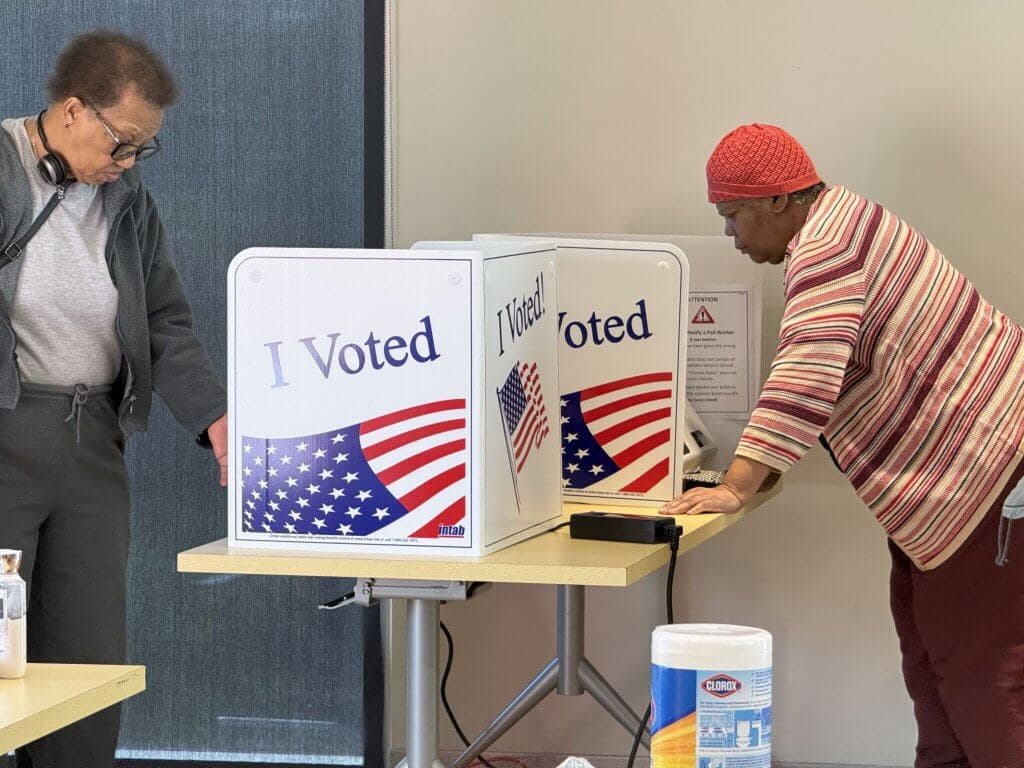
Early voting for the 2026 midterm election began Monday across Arkansas, and thousands of residents turned out to cast their ballots in the coming weeks’ pivotal races. Local, state, and federal contests have drawn significant attention, with voters citing contrasting hopes and frustrations that influenced their decisions.
### Voter Turnout and Anticipation The Arkansas secretary of state’s office anticipates around 500,000 residents—half of the total expected voters—will participate in early voting this year. In Saline County, a central Arkansas Republican stronghold, nearly 600 voters had visited polling locations by mid-morning, according to county communications director Trevor Villines. Pulaski County, home to Little Rock, reported over 10,000 ballots cast on day one, reflecting strong early engagement.
### Republican Supporters Focus on Continuity Several Republican voters emphasized their alignment with current GOP officeholders and former President Donald Trump. Retired police officer William Good of Benton noted he intended to vote Republican down the ballot, supporting candidates like Governor Sarah Huckabee Sanders and U.S. Senator Tom Cotton. AJ Burchfield of Haskell described Sanders as "doing the job right" and expressed hope for continued leadership in line with her tenure.
### Democrats Highlight a Desire for Change For some voters, frustration with Republican leadership shaped their choices. Tanner Oglesby, a Saline County teacher, said he supported Democratic candidates Chris Jones and Hallie Shoffner, citing the need for balance and a break from what he described as partisan entrenchment. Robert Zimmerman, another Benton voter, voiced concerns about public benefit cuts under current Republican policies and voted for Democratic alternatives.
Sarah King of Pulaski County echoed these sentiments, expressing dissatisfaction with the administration’s stance on issues such as human rights and treatment of immigrants. King pointed to concerns about local infrastructure such as camera surveillance systems and reflected on the broader impact on her community and family. "These are my neighbors," she said.
### Local and Ballot Issues Voters in Saline County also weighed in on local proposals, including a measure to reduce property tax funding for libraries. Both Oglesby and Neil McElhaney expressed opposition to the cut, emphasizing the value of education and access provided by these resources. Retired teacher Faye Hanson, voting in North Little Rock, voiced reservations about all four statewide ballot measures, including a $500 million bond issue for water and wastewater infrastructure. She cited concerns over transparency and trust in the current administration’s handling of public funds.
### Calls for Accountability in Congress Some voters expressed a broader desire for increased oversight and accountability in Washington. Bruce Wilkinson of Benton County pointed to Congress’s failure to act as an effective check on presidential powers, saying the election represents an opportunity to address this shortfall. "We wanted to get the earliest in," Wilkinson said, highlighting his eagerness to participate in shaping leadership going forward.
### Local Races and Nonpartisan Choices In Rogers, voter June Galloway cited local dynamics as her main motivator. Outside the Benton County Election Commission, she expressed support for Mallory Sanders, a candidate for Rogers City Council, based on Sanders’ professional and academic background rather than partisan affiliation. "I’m here as a nonpartisan to support Mallory," Galloway said.
With weeks of early voting ahead and a clear divide in voter priorities, Arkansans are engaging actively in an election with implications at every level. County officials and election commissioners have noted steady turnout statewide, cementing early voting as a critical component of the electoral process.