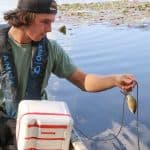
As summer temperatures rise across Arkansas, the Arkansas Game and Fish Commission (AGFC) highlights nighttime catfishing as a way for anglers to beat the heat while enjoying productive fishing. According to the AGFC, catfish tend to stay in deeper, cooler water during the day in late summer but move to shallow feeding areas after dark.
Anglers are encouraged to target creek channel edges and shallow flats, setting passive fishing gear—such as trotlines, limblines, and juglines—in water less than six feet deep. Limblines, often described as one of the simplest nighttime fishing techniques, involve tying a baited, weighted hook to an overhanging tree branch. As fish swim away with the bait, they hook themselves.
Trotlines offer an alternative by using a long main line with multiple baited hooks spaced at least 24 inches apart. The AGFC reminds anglers to keep trotlines submerged and properly anchored to prevent interference with boats.
Juglines remain a popular option for targeting night-feeding catfish. While once made from empty plastic bottles, many anglers now prefer brightly colored sections of pool noodles for visibility and convenience. Some designs even stand upright when a fish is caught, making them easier to locate on the water.
The AGFC emphasizes the importance of using the correct bait for different catfish species. Channel catfish respond to prepared baits such as chicken liver, shrimp, hot dogs, cheese bait, and stink bait. Blue catfish similarly favor meaty baits, while flathead catfish are most attracted to live bait, including green sunfish, brood minnows, black salties, small bream, or shad. Anglers must ensure live bait is caught in accordance with Arkansas fishing regulations.
Safety and compliance are key for nighttime catfishing. The AGFC requires all limblines, trotlines, and juglines to display the owner's name and address, fishing license number, or vehicle registration number. Anglers may use up to 25 limblines or free-floating juglines, with limblines and trotlines checked at least once every 24 hours. Juglines should be collected after each night of use.
Safety precautions include equipping boats with proper navigation lights, carrying a spotlight and whistle, and using paddles or poles—rather than hands—to check lines. This helps avoid potential injuries caused by large, unexpectedly strong catfish pulling on the line.
For anglers awaiting dove season or cooler fall weather, AGFC officials say nighttime catfishing offers an enjoyable way to escape the oppressive heat and experience some of Arkansas’ best fishing opportunities.