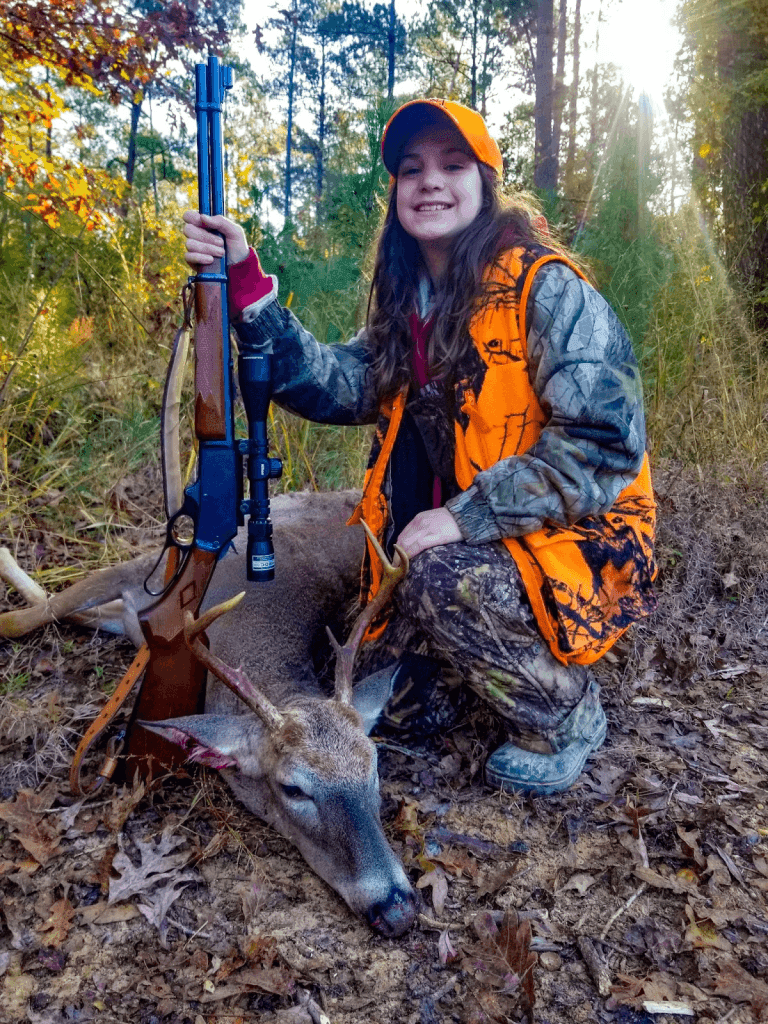
This weekend’s alternative firearms deer season will carry on a tradition that has endured in Arkansas for 50 years: the mandatory use of hunter orange. Since 1973, hunters in the state have been required to wear at least 400 square inches of blaze orange clothing, including headgear, while pursuing deer, a measure implemented to increase outdoor safety.
The Arkansas Game and Fish Commission (AGFC) first made blaze orange mandatory for firearms deer seasons to improve visibility and reduce hunting-related accidents. Over time, the requirement has expanded to include bear and elk seasons as populations of those species recovered to sustainable levels for hunting.
“Deer really don’t see colors the same way we do,” said Matt Gideon, Hunter Education and Boater Education Coordinator for the AGFC. “They have dichromatic vision, meaning they see blues, purples, and greens well, but that bright blaze orange that stands out to humans looks more muted to deer. They’re more likely to notice movement than an unusual color.”
Some hunters opt for alternative fluorescent colors like chartreuse, but blaze orange remains the standard for outdoor visibility. For those who worry that the solid orange garments may make them too conspicuous, Gideon recommends blaze camouflage, which incorporates black patterns to break up the solid color. This option remains legal under Arkansas law while ensuring hunters remain visible to one another.
Hunter safety measures evolved further in 1985 when Arkansas introduced a mandatory Hunter Education program, but the blaze orange requirement had already been in place for nearly a decade. Before these regulations, some safety-conscious hunters voluntarily wore bright colors, such as red-and-black checked wool, but statewide implementation of hunter orange significantly standardized safety practices.
Massachusetts led the nation in adopting mandatory hunter orange as early as 1961. Research in subsequent decades has highlighted the importance of this safety measure. A New York study conducted from 1989 to 1995 found that out of 343 incidents involving hunters and firearms, 259 of the victims (76%) were not wearing hunter orange, illustrating the stark risks associated with inadequate visibility.
While some states still do not require hunter orange, Gideon emphasized its critical role in preventing misidentifications and ensuring hunters can be seen easily when near another’s field of fire.
As Arkansas hunters gear up for the alternative firearms season, many will don blaze orange with pride, marking it not just as a safety tool but as a hallmark of responsible hunting practices in the Natural State.