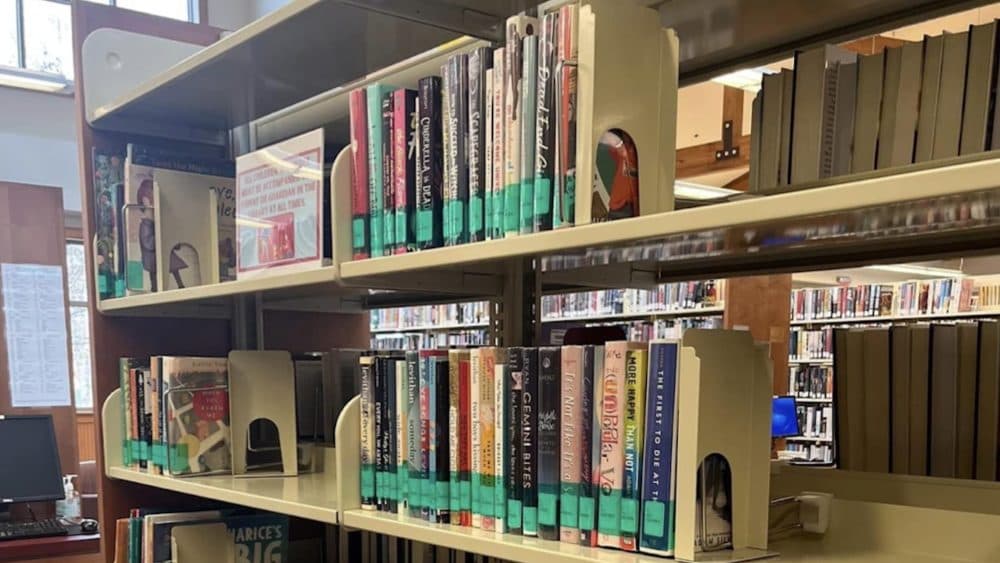
A federal appeals court has cleared the way for Arkansas to enforce a law that restricts access to certain library materials, overturning a prior injunction on the legislation. The 8th U.S. Circuit Court of Appeals issued its decision Thursday, concluding a challenge from several plaintiffs lacked standing for one portion of Act 372 and failed to demonstrate another section was unconstitutionally vague.
Act 372, passed in 2023, establishes criminal penalties for librarians and booksellers who provide content deemed "obscene" or "harmful to minors." It also grants local governing bodies the authority to override library decisions on challenged materials. A previous federal court ruling had blocked enforcement of portions of the law on First Amendment grounds.
Arkansas Attorney General Tim Griffin, a Republican, praised the appellate ruling, saying the decision "allows Arkansas to move forward in enforcing a law that protects children from obscene materials while increasing accountability for public-library curation decisions."
The plaintiffs in the case, which include libraries, bookstores, advocacy groups, and several library patrons, argued that Act 372 could create a chilling effect on free speech. "Libraries and bookstores should be places where people can freely explore ideas — not where booksellers and librarians face criminal liability for selling, checking out, or even just shelving constitutionally protected books," their lead attorney, John Adams, said in a statement. He added that the legal team is evaluating further options, including additional appeals.
The contested portions of the law primarily focus on the treatment of materials deemed harmful to minors. Section 1 makes "furnishing a harmful item to a minor" a Class A misdemeanor, which could carry a maximum sentence of one year in prison. The plaintiffs argued that terms like "furnishing" and "harmful" were too vague, potentially allowing First Amendment violations through uneven enforcement. However, the appeals court disagreed, noting that the section applied only to those who knowingly provided items harmful to minors.
Another key element of Act 372, Section 5, allows city and county governing bodies to relocate challenged materials if a library panel decides to keep them accessible. While plaintiffs argued such policies could lead to targeted censorship, the appeals court found no evidence of harm to the library patrons challenging this provision. The panel wrote, "Plaintiffs are speculating libraries might decide to segregate certain books as part of their curation policies, which they have not yet adopted, or in response to challenges, which have not yet been filed."
Crawford County’s library practices were cited in court as an example of how the law could operate. After public objections, the county's libraries separated LGBTQ+-themed children’s books into “social sections” and cited Act 372, even before its adoption, as part of their reasoning. Crawford County lost a related federal lawsuit last year, when a court ruled that such policies violated the First Amendment.
The broader implications of the appeals court ruling could shape state education and library policy further. The Arkansas Department of Education is presently considering whether to require public libraries to restrict minors' access to "sexually explicit materials" to qualify for state funding. Public hearings held in June drew opposition from Arkansans who argued such policies could limit youths’ ability to access diverse perspectives.
The Arkansas State Library Board, all members of which were appointed by Republican Gov. Sarah Huckabee Sanders, is scheduled to meet on August 14 to determine whether to advance proposed library content restrictions for legislative approval. Unchallenged parts of Act 372 already remove schools and public libraries from exemptions against prosecution for disseminating obscene content.
State library and education officials say the law is intended to address concerns brought up by parents and lawmakers. However, librarians and First Amendment advocates have warned that Act 372 could create a chilling effect on the operation of public and school libraries, particularly for materials dealing with sensitive or controversial topics.