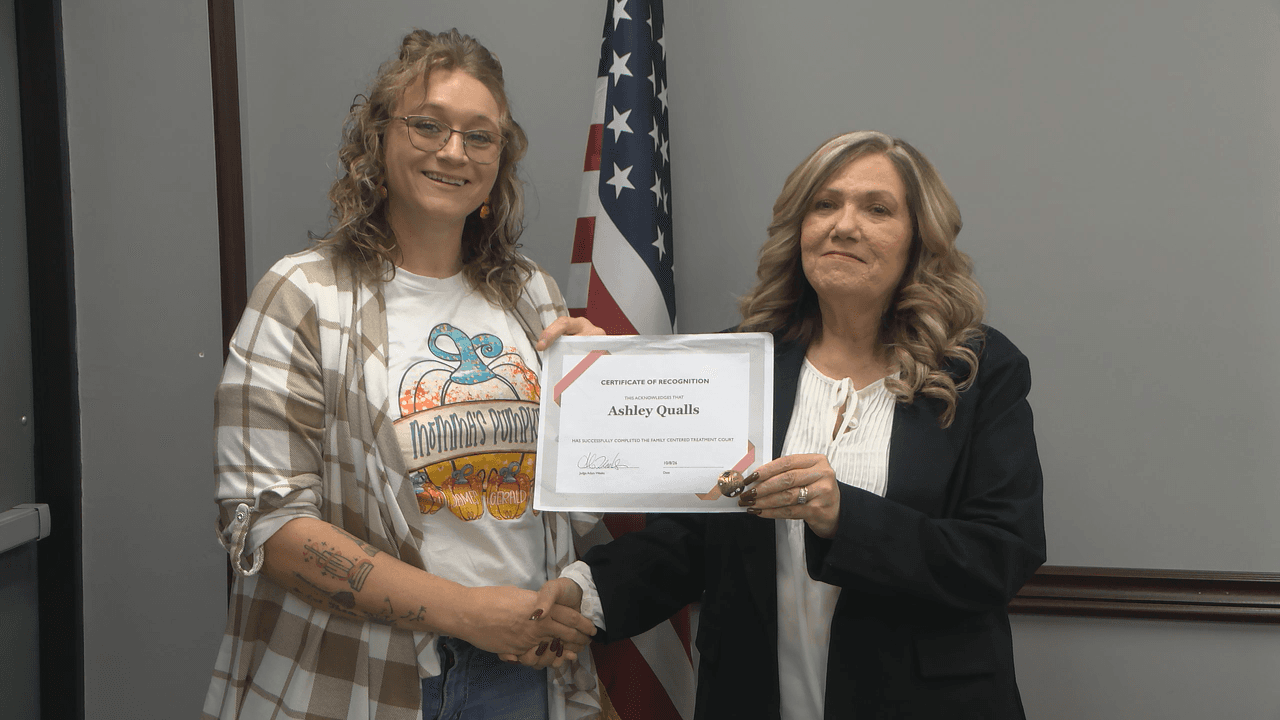
A Sharp County mother battling methamphetamine addiction graduated last week from the Family Center Treatment Court (FCTC), a program she credits with transforming her life.
Ashley Qualls was referred to the FCTC two years ago. Unlike conventional drug courts, FCTC emphasizes treatment over punishment, focusing on rehabilitation in a supportive environment.
“Drugs were more important,” Qualls admitted. “My addiction was more important than my sobriety. It was easier to get in trouble than to do right.”
Kim Lavespere, the FCTC coordinator, explained that the program uses a collaborative, non-judgmental approach. “We do not judge the participant,” Lavespere said. “We brainstorm and try to put a plan in place that’s going to help them get back on track.”
Participants meet weekly at the Sharp County Courthouse and complete the program in four phases. These include orientation, maintaining initial sobriety, achieving sustained sobriety while rebuilding their lives, and finally mentoring new participants.
For Qualls, staying committed wasn’t easy. She dropped out at one point, struggling to believe in the program’s level of support. Even during her absence, court staff continued to check on her.
“Even though I dropped out, they still checked on me,” Qualls said. When relationships with friends, family, and colleagues began to strain under the weight of addiction, the decision to return became clear.
“Getting the ultimatum of getting your life straight or getting your kids taken for good,” she said. “That was it for me, you know?”
After rejoining the program, Qualls succeeded in completing its phases. Along the way, she reached the “100% club,” a milestone celebrating sobriety with small rewards.
“Usually, I get out early, which was one of my favorites because I’m impatient and don’t always like to sit in a courtroom,” she said, reflecting on moments of encouragement during recovery.
By the final phase, Qualls began mentoring others while achieving personal milestones, such as purchasing a new home. Last Thursday, she graduated from the program with pride.
“I’m smiling, for one,” Qualls said following her graduation. “I used to never smile, and I feel better about myself, healthier wise, inside and out. I just feel all around better.”
Qualls emphasized the importance of connection in her recovery, noting that building relationships within her community and utilizing available resources helped her confront both addiction and mental health challenges.