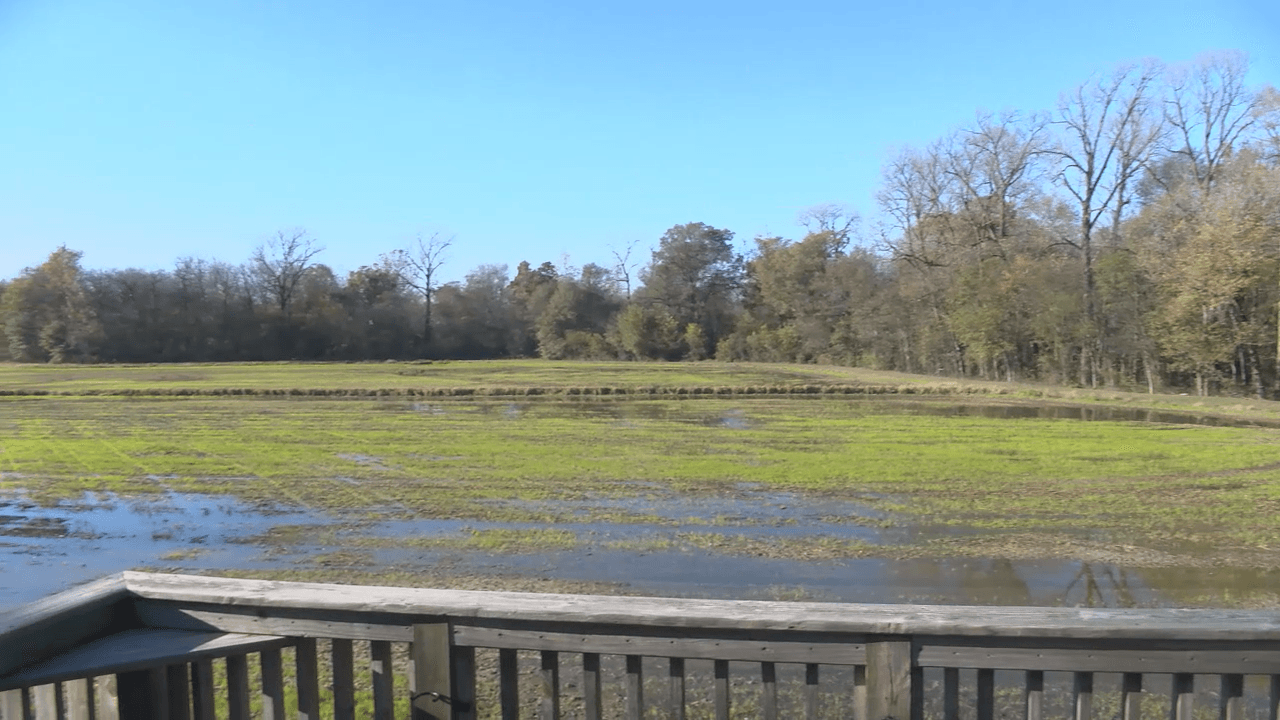
Dry conditions across Arkansas could leave hunters facing an uphill battle as the state's duck season nears. Experts warn that low water levels and reduced food availability may affect where waterfowl congregate this winter.
Trey Reid, assistant chief of communications for the Arkansas Game and Fish Commission (AGFC), said ongoing drought is impacting much of the state. "We are in various stages of drought, depending on where you are in Arkansas," Reid stated. "They’re waterfowl, and there is no bigger driver of duck abundance in Arkansas during the wintering period than water."
Local waterfowl habitats illustrate the challenge. At Stan Jones Mallard Lodge in Walnut Ridge, dwindling water levels have already reduced available wetland areas. Compounding the issue, rice production—a significant food source for ducks—has also declined this year.
Reid pointed to the longer-term scope of the problem, noting that the period from November 2025 through September 2026 was the driest 11-month stretch in Arkansas since 1895. "That really tells you how dry things have been," he said.
Efforts to manually flood wetlands are limited. Many areas rely on natural rainfall rather than surface water from lakes and rivers, which are also suffering from below-average levels. "There’s a misconception on the part of the public that there’s some magic button we can turn on and flood all these areas," Reid said. "They are largely rainfall-dependent."
Chris Buonanno, science and operations officer with the National Oceanic and Atmospheric Administration (NOAA), noted that drought conditions vary across the state. While the Missouri Bootheel has seen slightly more rainfall, northeast Arkansas remains in severe to extreme drought. Buonanno explained this regional difference as a "gradient" that NOAA plans to study further after the drought ends.
Statewide, considerable rainfall is needed to replenish water sources and improve habitat conditions. In the interim, hunters, private landowners, and AGFC staff are working to create flooded areas wherever feasible. However, such efforts may fall short without significant precipitation.
As preparations continue, officials are urging hunters to adjust their expectations. "Hunters, private landowners, and even us as Game and Fish are trying to provide those opportunities," Reid said. "It’s just very difficult right now because of the drought conditions."
The 2026 duck hunting season is scheduled to open soon, but the effects of Arkansas’s historic drought will likely play a significant role in shaping the season’s success. Hunters are reminded to plan accordingly.