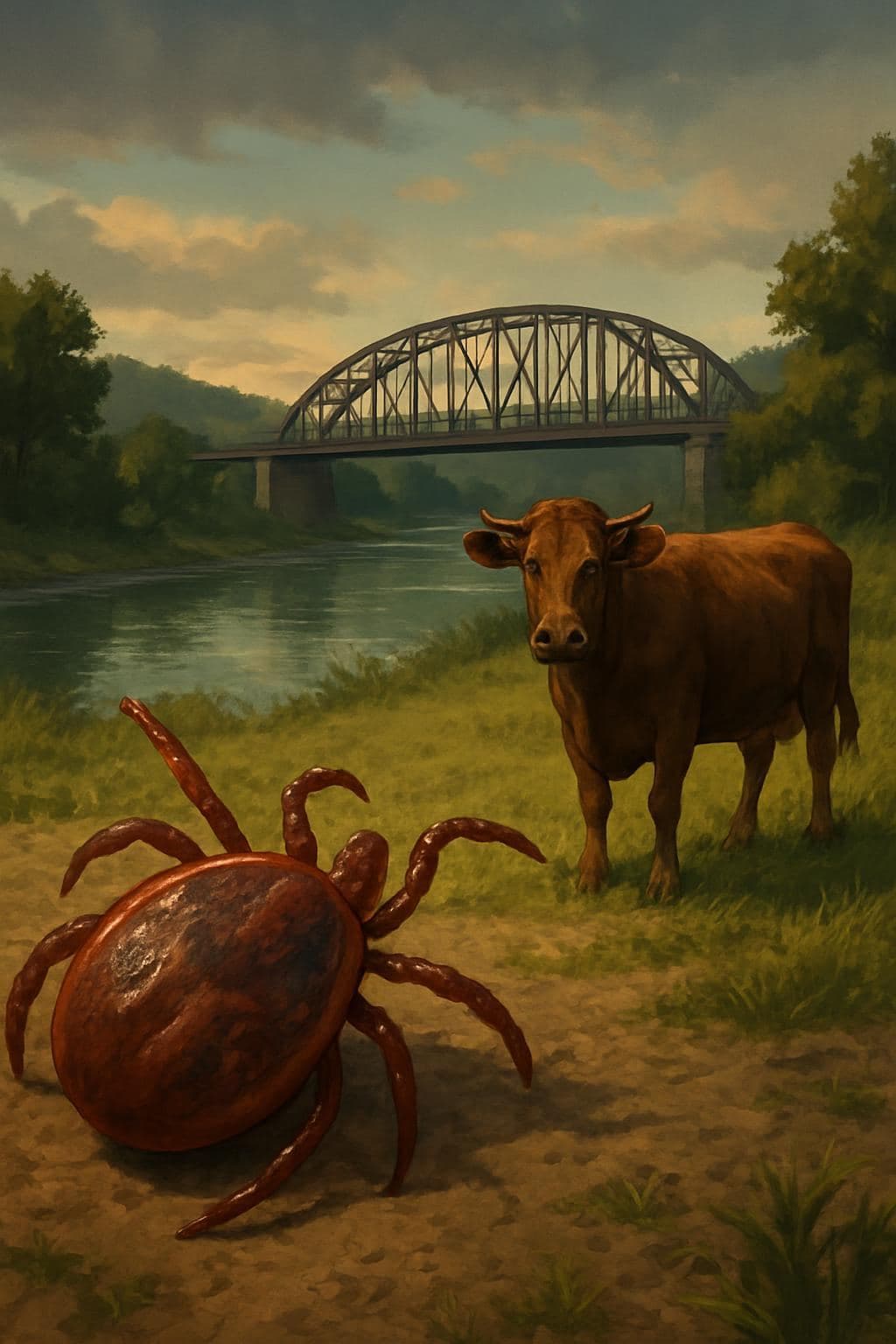
A dangerous parasite carried by the invasive long-horned tick is impacting cattle in 20 Arkansas counties, including Lawrence, Sharp, and Independence, according to Bryce Baldridge, agriculture agent with the Lawrence County Cooperative Extension Service.
The parasite, a blood-borne protozoal organism, was first detected in the United States approximately nine years ago. Since then, its spread has been largely silent, with infected cattle often showing no outward signs or symptoms. This can lead to livestock losses for producers who may not realize their herds are affected until it's too late.
“There is no approved treatment or vaccine available for this disease,” said Baldridge, emphasizing the seriousness of the threat.
To help prevent further transmission, the Arkansas Cooperative Extension Service recommends livestock producers take extra precautions. Suggestions include changing needles between cows and thoroughly sanitizing equipment after each use. These measures aim to reduce the risk of spreading the parasite within individual herds.
Producers in affected areas are urged to stay vigilant, monitor their livestock closely, and consult with extension agents if they suspect any issues.
The long-horned tick, an invasive species, continues to raise concerns across the region due to its role in spreading a variety of livestock-related diseases.