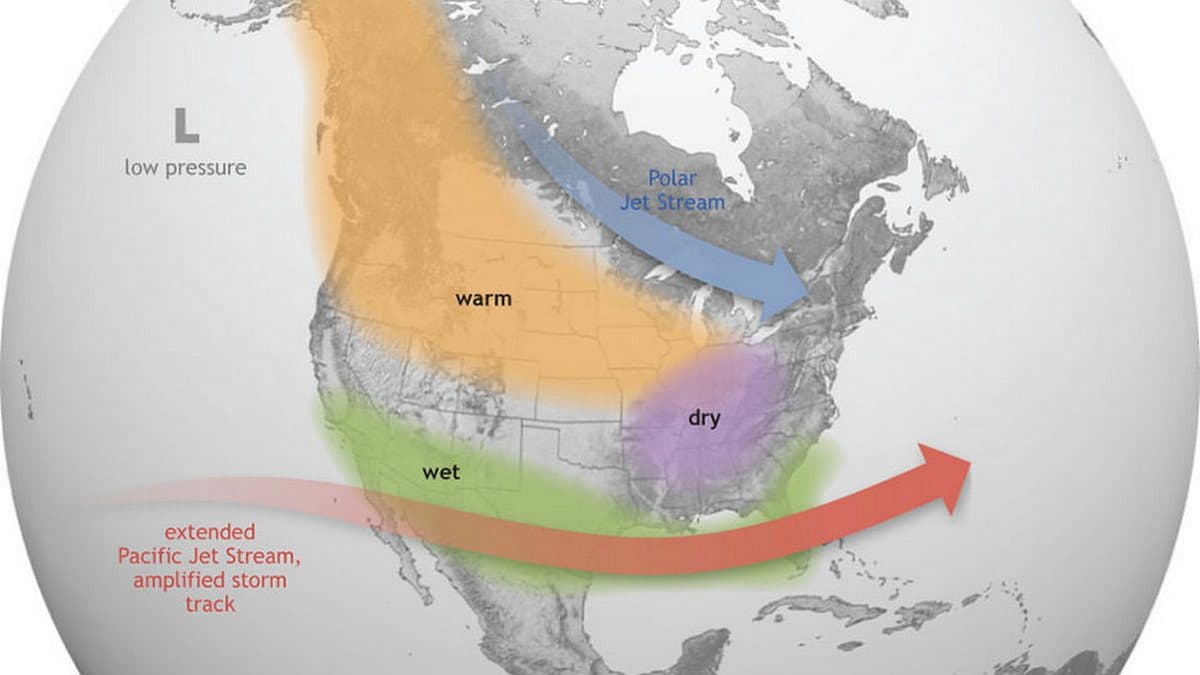
Meteorologists are closely monitoring a rapidly strengthening El Nino event in the Pacific Ocean that some scientists believe could become the strongest ever recorded. The National Weather Service (NWS) in North Little Rock has highlighted that the developing weather pattern could affect Arkansas this coming winter.
El Nino, which means "little boy" in Spanish, is a climatological phenomenon that disrupts normal trade wind patterns in the Pacific Ocean. During El Nino, trade winds weaken, pushing warm ocean waters eastward toward the west coast of the Americas and altering global weather patterns. While these events often peak in the winter months of the Northern Hemisphere, their impacts can vary widely depending on their intensity.
According to NOAA data, this year’s El Nino already features record-high water temperatures in its core region for the month of July, raising concerns that this warming trend may create significant ripple effects globally and locally. Analysts have referred to this event as a potential "Super El Nino" or "Godzilla El Nino."
Chris Buonanno, a meteorologist with the NWS in North Little Rock, explained that Arkansas weather is typically more influenced by La Nina conditions. However, with the current El Nino intensifying, a wetter-than-usual winter could be in store for the region. Historically, El Nino-driven weather patterns often cause wetter and stormier conditions in the U.S. Southeast, which can increase the risk of flooding in states like Arkansas.
"This could become the strongest El Nino we’ve seen on record," Buonanno noted. "These patterns primarily affect the winter months—December, January, and February—but the full extent of their impact on Arkansas remains to be seen."
El Nino events generally last between nine and 12 months, though they can sometimes persist for years, occurring every two to seven years on average. NOAA reports that El Nino episodes tend to occur more frequently than their counterpart, La Nina, which typically brings colder and drier conditions to the region.
As Arkansas residents prepare for the coming winter, meteorologists recommend keeping an eye on seasonal forecasts from the NWS. Updates on expected rainfall and potential storm activity will likely become available as the El Nino event progresses in the coming months.