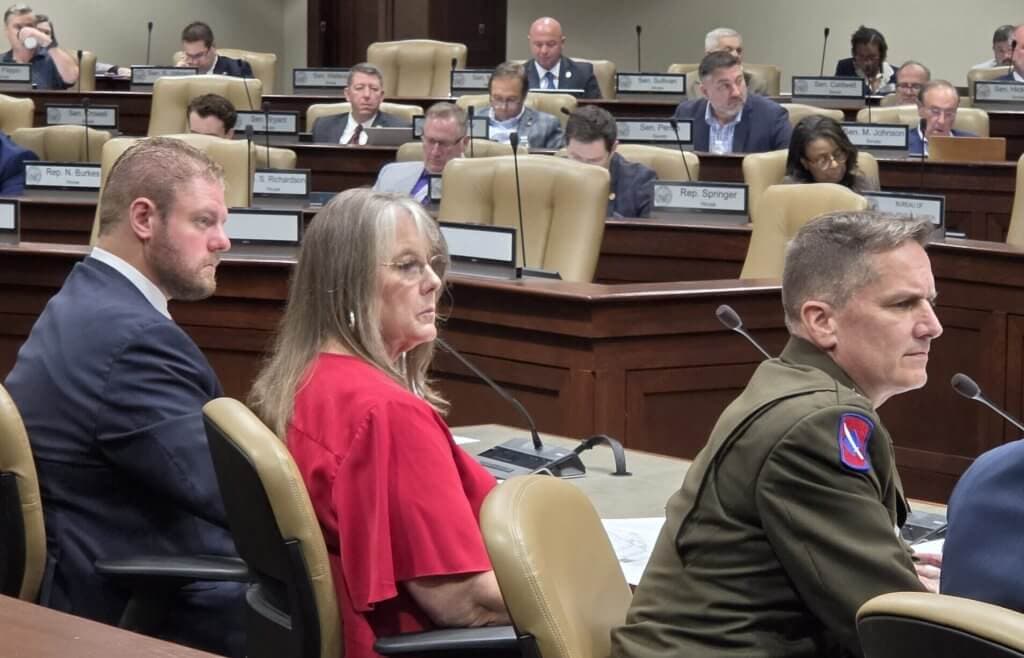
Arkansas lawmakers initiated a monthlong series of budget hearings on Tuesday, starting with proposals from the Department of Military and Department of Labor and Licensing. The Joint Budget Committee unanimously approved both agencies' budget recommendations, which will next advance to the full Legislature when its regular session begins in January.
The Department of Labor and Licensing's proposed budget drew particular attention for projecting significantly lower spending than the funding it requested. Daryl Bassett, the department's secretary, explained to legislators that the agency is aiming to streamline operations and cut unnecessary expenditures. "At the same time, though, we need to have a buffer just in case something happens," Bassett said.
This emphasis on fiscal restraint aligns with Republican Gov. Sarah Huckabee Sanders' directive from June for cabinet officials to collaborate on cost-cutting across state departments. Over the past five years, Arkansas lawmakers have enacted five rounds of cuts to individual and corporate income taxes.
The Department of Military's budget proposal, presented Tuesday by top officials including Arkansas National Guard Deputy Adjutant General Jeff Wood and budget analyst Blake Smith, includes a request for $118 million in annual funding for fiscal years 2028 and 2029. This marks an $11 million increase over the current fiscal year's budget.
Arkansas concluded fiscal year 2026 with a $655 million surplus and approximately $4 billion in reserves. Gov. Sanders is set to reveal her proposed 2027 balanced budget in November. Notable features of the current year's $6.7 billion state budget include a $139 million plan to raise pay for correctional officers, social services staff, and other hard-to-fill state positions in a bid to improve retention and match private-sector salaries.
The labor department projects an annual $4 million increase in expenditures over the next two fiscal years due to pay plan adjustments that include raising salaries and benefits by up to 3% annually, according to its chief financial officer, Tyler Cain.
The Joint Budget Committee will meet three times weekly through early November to review budget proposals from state agencies. On Wednesday, lawmakers are scheduled to hear from the Arkansas Department of Health and the Department of Parks, Heritage, and Tourism. Other agencies, including commissions on ethics, judicial discipline, elections, and public defense, will present proposals Thursday. Larger departments, like Education and Human Services, will follow later in the month.
The Department of Education’s budget, to be reviewed on October 28, is expected to prompt questions from lawmakers regarding increases in school voucher program costs. The program, a centerpiece of Sanders' administration since its creation in 2023, became available to all students for the 2025-26 school year.
The Department of Human Services (DHS) is slated to present its budget on October 29 amid lingering uncertainty about the future of Arkansas’ Medicaid expansion program. In July, the federal Centers for Medicare and Medicaid Services verbally declined to renew the state’s expansion program. DHS requested a two-year grace period in August to transition to a new Medicaid model but has yet to receive a formal response.
Additionally, DHS faces pressure from rising administrative costs tied to federally funded food assistance programs. A U.S. Department of Agriculture budget overhaul for 2025 is expected to raise the state's Supplemental Nutrition Assistance Program (SNAP) expenditures by $24 million. Advocates have expressed concerns about whether DHS, which did not receive an increased budget for fiscal year 2026, is sufficiently resourced to meet these demands.
The budget hearings will conclude in November, with the Joint Budget Committee's recommendations shaping legislative debates early next year, as fiscal policy remains a top priority in the run-up to the 2024 election cycle.