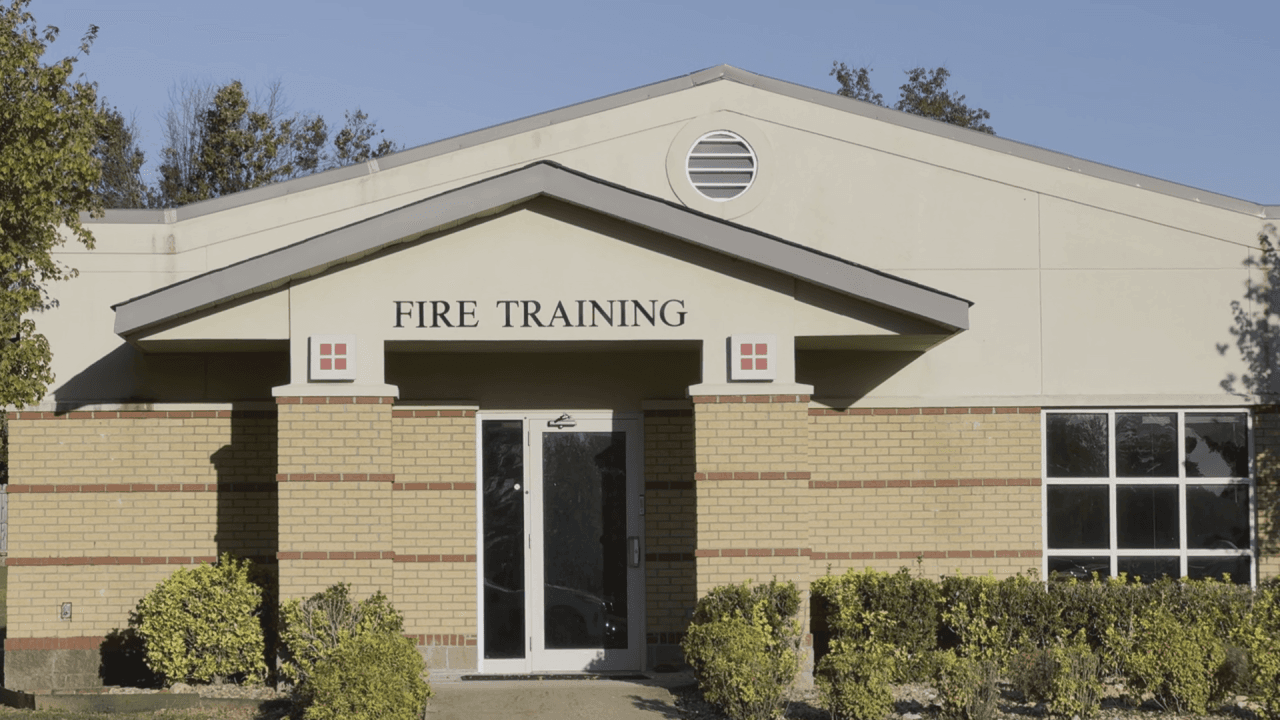
The University of Arkansas Community College at Batesville (UACCB) has introduced its first firefighter training rookie school, aiming to make it easier for volunteer firefighters in the region to receive professional training.
Developed in partnership with the White River Firefighter Training Association, local fire departments, and the Arkansas Fire Training Academy in Camden, the program provides a state-accredited curriculum without requiring participants to travel hours away. For 38 weeks, students meet twice a week to complete coursework identical to that offered in Camden.
UACCB Provost Zach Perrine said the initiative has met significant interest in its inaugural run. “Within the first registration period, which was actually less than a month, we were able to get 19 out of 20 seats filled,” Perrine said. “Already, we are seeing this is going to be a tremendous success and one that other areas are looking at emulating.”
The idea for the program came from discussions about how to bring state-certified training closer to home. “This is the state program,” Perrine said, explaining that the partnership with the Arkansas Fire Training Academy allows participants to receive premier training locally. “So it’s really exciting for us to be able to be like a resource for our local firefighters.”
Lead instructor Robert Beel, a firefighter from Searcy, said students will learn all the skills necessary to respond to emergencies. “From the intro to the structure to fire four and everything in between, our curriculum is the exact same as the academy’s,” Beel explained. He added that staging the program locally accommodates the busy lives of participants. “The benefit right now is you can still keep your full-time job and be able to become a certified firefighter.”
Each of the students attending the program was sponsored by a fire department. Batesville Fire Department Chief Mark McCollum emphasized the essential role volunteers play, especially in rural communities. “Volunteers are instrumental in people’s safety, and they fight every kind of fire in the world,” McCollum said. “They fight woods fires, they fight house fires, everything. They back the ambulance service up on heart attacks, strokes, wrecks, MVAs; they do all that.”
Organizers hope the class will bolster the ranks of volunteer firefighters across the area while reducing training barriers. Perrine indicated there is already interest in running the program again next year. For now, this year’s cohort will complete its training by attending twice-weekly sessions until the 38-week program concludes.
The partnership reflects a broader effort to support rural fire departments and improve accessibility to state-certified training, ensuring that communities are protected by skilled first responders.