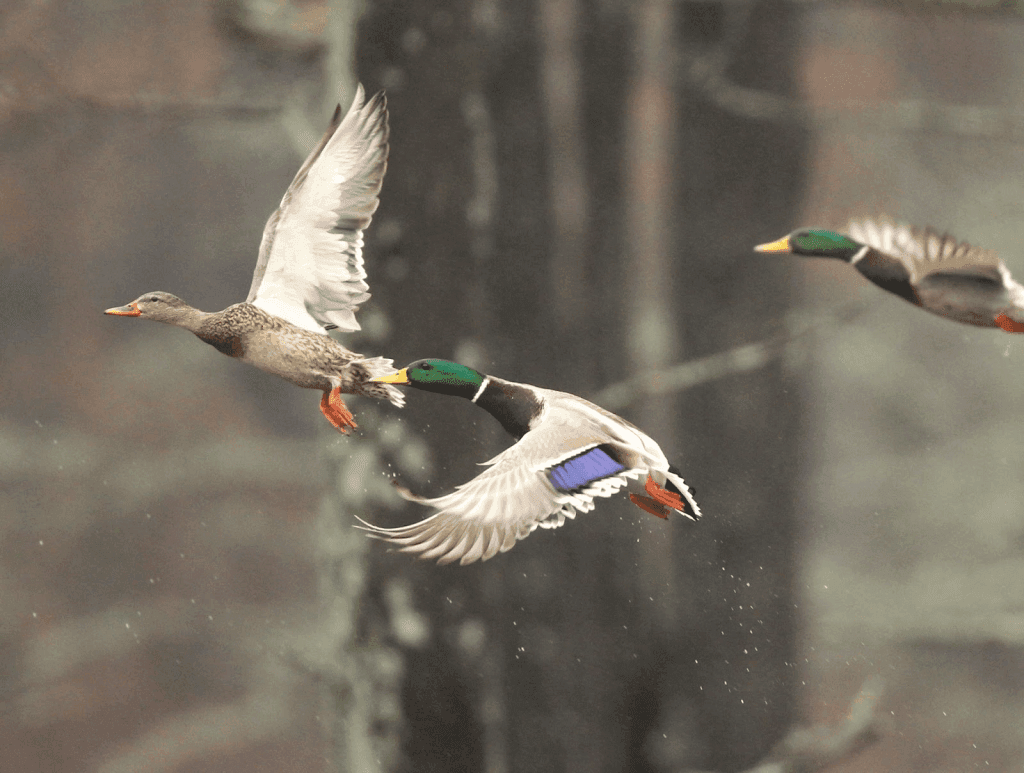
Arkansas duck hunters are gearing up for a season with tempered expectations as drought conditions persist and waterfowl populations show mixed results, according to experts and recent surveys.
The U.S. Fish and Wildlife Service’s 2026 Waterfowl Breeding and Population Survey indicated slight improvements in breeding habitat conditions within the Prairie Pothole Region, which includes Canada and parts of the northern United States. This area is responsible for producing the majority of ducks that migrate to Arkansas each winter. The survey found an estimated 4.8 million May ponds, up from last year’s figure but still 9% below the long-term average. Brett Leach, Waterfowl Program Coordinator with the Arkansas Game and Fish Commission (AGFC), said this increase reflects habitat conditions improving from poor to fair, though the region remains below historic averages.
While habitat improvements may boost duck production slightly, population numbers tell a mixed story. Mallard populations declined 11% from last year to 5.9 million, marking the lowest spring count in the Prairie Pothole Region since 1993. This figure is also 26% below the long-term average and roughly half of what it was less than a decade ago. Other duck species, including gadwall, American wigeon, green-winged teal, and northern pintail, showed similar or slightly lower counts than last year, with pintails in particular struggling at 48% below their long-term average. Conversely, northern shovelers saw a 19% increase over last year’s numbers, sitting 24% above their long-term average.
“While breeding duck populations other than mallards remain similar to last year, the improvements in breeding habitat in Prairie Canada may offer a boost in production, adding a few more total ducks to the fall flight over last year,” Leach explained.
Even with potential gains in duck populations, Arkansas hunters face significant challenges on the ground. Persistent drought has left surface water levels critically low across much of the state. The U.S. Drought Monitor predicts that dry conditions will continue through at least November, with drought extending across Arkansas, Oklahoma, northern Texas, and parts of Missouri. While the National Weather Service’s seasonal forecast suggests potential for above-average precipitation from November through January, rainfall is not expected to arrive soon enough to flood the traditional hunting areas needed for early-season success.
“Conditions across the landscape during winter play a critical role in how many birds remain in Arkansas during the hunting season,” Leach noted, adding that sufficient water provides ducks with the energy and nutrition necessary to sustain their migrations.
Arkansas is entering its 14th consecutive month of drought, leaving much of the state’s wetland habitat dry or inaccessible for waterfowl. Hunters are left waiting for significant rain to improve conditions, a challenge familiar to recent years. In 2025, dry weather persisted until mid-December, and last year saw drought conditions stretch into January. Despite a wet spring earlier in 2026, rainfall has been sparse throughout the summer and early fall, which are typically among the driest periods of the year.
For now, the absence of rain limits the ability to flood many of Arkansas’s traditional hunting areas, such as those in the Mississippi Alluvial Plain and Arkansas River Valley. Hunters will be watching the skies and listening for weather updates in the hope that November’s forecasted precipitation will begin to replenish the state’s dry landscape.