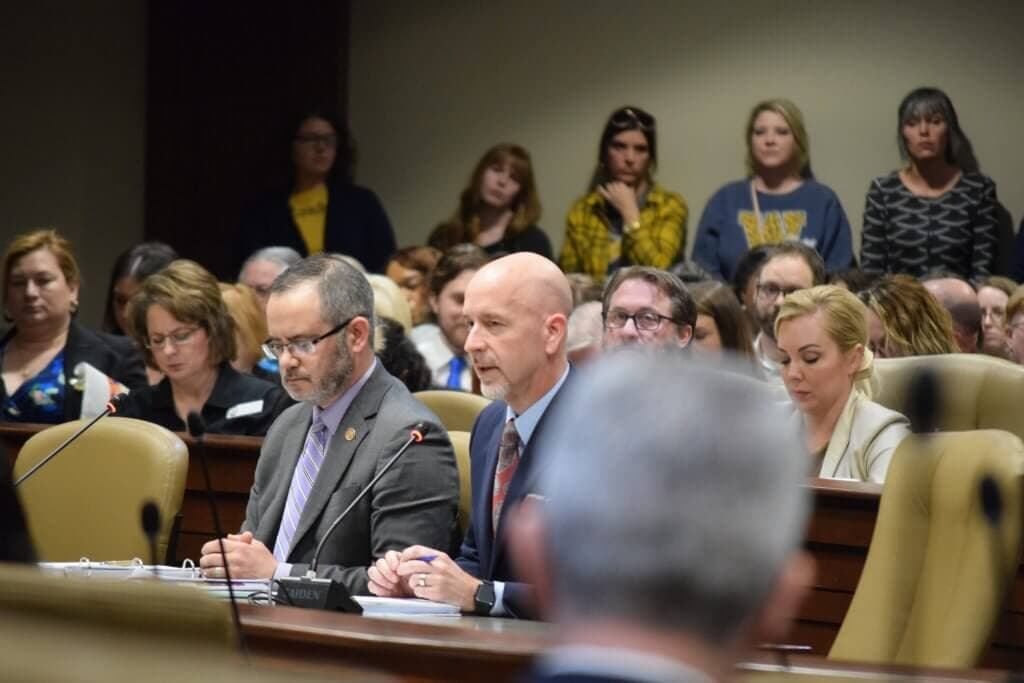
Arkansas legislators are proposing a more than 2% increase in per-student public school funding over the next two years, according to recommendations approved by the Joint Education Committee this week. The new rates, set for review in the upcoming legislative session, aim to raise current funding levels from $8,037 per student to $8,239 for the 2024–2025 school year and $8,431 the year after.
The recommendations, finalized following the committee’s months-long adequacy study, fulfill a state-law mandate requiring the Legislature to assess and propose the funding necessary to provide an adequate and equitable education to all Arkansas students. These proposals must be submitted to House and Senate leadership by November 1 in preparation for the session scheduled to begin in January.
Committee co-chair Rep. Keith Brooks, a Republican from Little Rock, highlighted key allocations in the recommendations, including an additional $1,000 per student in kindergarten through third grade for dyslexia intervention programs. This provision represents approximately $26 million in new spending for the 2024–2025 fiscal year. Additionally, $14 million has been designated to support students with high-cost special education needs. According to the Arkansas Department of Education, this funding addresses cases where costs for services required by Individualized Education Programs exceed what is typical for special education. Combined, these special needs allocations total around $40 million in new spending for the upcoming year.
“These recommendations are among the strongest this committee has produced in the history of the adequacy study,” Brooks said. “We’ve prioritized special needs funding with significant dedicated support, reflecting the importance of this issue.”
While several lawmakers praised the proposed funding increases, concerns were raised about the pace of the decision-making process. Republican Rep. Julie Mayberry expressed frustration over the limited time available to review and discuss the recommendations before Monday’s vote.
“I’m very happy to see a lot of the things that are in here, I really am,” Mayberry said. “I just wish that we had a little bit more overall discussion because I don’t think this committee has had that chance to have those discussions.”
In response, Rep. Stephen Meeks, a Greenbrier Republican and senior committee member, noted that these recommendations serve as the foundation for drafting legislation. Meeks assured members that there would be opportunities to revisit and debate funding amounts when the session opens in January.
Brooks confirmed his intention to introduce a bill incorporating the committee’s proposed funding levels next year. The adequacy study and its recommendations stem from requirements set in place after school funding litigation, ensuring the state complies with its obligation to provide equitable education funding.