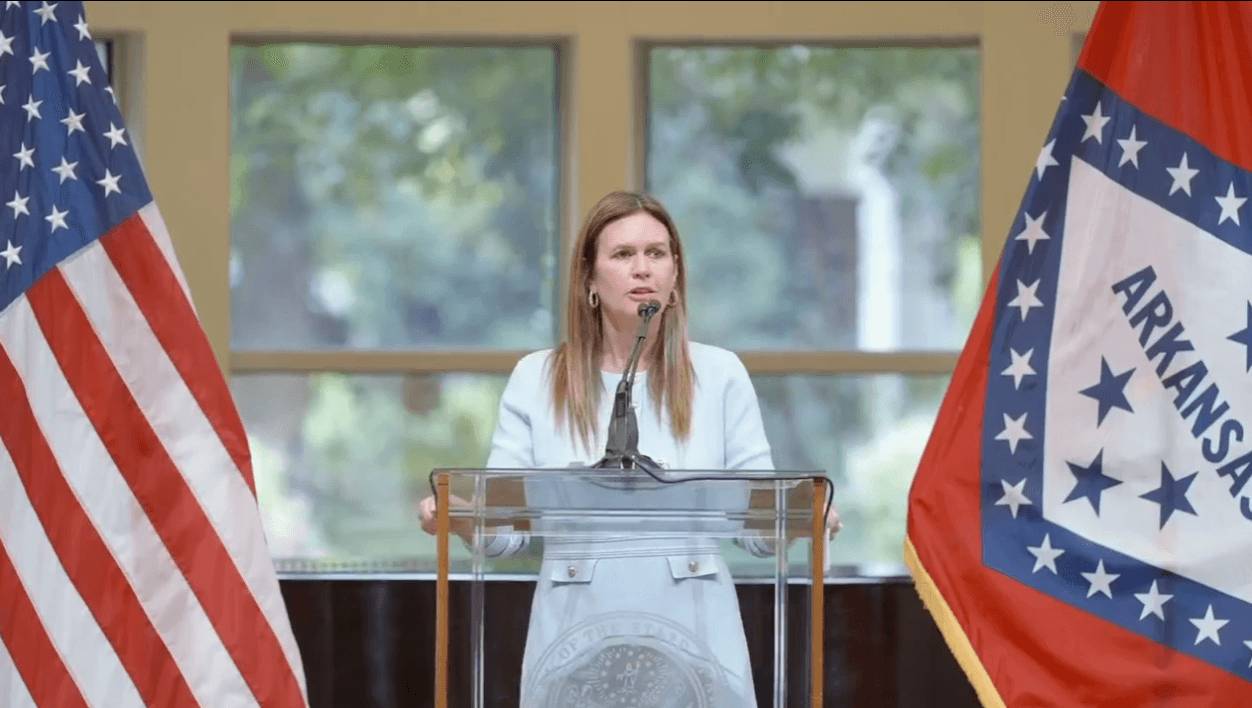
A campaign video from Arkansas Gov. Sarah Huckabee Sanders has drawn criticism from some conservative commentators for its portrayal of a Medicaid recipient in new messaging promoting stricter state rules for the program. The ad features a character named Brad, depicted as an unemployed, junk food-eating gamer, and was part of Sanders' campaign for her upcoming reelection.
The video’s intent was to advocate for tougher work requirements for Medicaid recipients, with Sanders emphasizing that able-bodied Arkansans should work rather than rely on taxpayer-funded healthcare. However, some on the right criticized the ad's choice of a white recipient as the focal character, arguing it ignored longstanding racial stereotypes about public assistance.
Conservative commentator Matt Walsh expressed frustration on social media, writing, “Republicans don’t have the courage to do this ad with ‘Shaniqua’ as the villain, even though that would actually be an accurate portrayal of the problem at hand.” Similarly, Sean Davis, co-founder of the conservative website The Federalist, criticized the video, claiming it perpetuated discrimination against white men.
The backlash highlights the enduring use of racial tropes surrounding public assistance in political messaging and their hold on American discourse. Ange-Marie Hancock, a scholar and author with expertise in public sentiment around welfare programs, suggested the video may have been designed to appeal to older voters with unemployed adult children. However, critics focused on race, Hancock said, because narratives about lazy Black welfare recipients have shaped political rhetoric for decades.
Medicaid, created in 1965, serves as a joint federal and state health insurance program providing low-cost coverage for individuals with limited incomes, including the elderly, children, and adults with disabilities who cannot work. Data from the Arkansas Department of Human Services shows that around 60% of Medicaid recipients in the state are white, while approximately 18% are Black.
Barry Jefferson, president of the NAACP Arkansas State Conference, condemned the ad for reducing low-income residents, regardless of race, to harmful stereotypes. “We shouldn’t betray anyone because they are asking for help and they don’t meet your standards,” Jefferson stated.
Allison Butler, an author and cultural scholar, noted that the debate renews myths about people of color abusing public assistance programs. “When you deconstructed that narrative and actually tried to find the source, there was no widespread evidence to support it,” Butler said.
Governor Sanders has launched stricter work requirements for the Arkansas Health and Opportunity for Me (ARHOME) Medicaid program, mandating healthy adults aged 19 to 64 work, volunteer, or attend school for at least 80 hours per month to maintain coverage. These requirements align with a greater push in Republican-led states to curb fraud in public assistance programs. Jordan Powell, Sanders’ campaign manager, defended the governor’s stance and the ad itself, stating, “We should never confiscate money from hard-working Arkansans to give it away to those who simply choose not to work at all.”
While some commentators suggested the ad would have been more effective with different racial imagery, others condemned such suggestions as overtly racist. Robert Coon, a political strategist with experience in Arkansas, remarked, “Suggestions that the character should have been Black are not just inaccurate but overtly racist.”
State data highlights enduring disparities within social programs. Though Black people represent a smaller portion of public assistance beneficiaries than whites overall, they remain disproportionately represented when compared to their share of the population due to the lasting effects of structural inequity. Research shows that Black Americans make up 18.5% of Medicaid beneficiaries nationally, in a program where whites are the majority overall.
Chris Jones, a Democratic congressional candidate from Arkansas, underscored the broader issue at stake, emphasizing that public assistance programs address systemic challenges. “A welfare recipient is not looking for a way out of work but for a way forward,” Jones said, noting that the focus should be on why so many hardworking people still find it difficult to meet basic needs like healthcare, food, and housing.