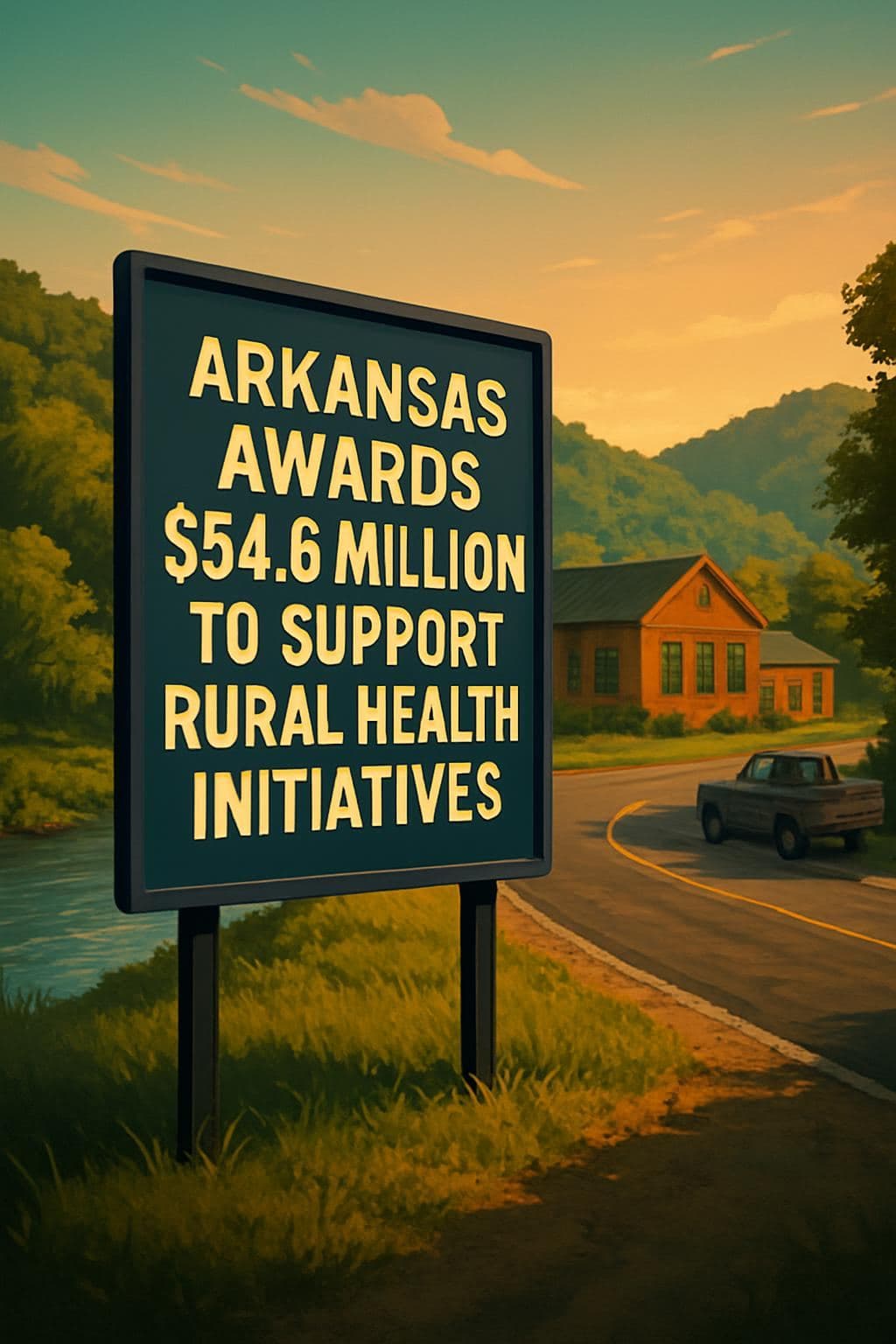
Governor Sarah Huckabee Sanders has announced $54.6 million in funding awards from the second round of the Rural Health Transformation Program grants. Over the next five years, Arkansas is expected to receive approximately $1 billion in rural health transformation funding to bolster healthcare services statewide, according to the Arkansas Department of Finance and Administration. Every county in the state is projected to benefit from these initiatives.
Several regional projects were highlighted in this latest round of grants. White River Health's Year One RISE Initiatives, targeting Sharp, Independence, Stone, and Jackson counties, will receive $2.1 million for 13 projects aimed at improving recruitment, workforce training, retention, and career development in healthcare.
St. Bernards Development Foundation has been allocated $3.8 million for its Rural Care Workforce Network. This initiative will serve Lawrence, Randolph, Craighead, and Cross counties, with a focus on integrating clinic simulation training and leadership development to strengthen healthcare delivery in these areas.
The University of Arkansas for Medical Sciences (UAMS) will use $500,036 in funds to enhance the training of family physicians serving Lawrence and Randolph counties. Additionally, UAMS received $1.2 million for developing a regional telehealth hearing care network to benefit Fulton, Lawrence, Sharp, and Randolph counties.
The Baxter Health Thrive at Home Initiative, serving Fulton, Izard, Baxter, and Marion counties, has been awarded $7.7 million. This funding will be dedicated to deploying emergency response equipment and remote patient monitoring technology to enhance healthcare access in these rural communities.
In total, Fulton, Izard, Sharp, and Lawrence counties will collectively receive over $22.2 million in overlapping regional allocations for various rural health improvements.
Governor Sanders emphasized the importance of these investments, stating they represent a significant step toward addressing healthcare disparities in rural Arkansas communities. Specific timelines and further project details are expected to be announced as program implementation progresses.