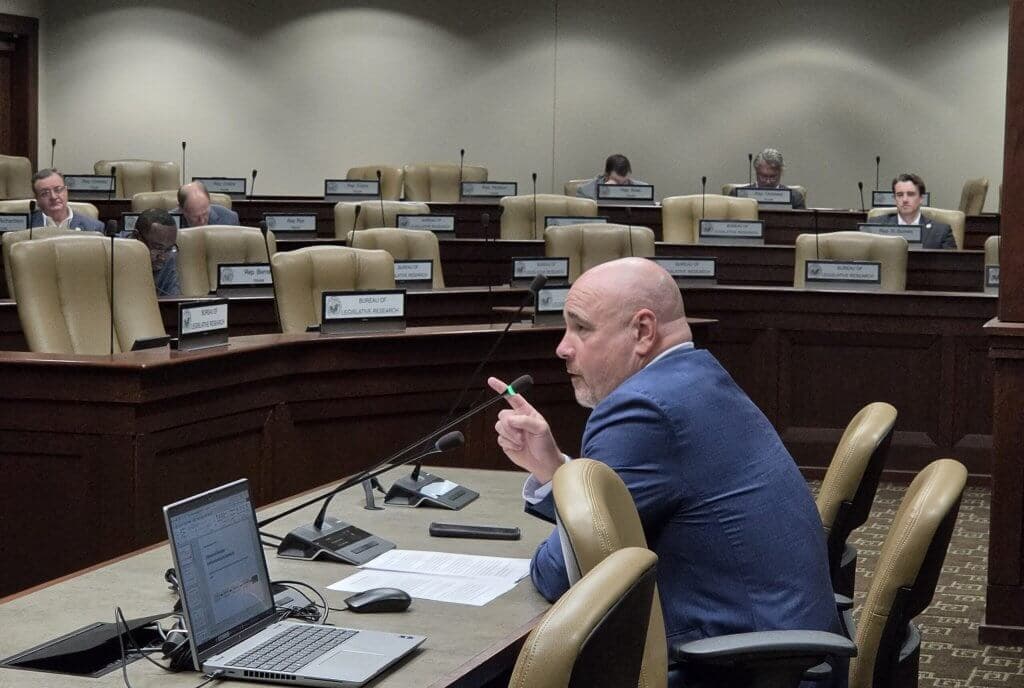
Arkansas lawmakers and criminal justice reform advocates emphasized on Wednesday that addressing reentry programs for incarcerated individuals could significantly reduce the state’s persistent prison overcrowding problem.
Currently, Arkansas correctional facilities house 16,804 inmates despite having a capacity of just 15,362 beds, according to data as of September 1. The overflow has left county jails grappling with the burden of housing individuals awaiting state prison beds. “We also need to examine what happens before someone reaches those prison beds,” said Marybeth Hill, an event coordinator with the ARCHway Institute, a Florida-based organization specializing in substance use treatment. Hill, who spoke during a legislative hearing on prisons held by the House and Senate judiciary committees, cautioned that public health crises cannot be solved through incarceration alone. Hill credited her recovery from drug-related charges to a blend of support systems, substance treatment, and accountability measures.
The prevalence of drugs within prison facilities was also a focal point of discussion. Jarad Harper, executive director of the Clarksville-based Shackle Free Ministries, called attention to the need for stronger measures against the distribution of drugs behind bars, including potential involvement by corrections staff. State Senator Mark Johnson of Ferndale supported tougher penalties for employees found complicit in such activities, highlighting their role in compounding the issue.
The hearing comes as the state explores alternatives to alleviate its prison system's strain after Governor Sarah Huckabee Sanders' proposal to construct a new 3,000-bed facility in Franklin County met legislative resistance. Committees on prison policy are conducting a series of meetings to evaluate solutions.
Former state legislator Jeremy Hutchinson, who served two years in federal prison for bribery and tax charges, also shared reform proposals at the hearing. Representing Unify.US, a criminal justice reform organization, Hutchinson suggested allowing nonviolent offenders aged 60 or older to serve their sentences under home confinement, which he claimed could reduce healthcare costs for the Arkansas Department of Corrections.
Hutchinson further proposed automatic expungement of nonviolent criminal records after inmates complete their sentences. He argued that lingering criminal records hinder employment and housing opportunities, increasing the likelihood of reoffending—the main driver of Arkansas' rising prison population. The state's recidivism rate reflects violations of release terms or new convictions within three years of an inmate's release.
Another concept presented during the hearing focused on reentry programs designed to reduce repeat offenses. Sharon Garrett, executive director of Safe Haven Ministries, a nonprofit assisting formerly incarcerated women, proposed incentivizing such programs by requiring inmates to share the financial responsibility for their reentry process. Garrett estimated the state could save $1,870 per inmate in reentry program costs over 45 days, compared to traditional incarceration expenses. She added that longer commitments to these programs—up to a year—might be necessary to see meaningful changes among participants.
Garrett said, “I propose that we treat them with dignity, we make them stay longer, we inspire their vision, and we let them share in the cost of their journey.”
Arkansas' prison population is projected to grow under legislation passed earlier this year. The Protect Arkansas Act increases penalties for certain offenses, requiring longer sentences and stricter parole eligibility, which is expected to add nearly 2,900 inmates by 2040. Policymakers continue to weigh these dynamics against efforts that aim to offer cost-efficient, rehabilitative solutions for prisoners before and after release.