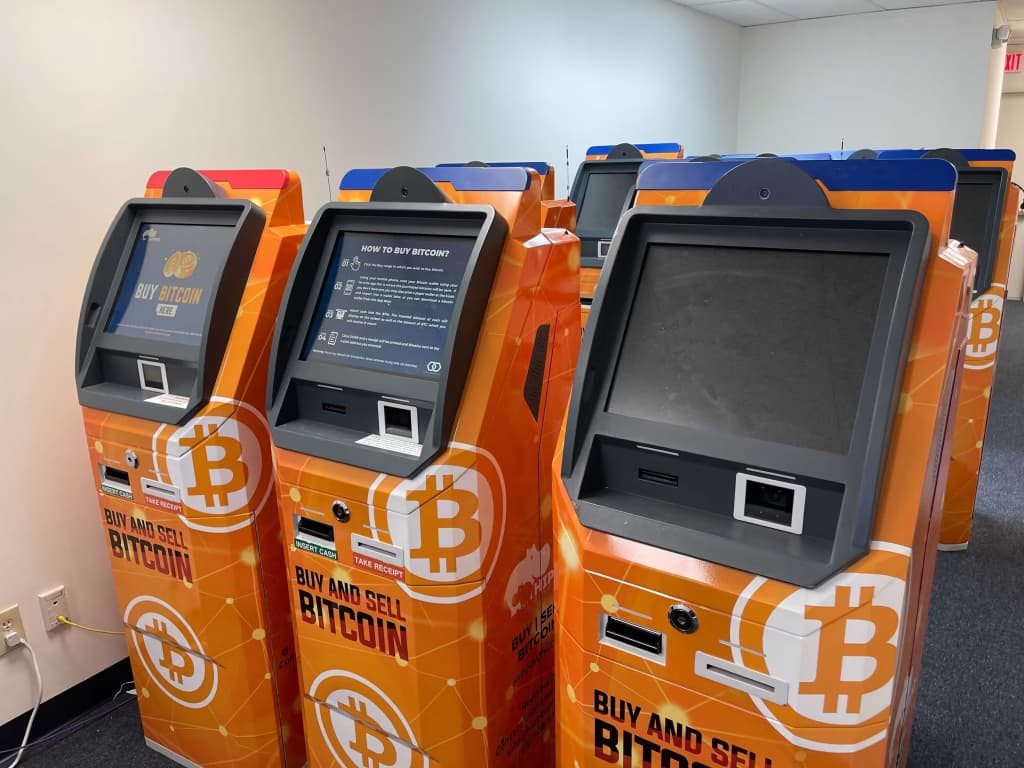
The Baxter County Quorum Court is set to consider an ordinance that would impose a one-year moratorium on cryptocurrency kiosks in unincorporated parts of the county. The ordinance, scheduled for its first reading on October 6 at 5:30 p.m. in the courthouse's second-floor courtroom, is sponsored by Justices of the Peace Rick Steiner, Maryanne Edge, and Cameron Davis. County Judge Kevin Litty will preside over the meeting.
Known as the Baxter County Virtual Currency Kiosk Moratorium Ordinance, the proposal seeks to address concerns over the machines' use in financial scams. Cryptocurrency kiosks, often referred to as Bitcoin ATMs, allow users to exchange cash for digital currency, which is deposited into a digital wallet. Once a transaction is complete, it cannot be reversed—a feature that, according to the ordinance, has made the kiosks a tool for scammers.
The proposal references 11 incidents of fraud linked to the kiosks in Baxter County over the past year. Statewide, Arkansans reported 102 complaints to the FBI’s Internet Crime Complaint Center (IC3) in 2025, with losses totaling $1.4 million. Nationwide, IC3 received more than 13,400 complaints involving cryptocurrency kiosks in the same year, reporting losses exceeding $388 million—a 23% increase in complaints and a 58% rise in losses compared to 2024. Over half of the national complaints came from individuals over 50, who collectively lost more than $302 million, according to the data.
The Federal Trade Commission (FTC) has also raised alarms about the kiosks. A September 2024 report noted that losses tied to the machines rose nearly tenfold between 2020 and 2023, surpassing $110 million in 2023. In the first half of 2024, the FTC reported a median loss of $10,000 per incident, with people over 60 more than three times as likely to fall victim.
The scams often follow similar patterns. Victims receive messages claiming their bank account is compromised, they owe money to the government, or face legal trouble for skipping jury duty. Impersonating officials from banks, technology companies, or federal agencies, scammers direct victims to withdraw cash and deposit it into a cryptocurrency kiosk. Using QR codes provided by the fraudsters, the funds are sent directly to the scammers' wallets.
Arkansas has already implemented regulations for cryptocurrency kiosks under Act 557 of 2025. These include transaction caps of $2,000 per day for new customers and $7,500 for existing ones, fee limits of $5 or 18% of the transaction (whichever is greater), and protections allowing new customers to claim refunds for fraudulent transactions under specific conditions. However, the proposed ordinance argues that these measures fall short, stating that scammers adapt to such regulations.
Some states have opted for outright bans. Indiana became the first to prohibit cryptocurrency kiosks in March 2026, followed by Tennessee in July and Minnesota in August. Vermont has also paused new installations while evaluating further action.
The proposed Baxter County moratorium would require all cryptocurrency kiosks in the county's unincorporated areas to cease operations immediately. Operators would need to disconnect the machines from power and the internet, with local law enforcement tasked with ensuring compliance. Violations could result in fines of $1,000 for a first offense, doubling for repeat offenses. Machines left running could incur additional fines of $500 per day. The ordinance also allows county officials to seek injunctions in circuit court if necessary.
The moratorium would not apply to cities within the county, such as Mountain Home, which would need to implement their own rules. During the one-year pause, the county plans to evaluate the feasibility of a kiosk permitting process, map their locations, monitor associated fraud reports, and assess whether state and federal regulations are sufficient. The ordinance also urges the Arkansas General Assembly to consider a statewide ban on the machines.
If approved, the moratorium would take effect immediately and remain in place for one year unless repealed earlier by the court.