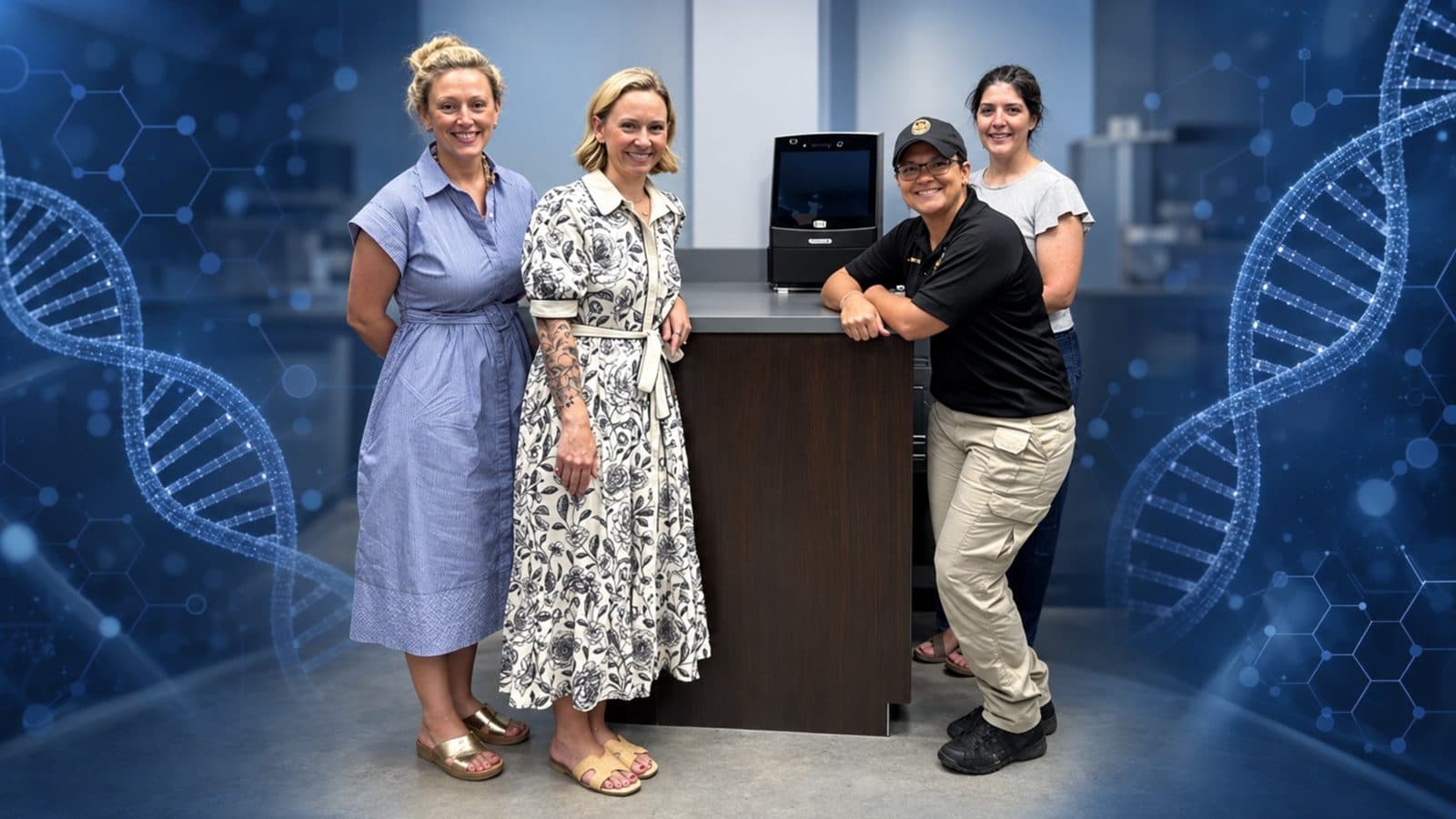
LITTLE ROCK, Ark. — The Arkansas State Crime Laboratory (ASCL) has launched Rapid DNA technology at participating booking stations, becoming the third state in the nation to deploy this advanced tool for law enforcement. The Saline County Detention Center in Benton began using the system on September 23, 2026, while preparations are underway in Faulkner County for future adoption.
Governor Sarah Huckabee Sanders praised the milestone, emphasizing the potential impact on public safety. “Arkansas is proud to be the third state in the entire nation to offer Rapid DNA technology to our law enforcement — and excited for the difference this will make in public safety,” Sanders said. She expressed gratitude to federal, state, and local collaborators for their role in the program’s development.
Rapid DNA is a fully automated process that can generate a DNA profile from a qualifying arrestee sample in about 90 minutes. Profiles are uploaded to the Combined DNA Index System (CODIS) for searches against crime-scene evidence. Initial searches target public-safety cases, with broader searches of eligible crime-scene profiles completed within 24 hours. Matches trigger immediate notification of booking and investigating agencies.
“This is an important public-safety milestone for Arkansas,” said Arkansas Public Safety Secretary Col. Mike Hagar. “Rapid DNA gives law enforcement a valuable investigative tool while maintaining strict standards for accuracy, privacy, training, and oversight.”
The program required extensive training and testing before the Federal Bureau of Investigation (FBI) authorized Arkansas to operate the system in the summer of 2026. Key personnel from the ASCL and the Saline County Sheriff’s Office played critical roles in meeting the technical and procedural standards necessary for approval.
ASCL Director Dr. Theodore Brown highlighted the practical benefits of the technology. “Rapid DNA can provide investigators with actionable information in hours rather than weeks or months,” Brown said. “That speed can be especially meaningful when a person may still be in custody, and investigators are working to identify connections to unsolved crimes.” He commended the collaboration among state and federal agencies, detention facilities, and technology providers that made the initiative possible.
Dr. Brown credited several individuals for contributing to the project’s success, including forensic scientists Miranda Crawford and Emma Knight, who helped turn the concept into an operational tool. Deputy Director of Scientific Operations Jennifer Beaty-West was recognized for her leadership in coordinating efforts to complete the launch.
Funding support from federal sources and the Arkansas Attorney General’s Office played a vital role in bringing the technology to the state. U.S. Senator John Boozman, who helped secure funding for the initiative, underscored its value for public safety. “This technology will allow investigators to confirm the identity of dangerous suspects more quickly, ultimately helping to keep more Arkansans safe,” Boozman stated.
Attorney General Tim Griffin also noted the Arkansas Crime Lab’s leadership in forensic science. “This new technology will significantly enhance the State’s ability to solve crimes and ensure justice is served,” Griffin said.
To maintain program integrity, detention-center personnel must undergo training and certification. All participating centers adhere strictly to Arkansas State Crime Laboratory and FBI policies, with all DNA samples and related data protected under state and federal confidentiality laws.