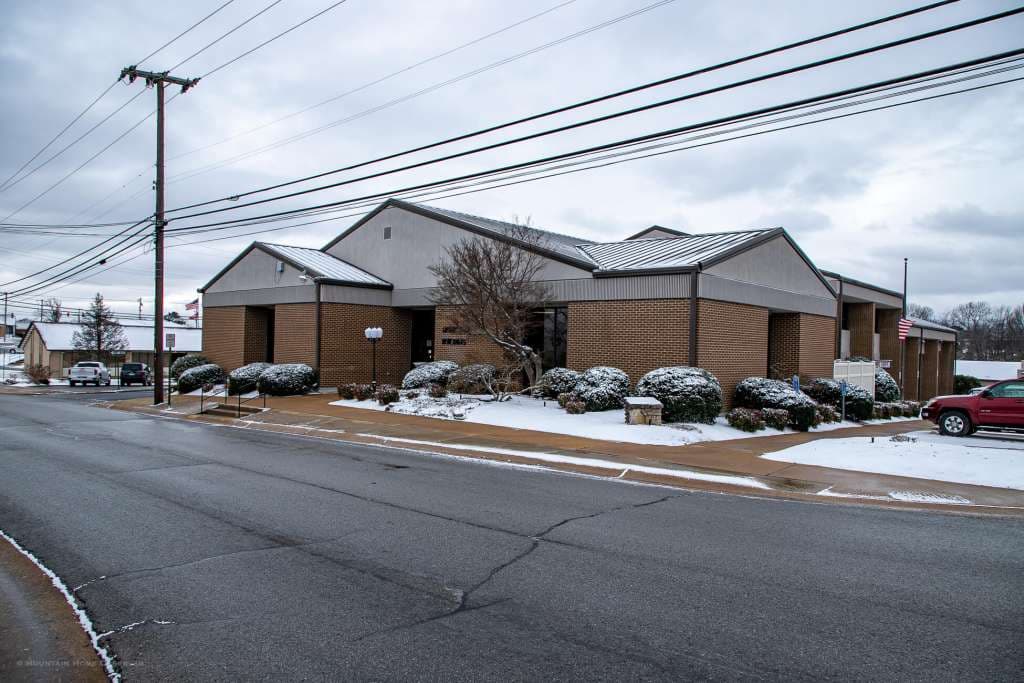
The city of Mountain Home has been collecting fees for various planning-related petitions for years without proper legal authorization, a recent inquiry revealed. The oversight came to light when the Building Department asked City Clerk Scott Liles to locate an official ordinance supporting the fees charged for lot splits, subdivision plats, and large-scale development plans. Liles informed the City Council during its September 17 meeting that no such documentation could be found.
Liles speculated that the fees were either never legislatively approved or were inadvertently removed during an overhaul of planning and engineering documents around 2006. To address the issue, Liles proposed an ordinance to formalize the fees and update them, in some cases significantly increasing the rates.
The draft ordinance states that fees for lot splits, zoning variances, subdivision plats, large-scale developments, and special Planning Commission meetings had been collected without being “prescribed by Ordinance.” It also outlines plans to raise several fees. Under the proposal, the cost for a lot split would rise from $15 to $40, a subdivision plat would increase from $75 to $200 (with an additional $5 for each lot over four), and large-scale development plan fees would jump from $25 to $200. Zoning variance fees and special Planning Commission meeting charges would remain unchanged at $20 and $100, respectively.
Fees for annexation, rezoning, and special use variances are unaffected, as those were formally established by ordinance in 1990 and updated earlier this year. They are set at $250, $200, and $200, respectively, under the new proposal.
Planning Director Arnold Knox emphasized that the city currently loses money on certain petitions, particularly subdivision plats, as they require reviews from several city departments, including Planning, Street, Water, and Fire, in addition to appearances before the Planning Commission and possibly the City Council. Liles said the revised fees were calculated with departmental workloads in mind and noted that inflation since 1990, when some fees were originally set, has substantially reduced their real value. For example, $1 in 1990 is equivalent to $2.57 today, according to a staff comparison sheet.
City Council members expressed concern about the magnitude of the proposed increases and requested a comparison with fees in similar cities before making any decisions. The ordinance underwent its first reading on September 17 and is slated for a potential second reading during the council’s 5 p.m. meeting on Thursday at City Hall, 720 Hickory Street. However, that discussion depends on whether Liles can obtain sufficient fee schedule data from other municipalities.
Liles, who spent last week at the Municipal Clerks Institute in North Little Rock, indicated in an email that he is still gathering the requested information. If his research is incomplete, the council will likely table the matter until its October 15 meeting. “I just hate to advance a bill without first providing for what the Council has asked for regarding said bill,” Liles wrote in his email announcement.
The proposed ordinance also aims to streamline city processes by consolidating all planning and council petition fees into a single legislative document. It designates the city clerk to receive annexation, rezoning, and special use variance petitions, while the Planning and Engineering Department’s office manager would handle other applications. All fees would be allocated to the city’s general fund.
Included in the draft is an emergency clause, which would make the changes effective immediately upon the ordinance’s passage, bypassing the usual 30-day waiting period for new laws to take effect.