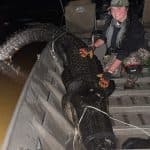
Arkansas alligator hunters harvested 150 alligators during the opening weekend of the 2026 season, held September 18–21, according to the Arkansas Game and Fish Commission (AGFC). The hunts took place across the state’s three alligator management zones, with most conducted on private land.
Zone 3, which covers southeastern Arkansas along the Mississippi River from Louisiana to Monroe County, accounted for the majority of the harvest with 90 alligators taken—81 on private land and nine with public land permits. In Zone 1, in the southwestern corner of the state, hunters harvested 56 alligators, 42 on private property and 14 on public lands. Zone 2, the state's largest management zone stretching from the Louisiana border to Pope County, saw a harvest of four alligators, all from private land.
A newly implemented quota for Millwood Lake in Zone 1 was reached during the first two nights of the hunt. As a result, that area will be closed for the season’s final hunting weekend, which runs from sunset September 25 to sunrise September 28. Amanda Bryant, AGFC's herpetologist, noted that the quota system was introduced in 2025 to encourage hunters to take their alligator earlier rather than holding out for a bigger catch. “Millwood Lake hunters took advantage of their first weekend this year and filled the quota during the first two nights of this year’s hunt,” Bryant said.
Most other areas remain open for the season's closing weekend. Hunters can check the AGFC’s website for updated harvest totals and availability in each management zone.
Public land hunters recorded the largest catches during the first weekend, with seven of the ten largest alligators coming from public hunts. Hannah Jester, hunting at Millwood Lake for her first season, tagged a 12-foot, 4-inch alligator weighing 448 pounds. Another hunter, Roger Alexander, also at Millwood, harvested an 11-foot, 2-inch alligator—though he later measured again and believes the length may have been slightly underestimated.
Arkansas’ alligator hunting program has its roots in conservation efforts. By the 1960s, the state’s alligator population was nearly extinct. Starting in 1972, biologists with the AGFC relocated 2,800 alligators from Louisiana to bolster the population, concentrating efforts in southern Arkansas and the Dale Bumpers White River National Wildlife Refuge. After years of recovery, hunting resumed in 2007 under a regulated framework to manage the now-thriving population. Last year’s record harvest of 205 alligators set a high bar for the program.
The AGFC continues to oversee the management of alligator populations with a focus on conservation and sustainable harvest practices.