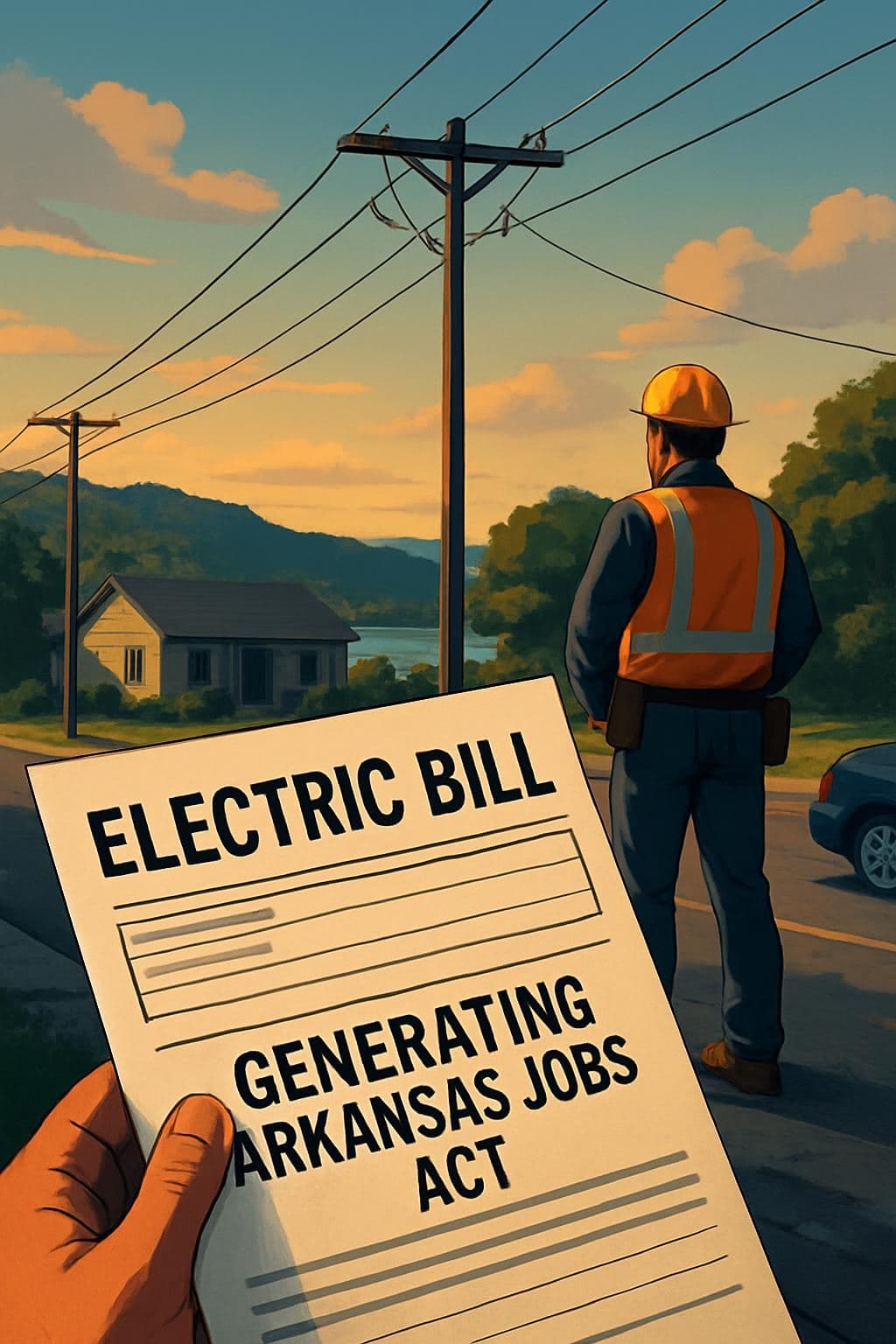
Many Arkansans may have noticed an increase in their electric bills earlier this year, attributed to the Generating Arkansas Jobs Act, also known as Act 373/Senate Bill 307. The legislation, signed into law by Governor Sarah Huckabee Sanders in March 2025, permits utilities to recover costs associated with constructing and financing new power plants before those plants begin operations.
The bill was supported by Entergy Arkansas, various electric cooperatives, and state economic officials as part of an effort to attract major power consumers such as AI-driven data centers and lithium processing facilities. Proponents argue that the legislation positions Arkansas to compete for energy-intensive industries, but critics have raised concerns about the financial burden shifted onto customers.
The Arkansas Senate passed the measure with 27 affirmative votes. Local elected officials Blake Johnson and Dan Sullivan were among those voting in favor. On the House side, 77 representatives approved the bill, with Representative Jack Ladyman of Craighead County serving as a co-sponsor; 13 representatives, including Fran Cavenaugh, opposed the measure. Local State Representative Bart Schulz did not cast a vote on the legislation.
Since spring 2026, customers have seen additional charges on their electric bills labeled under the Generating Arkansas Jobs Act. Entergy Arkansas bills, for example, identify the charge separately, making its impact visible to residents who are already grappling with rising costs of living.
Customers who are concerned about these additional charges are encouraged to contact their local legislators to share how the rate increases are affecting their households. Utility companies and lawmakers supporting the bill argue the costs are necessary for fostering economic growth, but the measure's impact on affordability for residents remains a key issue of debate.