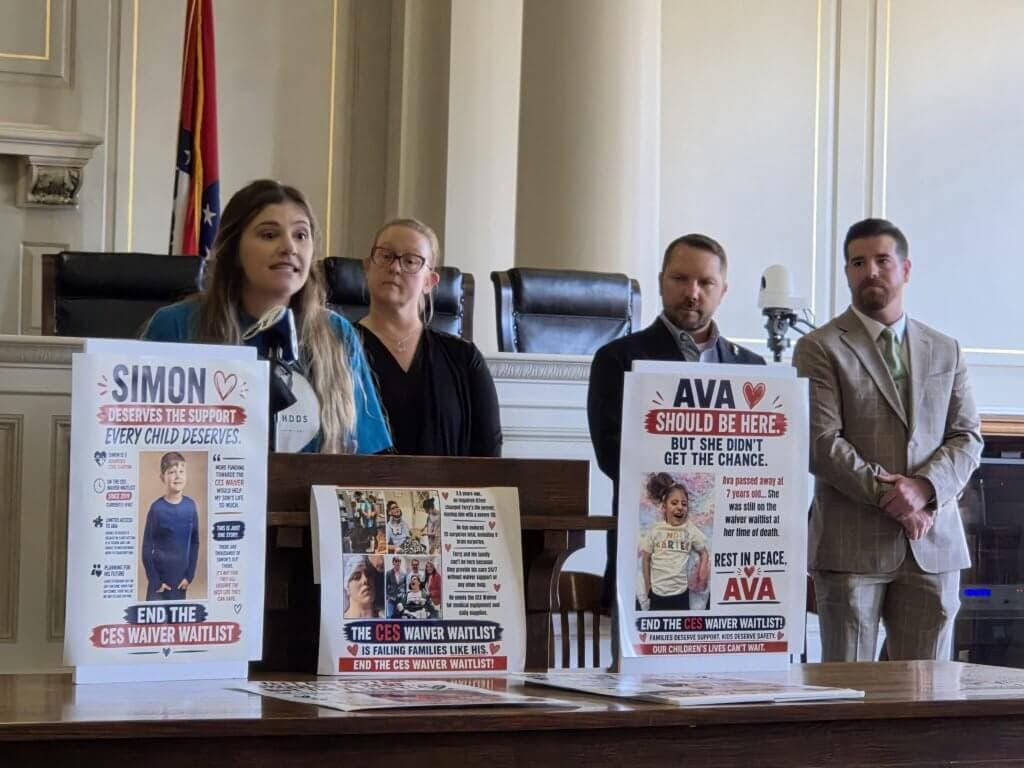
Families of children with disabilities gathered at the Arkansas Capitol on Wednesday, urging Governor Sarah Huckabee Sanders to take additional steps to address the state’s Medicaid waiver waiting list for supportive services. The rally took place in the Old Supreme Court room, with speakers highlighting the challenges faced by over 2,400 Arkansas families waiting for assistance.
The Medicaid waiver program offers critical support to children with complex medical and non-medical needs. While up to 8,233 individuals can receive services under the program, many families remain on a lengthy waiting list. Some spend years awaiting essential resources, including the program’s most requested option—supportive living services, or affordable in-home care for disabled individuals.
On Tuesday, Sanders announced that the Department of Human Services would begin providing supportive living services to some families on the waitlist starting in January. She estimated the initiative would cost the state’s managed-care Medicaid program approximately $17 million. Speaking on her behalf, spokesperson Sam Dubke said the administration “will continue to look at options to improve services across the state.”
Paige McCammon, a disability advocate whose son Turner lives with severe epilepsy and a neurodegenerative condition, acknowledged Sanders’ announcement as a positive step. McCammon said the effort was partly spurred by weeks of advocacy from parents sharing their stories online. “This was the moment Arkansas said, ‘Enough,’” McCammon said. “Governor Sanders, you have a huge opportunity to help us change that.”
Despite Sanders’ decision, some parents and advocates pressed for more immediate solutions, including a special legislative session to address the backlog. Tamerah Cooper, whose son Maceo has a neurodegenerative disorder, described the situation as urgent. “I speak for the children deteriorating while they wait,” Cooper said. “I speak for the caregivers who are not paid for the work they do, but they do it out of love.”
Families who eventually move off the waitlist gain access to reimbursement for in-home care, respite services, and essential equipment. However, the program’s financial structure has drawn criticism. Syard Evans, CEO of Arkansas Support Network, noted that reimbursement rates for Medicaid waiver services remain unchanged since 2018, despite rising costs. A study conducted by the Department of Human Services in 2022 found these services cost 23% more than what Medicaid insurers currently reimburse. Although the state is set to implement updated reimbursement rates on January 1, Evans expressed concern that delays may have already had lasting consequences. “We have seen colleagues close their waiver programs and stop providing supported living services,” Evans said.
Dr. Hannah Lewis, a pediatric neurologist, underscored the impact these systemic delays have on families. “I have seen parents lose jobs, go without sleep, and lose their financial security to pay for bills or stable housing,” Lewis said. “Their goal remains simple: to keep their child at home, where they are known, loved, and cared for by their family.”
Sanders’ administration follows that of former Governor Asa Hutchinson, who directed $37.6 million toward disability support services in 2021. At that time, more than 3,000 people were on the waiting list. By 2025, everyone on the list had been accommodated, but a new backlog emerged shortly thereafter.