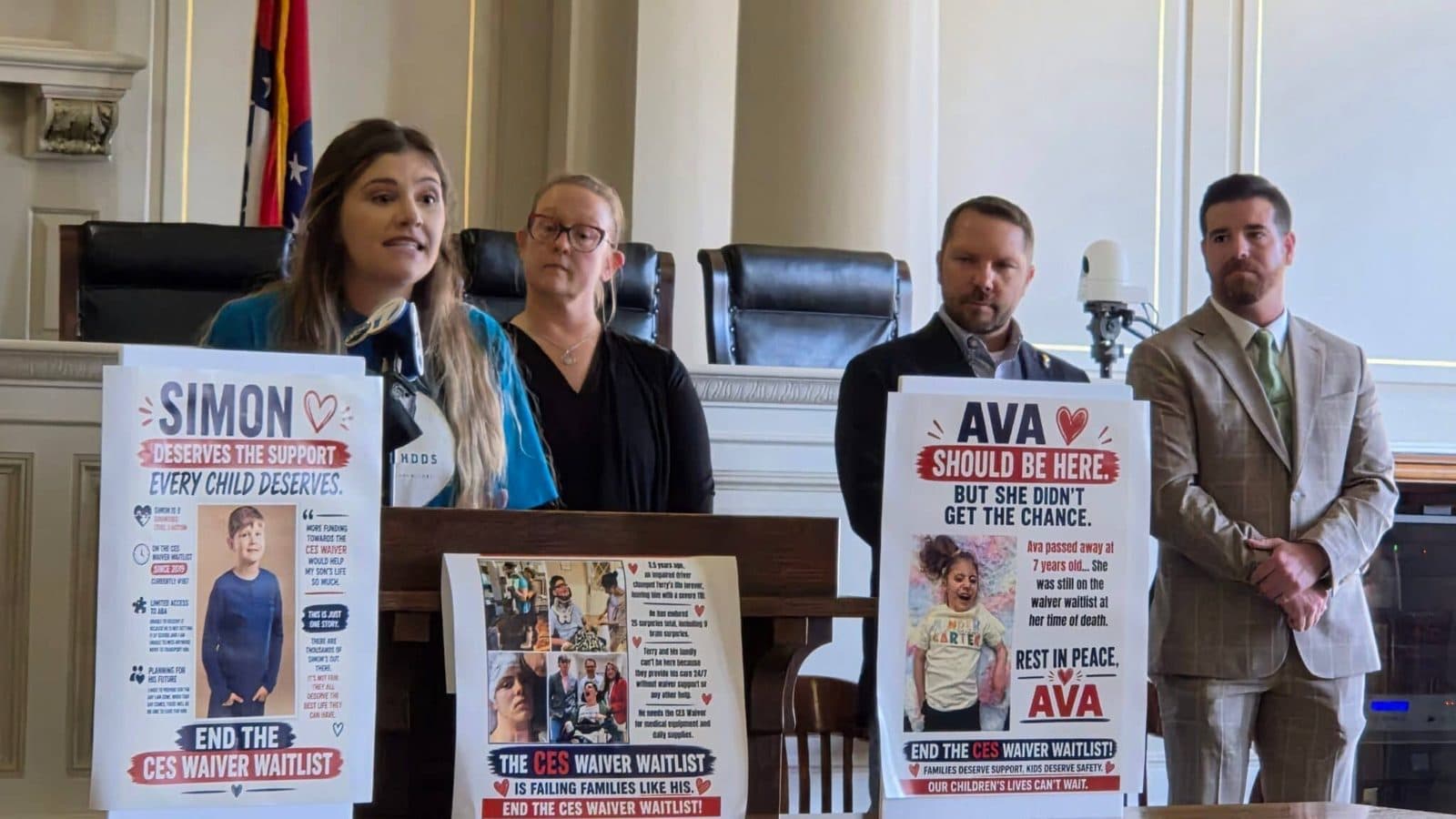
Families of children with disabilities gathered at the Arkansas Capitol this week, urging Gov. Sarah Huckabee Sanders to take further steps to address a lengthy waitlist for supportive services. Over 2,400 families are waiting for Medicaid waivers that provide assistance with medical and non-medical needs for individuals with disabilities. While Sanders recently announced plans to begin providing these services to waitlisted families in January, advocates stress that more immediate and sustained action is necessary.
The Medicaid waiver can benefit up to 8,233 Arkansans at one time, but many families face years of waiting for these services. Supportive living services — such as in-home care for individuals with disabilities — are among the most sought-after resources that, while limited in availability, could improve quality of life for families statewide.
At a rally on Wednesday, Paige McCammon, whose son Turner has severe epilepsy and a neurodegenerative condition, expressed gratitude for the governor’s initial effort but called for continued momentum. McCammon was part of a group of parents who recently fueled public awareness through social media. "This was the moment Arkansas said, ‘Enough,’" McCammon told attendees. "Governor Sanders, you have a huge opportunity to help us change history.”
Although Sanders did not attend the rally, officials said she remains committed to exploring additional options to improve services. Her spokesperson, Sam Dubke, indicated that the state’s Medicaid program will allocate approximately $17 million toward supportive living services by January.
Parents and advocates at the Capitol continued to push for convening a special legislative session to address the problem more comprehensively. Tamerah Cooper, whose son Maceo lives with a neurodegenerative disorder, described the waiting families’ challenges as an urgent and universal issue. "I speak for the children deteriorating while they wait," Cooper said. "Caregivers often perform full-time unpaid work out of love, while families make deep sacrifices.”
Speakers at the rally included Syard Evans, CEO of the Arkansas Support Network, who emphasized the financial strain on providers delivering these services. A state study conducted last year showed that current reimbursement rates fall significantly below the actual cost of care. Evans noted that care providers are still operating at 2018 payment levels, adding that recent increases mandated by law are expected to take effect in January. “My fear is that it’s too late for many providers. We’ve already seen programs shut down,” Evans said.
Sanders’ immediate predecessor, Gov. Asa Hutchinson, directed $37.6 million toward disability services in 2021. That funding helped eliminate a backlog of over 3,000 families, all of whom were placed in services by 2025. Sanders is expected to follow a similar approach; parents say the need has only grown since then.
Dr. Hannah Lewis, a pediatric neurologist who treats children on the waiver waitlist, highlighted the burdens families endure while attempting to meet their children’s needs. "I have seen parents lose jobs, go without sleep, and risk financial ruin,” Lewis observed. "Despite these hardships, their goal remains simple: to keep their children at home, where they are loved and cared for within their families.”