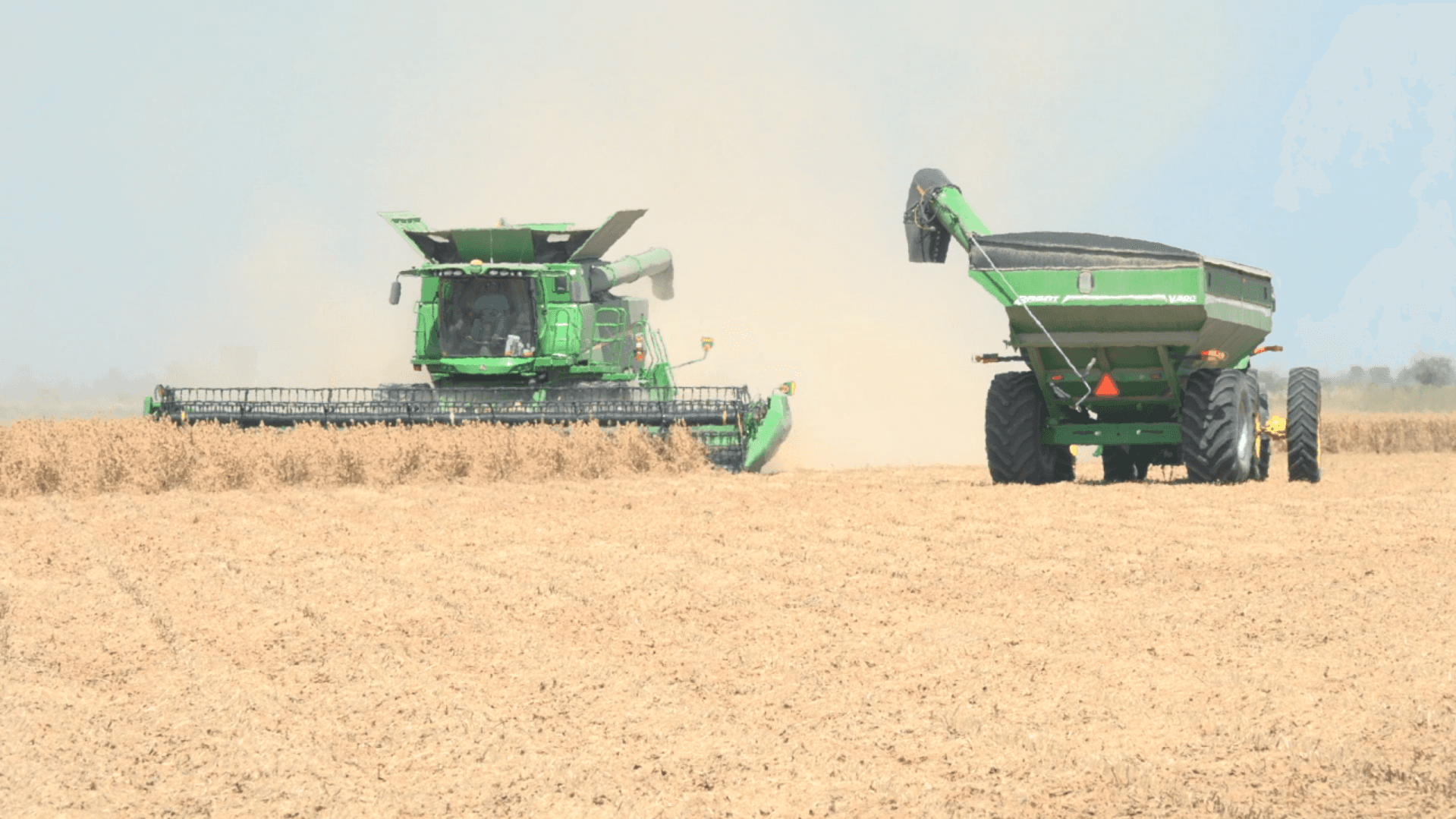
Weeks of extreme heat and prolonged drought across Northeast Arkansas are placing significant burdens on farmers, reducing crop yields, damaging grain quality, and driving up expenses.
Arkansas, the nation's leading rice producer, is already in a season with its lowest rice acreage in half a century. This year, farmers planted approximately 900,000 acres of rice, down from the usual 1.2 to 1.4 million acres.
In Craighead County, Benton Felts of Felts Farms reported that early-season rains provided a promising start. However, as summer progressed, intense heat and dry conditions stunted crops before they could fully mature.
“The seed is smaller than normal, so it’s affecting the yields," Felts said. “We’ve been in some dryland soybeans that are cutting in the upper thirties, low forties, but we also cut some in the low thirties.”
Rice crops face similar challenges, compounded by the extreme heat. Dr. Jarrod Hardke, a rice extension agronomist with the University of Arkansas Division of Agriculture, explained that the heat wave accelerated rice maturity, often drying grains too quickly. This over-drying results in brittle kernels that fracture during milling, reducing the percentage of intact grains and lowering their market value.
“This has a direct impact on farmers,” Hardke said. “We’re talking reducing milling yields to an extent that’s going to leave growers receiving 40 to 60 cents per bushel less than what they would have received because of these milling deductions.”
Farmers also face increased costs stemming from higher diesel prices to power irrigation pumps and machinery, as well as rising transportation expenses. With fewer operating mills in the region, growers are forced to haul their grain farther, adding wear and tear to vehicles.
“Anytime it’s this hot, the road’s hot. You have a chance of blowing tires out,” Felts said, noting his trucks had experienced multiple blowouts in the heat. “It’s harder on the trucks running that far. We had three blowouts ... anytime it gets this hot, we got more expenses for sure.”
The harsh weather is also complicating preparations for the next planting season. Farmers say the parched soil, hardened under a dusty top layer, won’t be suitable for fieldwork until substantial winter rains restore moisture levels.
The ongoing challenges come at a time when Northeast Arkansas farmers are already adapting to economic pressures and shifting market conditions, making the path forward uncertain for many in the agricultural community.