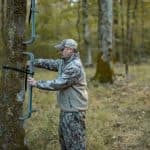
As hunting season approaches, the Arkansas Game and Fish Commission (AGFC) is urging hunters to inspect their tree stands and take safety precautions to avoid potentially life-threatening accidents.
Tree stand falls are the leading cause of hunting-related injuries in Arkansas, accounting for 75 to 80 percent of accidents annually, according to Matt Gideon, Hunter Education and Boater Education Coordinator for the AGFC. Many of these accidents result in severe injuries or fatalities. Gideon advises hunters to thoroughly examine all welds, straps, and cables on their stands. Stands that have been left outdoors year-round are particularly vulnerable to wear and damage from weather exposure and interference from wildlife.
“If it’s been out all year, it’s almost a sure thing you need to replace the straps holding it to the tree,” Gideon said. “Ideally, you should take the stand down at the end of every season. Squirrels and rats can chew up the straps, and just sitting in the elements all year can weaken the materials.”
In addition to structural inspections, Gideon emphasizes the importance of using and properly attaching safety harnesses. Although most tree stands come with a complimentary harness, misuse or failure to wear one remains the top cause of injuries from tree stand falls.
“A lot of people either aren’t wearing their harnesses or not wearing them properly,” Gideon said. “Falls often happen during the climb up or down. Using a lifeline rope tied to the tree can keep you connected and safe throughout the climb.”
The lifeline, installed above the stand, uses a Prusik knot that slides along the rope but locks firmly if there is sudden pressure. This ensures hunters remain tethered from the moment they leave the ground until they return. The Mayo Clinic reports that one in three hunters using tree stands will experience a fall during their hunting career. The height of these falls can significantly impact outcomes, with injuries and fatalities reported from as little as eight feet.
“Jumping down from 10 feet is one thing, but falling unexpectedly is a different story,” Gideon said. “Plus, you often have a loaded firearm or bow with you, which increases the danger. There’s no excuse not to wear a harness, and if worn properly, you’ll hardly notice you’re wearing it.”
Though many hunters set their stands 12 to 15 feet off the ground, Gideon pointed out that effective hunting does not always require elevated positions.
“You don’t have to climb that high. Be still and monitor your scent — a lot of deer are taken from ground blinds or just from leaning against a tree,” he said.
Hunter injury reports from the AGFC indicate that Arkansas is relatively safe for outdoor enthusiasts. Last year, the state reported 16 hunting incidents, only two of which were fatal, among nearly 300,000 hunters. Despite the low injury rate, AGFC officials stress the importance of education and preparation to minimize risks further.
For additional information on hunting safety and to view the Fiscal Year 2026 Hunter Incident Report, visit the AGFC website at www.agfc.com/huntered.