Arkansas Governor Sarah Huckabee Sanders has announced immediate steps to support children with disabilities on the state’s Medicaid waiver waitlist. The move comes in response to growing public outcry, amplified by families' advocacy efforts, over delays in accessing critical services.
The Arkansas Department of Human Services (DHS) will provide supportive living services to families currently on the waitlist for the Community and Employment Services (CES) Medicaid waiver. This assistance includes in-home care for people with disabilities, a service identified as a major unmet need for affected families. DHS will also work to develop long-term solutions to address these issues, the Governor stated in a news release.
The CES Medicaid waiver is designed to help families meet both medical and non-medical needs for children with complex disabilities. While families on the 2,400-person waitlist receive some services through an alternate Medicaid program introduced in 2018, supportive living services are not included. According to the announcement, these additional services should begin by January 2024 and will be integrated into the state’s federal waiver renewal application next year. The plan, estimated to cost $17 million, will require legislative discussions to secure funding.
Families and advocates have underscored the hardships created by the delays. Paige McCammon, whose two-year-old son Turner has severe epilepsy and a neurodegenerative condition, shared her story on social media, posting videos of Turner’s seizures to bring attention to the issue. Her advocacy—and that of others—has sparked widespread support online, including a petition signed by nearly 3,000 people calling for action.
“This will go a long way toward addressing the number one concern we hear from families about the CES waitlist,” said Sanders. “DHS is also convening relevant stakeholders and policymakers to create additional long-term solutions for these families.”
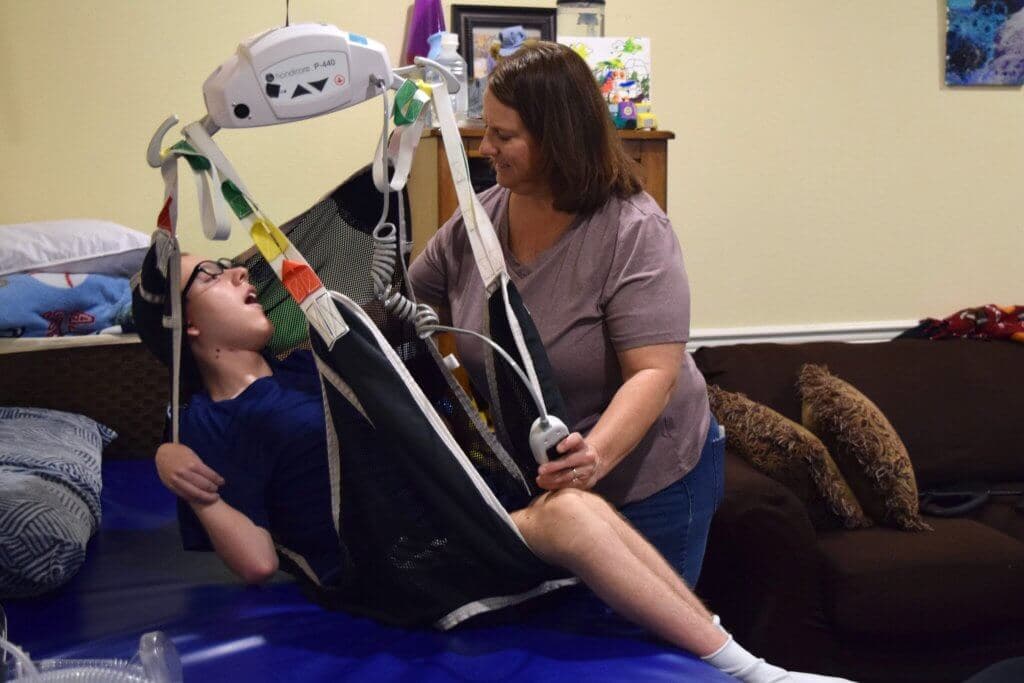
Arkansas families have long struggled with wait times for these services, which can span years. Currently, a maximum of 8,233 individuals can receive CES waiver assistance. Families like Susan Roberts’ in Bella Vista have only recently secured coverage after more than a decade on the waitlist. For Roberts’ 16-year-old son TJ, who was born with cerebral palsy, a Medicaid-funded ceiling lift now helps transfer him safely in their home.
Past administrations have also addressed this backlog. In 2021, then-Governor Asa Hutchinson directed $37.6 million toward the program, clearing a waitlist of over 3,000 people. By comparison, the state ended the fiscal year on June 30, 2026, with a $655 million surplus and roughly $4 billion in reserves. Critics of the persistent delays, including some state lawmakers and advocacy groups, have argued that a portion of these surplus funds should be directed toward supporting Arkansas’ most vulnerable populations.
Despite the announcement, advocates stress that more work remains. McCammon, one of the most visible voices in the movement, emphasized the power of collective advocacy. “We still have work to do,” she posted Tuesday. “But Arkansas, look at what happened when enough people decided this mattered and refused to be quiet about it.”
Many families plan to continue their efforts, including a scheduled news conference at the State Capitol. Shelby Brazeal, whose teenage son is also on the waitlist, hopes future funding will ensure her child can live independently after high school. “This isn’t about politics,” she wrote online. “Just the greater good for those who cannot advocate or fully care for themselves.”
Sanders has pledged to work with lawmakers on a sustainable funding model for current and future needs. Officials confirm that families on the waitlist will have full access to the newly expanded services by early 2024.