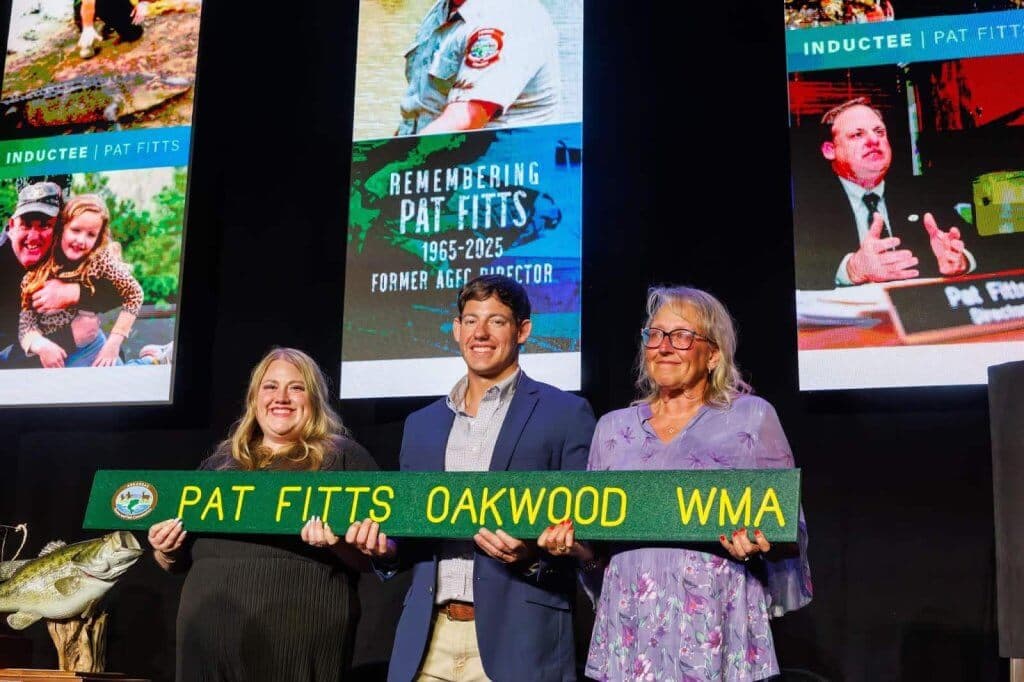
The Arkansas Game and Fish Commission (AGFC) has officially named the state’s newest wildlife management area in honor of former Director Pat Fitts. During its monthly meeting on Wednesday, the Commission unanimously approved the designation of the Pat Fitts Oakwood Wildlife Management Area, recognizing the late director's 32-year dedication to conservation and public access in Arkansas.
The Pat Fitts Oakwood WMA, spanning 2,206 acres, originated from a land trade earlier this year between the AGFC and the U.S. Fish and Wildlife Service (USFWS). Previously known as the Oakwood Unit, the property was restricted from public use due to a lack of accessible rights-of-way. Before his retirement in 2021, Fitts played a pivotal role in securing public access to the area, underscoring his commitment to conservation.
“It has taken five years to complete the work Fitts started, but thanks to his vision and effort, Arkansans now have a new wildlife management area in a region where public access is increasingly rare,” AGFC Deputy Director Brad Carner said during the meeting.
Fitts, who guided the AGFC through the challenges of the COVID-19 pandemic, left a lasting legacy. Under his leadership, the agency completed major projects, including the J.B. and Johnelle Hunt Family Nature Center in Springdale and renovations to the Joe Hogan State Fish Hatchery, Arkansas’s largest and oldest hatchery.
In other business, the Commission approved a $5.1 million budget increase for the AGFC’s Private Lands Habitat Division. This boost, funded through a mix of state reserve funds and federal grants, will enhance habitat improvements and public hunting opportunities on private lands. Chief of the division Garrick Dugger explained that $3 million of these funds would serve as matching cash for another potential grant, which could generate an additional $10 million for conservation initiatives.
Additionally, $100,000 from this increase will support the Waterfowl Rice Incentive Conservation Enhancement (WRICE) Program, furthering efforts to flood rice fields for waterfowl habitats and providing limited public hunting access. Dugger noted that ongoing economic challenges and drought conditions have made habitat conservation increasingly vital.
Presentations also highlighted the AGFC's expanding role in reviewing renewable energy developments and their potential impact on wildlife. Staff briefed commissioners on emerging wind and solar projects, emphasizing the need to study potential effects on migratory birds, pollinators, and wetland habitats. Experts from the University of Arkansas and Ducks Unlimited provided insights into how these projects could shape conservation strategies in the state.
Other topics discussed during Wednesday’s meeting included updates on the AGFC’s first year of the Legacy Lunker program, which successfully produced an estimated 300,000 bass fingerlings for state waters, and the recognition of innovative educational programming at Wynne Junior High School.
The Commission also approved various administrative items, including utility easements at the Bayou DeView and McCallie Access sites. A stolen laptop valued at $1,117.75 was removed from the agency's inventory.
More details on the meeting, including presentations, are available on the AGFC’s YouTube channel.