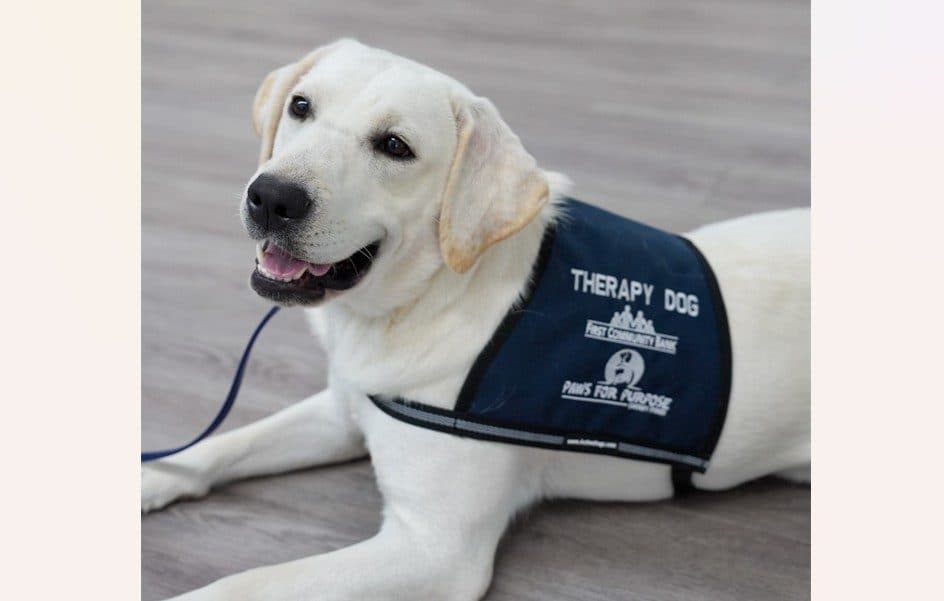
Seven schools across Arkansas welcomed new four-legged team members this year as part of an initiative to enhance student well-being. First Community Bank has partnered with Paws for Purpose and Snowy Pines White Labs to expand the Arkansas Therapy Dogs in Education program, introducing specially trained therapy dogs into school settings.
Under this partnership, First Community Bank helps identify schools that can benefit from a therapy dog, connects program organizers with school administrators, and supports the placement process, according to a release. The program aims to continue growing, offering more schools access to the benefits of therapy dogs. So far, seven dogs have been placed for the 2026-27 school year.
“These therapy dogs can help students and educators in ways that go far beyond academics,” said Dale Cole, chairman and CEO of First Community Bank. “From comforting a child during a tough day to encouraging students who experience anxiety while reading aloud, these dogs bring a calming, supportive presence to the school environment. We’re proud to be part of this effort.”
The therapy dogs work alongside teachers, counselors, and other staff to support a broad range of student needs. According to Paws for Purpose, interactions with therapy dogs can reduce stress and increase feelings of connection and emotional well-being. This is especially evident in reading programs where students who might feel self-conscious reading aloud get the chance to practice with a nonjudgmental companion.
“Ultimately, these dogs serve as companions for students who may be carrying emotional burdens,” said Gary Sevier, chief operating officer at Paws for Purpose. “Thanks to First Community Bank’s support, more schools across Arkansas can now offer moments of relief and connection for their students. That’s at the heart of what we aim to achieve.”
Research cited by Paws for Purpose points to benefits like improved reading fluency, boosted confidence, and heightened enthusiasm for reading in students who participate in canine-assisted reading programs.
“This year’s placements are just the beginning,” Cole said. “With every dog placed, a school gains a resource focused entirely on its students. We’re excited to see this program grow and reach even more communities.”