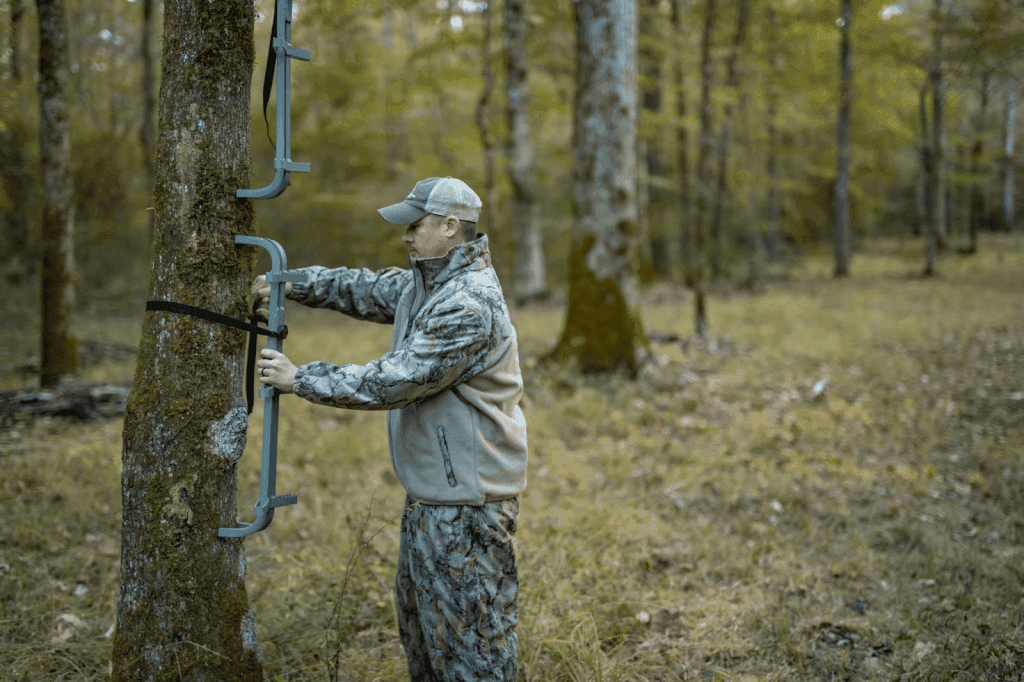
With the opening of deer hunting season just weeks away, hunters across Arkansas are being urged to inspect their treestands and safety equipment to avoid serious accidents. According to Matt Gideon, Hunter Education and Boater Education Coordinator for the Arkansas Game and Fish Commission (AGFC), treestand falls account for 75 to 80 percent of hunting-related injuries each year, many of which result in severe injuries or fatalities.
“A quick safety check of your stand, welds, straps, and cables can make the difference between coming home safely or experiencing a preventable tragedy,” Gideon said. He noted that treestand straps left outdoors year-round are particularly prone to damage from weather and wildlife. “If it’s been up all year, it’s almost a guarantee that you’ll need to replace those straps. Ideally, treestands should be taken down at the end of each hunting season, inspected, and stored until they are needed again.”
Gideon, an experienced hunter and educator with AGFC, works closely with the agency’s Enforcement and Education divisions to produce the annual Hunter Incident Report. This document is used to inform hunter safety education and to propose updates to regulations that reflect changes in hunting gear and methods.
One of the most common contributors to treestand accidents, Gideon said, is misuse—or complete lack—of safety harnesses. While nearly all treestands are sold with harnesses, and aftermarket versions offer improved comfort and accessory options, many hunters forgo using them or fail to use them properly. “A lot of accidents happen during the climb up or down when hunters are disconnected from their harness,” Gideon explained. He recommended using a lifeline—a safety rope tied to the tree for the duration of the season—as an added precaution. The lifeline works in tandem with a harness, utilizing a Prusik knot that moves with the hunter but locks down in the event of a fall.
National statistics highlight the importance of these precautions. The Mayo Clinic estimates that one in three hunters who use treestands will fall at some point. Even a fall from as little as eight feet can be fatal, particularly when coupled with the additional dangers posed by a firearm or bow. “There’s really no excuse not to wear a harness,” Gideon said. “When worn correctly, it’s almost unnoticeable, and it can save your life.”
While treestands remain a popular choice among Arkansas hunters, Gideon noted that successful hunts don’t always require climbing to high altitudes. “Many deer are taken from ground blinds or while hunters are seated against the base of a tree,” he said. “The key is to stay still, monitor your scent, and prioritize safety.”
Despite these risks, hunting incidents in Arkansas remain relatively low. The AGFC reported just 16 hunting-related incidents last year, two of which were fatal. With nearly 300,000 hunters participating statewide, the incident rate equates to just 0.008%. Comparatively, golf has nearly double the injury rate, at 0.016%.
Gideon emphasized that hunters should take advantage of resources like the AGFC’s Fiscal Year 2026 Hunter Incident Report, available at www.agfc.com/huntered, for additional safety tips and information.
“Hunting is a cherished tradition in Arkansas, and we want every hunter to return home safely. A few extra steps before the season can prevent unnecessary risks and make for a more enjoyable experience,” Gideon said.