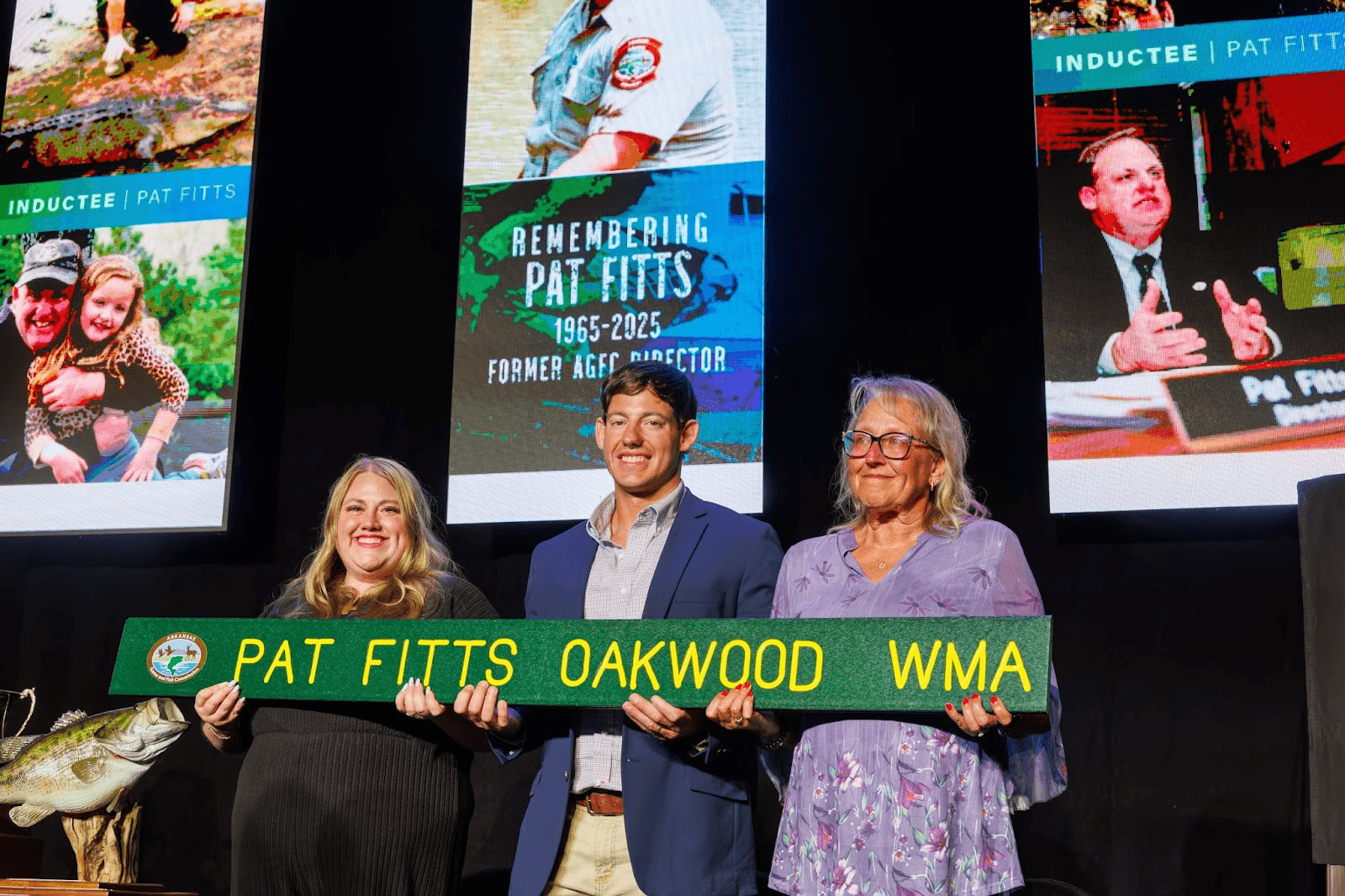
The Arkansas Game and Fish Commission (AGFC) has officially named the state’s newest wildlife management area in honor of late AGFC Director Pat Fitts. Following a unanimous decision at its monthly meeting in Wynne, the Commission designated the 2,206-acre property as the Pat Fitts Oakwood Wildlife Management Area (WMA).
The area, previously known as the Oakwood Unit, became accessible to the public earlier this year after a land trade between AGFC and the U.S. Fish and Wildlife Service (USFWS). Before the exchange, the property lacked a public right-of-way, restricting hunting access. Fitts, during his tenure as director, played a pivotal role in facilitating this agreement to open the land for recreational use.
“It has taken five years to complete the work Fitts started,” AGFC Deputy Director Brad Carner said. “Thanks to his vision and dedication, Arkansans now have access to a new WMA in a part of the state where public land is limited.”
Fitts’ contributions to Arkansas conservation spanned more than three decades. During the COVID-19 pandemic, his leadership guided the completion of the J.B. and Johnelle Hunt Family Nature Center in Springdale and advanced the renovation of the Joe Hogan State Fish Hatchery in Lonoke, the state’s oldest and largest hatchery. The Oakwood WMA was among his final initiatives before his retirement in 2021.
In other business, the AGFC approved a $5.1 million budget increase for its Private Lands Habitat Division. The added funds, sourced from governor’s restricted reserve funds and a federal Voluntary Public Access Grant, will support private habitat improvements and expand public hunting opportunities. Garrick Dugger, chief of the division, highlighted $3 million of these funds as a cash match for a proposed grant that could bring an additional $10 million for future conservation efforts.
The Commission also allocated $100,000 to complete this year’s Waterfowl Rice Incentive Conservation Enhancement (WRICE) Program, which provides incentives for rice farmers to flood fields for waterfowl habitat and enables limited public hunting access. Dugger noted the importance of this initiative, especially amid declining rice acreage and ongoing drought conditions affecting winter waterfowl habitat.
Additionally, the meeting explored the growing impact of renewable energy projects on wildlife habitats in Arkansas. Presentations by AGFC staff and experts covered the rise of wind and solar energy projects and their potential effects on waterfowl, migratory birds, and endangered species. While the agency does not regulate these developments, it has an advisory role under Arkansas law to ensure wildlife considerations are included in project planning.
In a separate presentation, AGFC shared updates on its Legacy Lunker program, which produced approximately 300,000 fingerling bass for stocking through the newly renovated Joe Hogan State Fish Hatchery. The program relies on Arkansas anglers donating 10-pound or larger bass for breeding purposes. AGFC’s success in its first year mirrors the longstanding efforts of similar programs in neighboring states.
Finally, Wynne Junior High was congratulated for its recent recognition as one of the AGFC’s Schools of Conservation Leadership. Teachers and students discussed how outdoor education has enriched their curriculum and fostered conservation awareness among the community.
For additional details, a recording of the meeting is available via the AGFC’s YouTube channel.