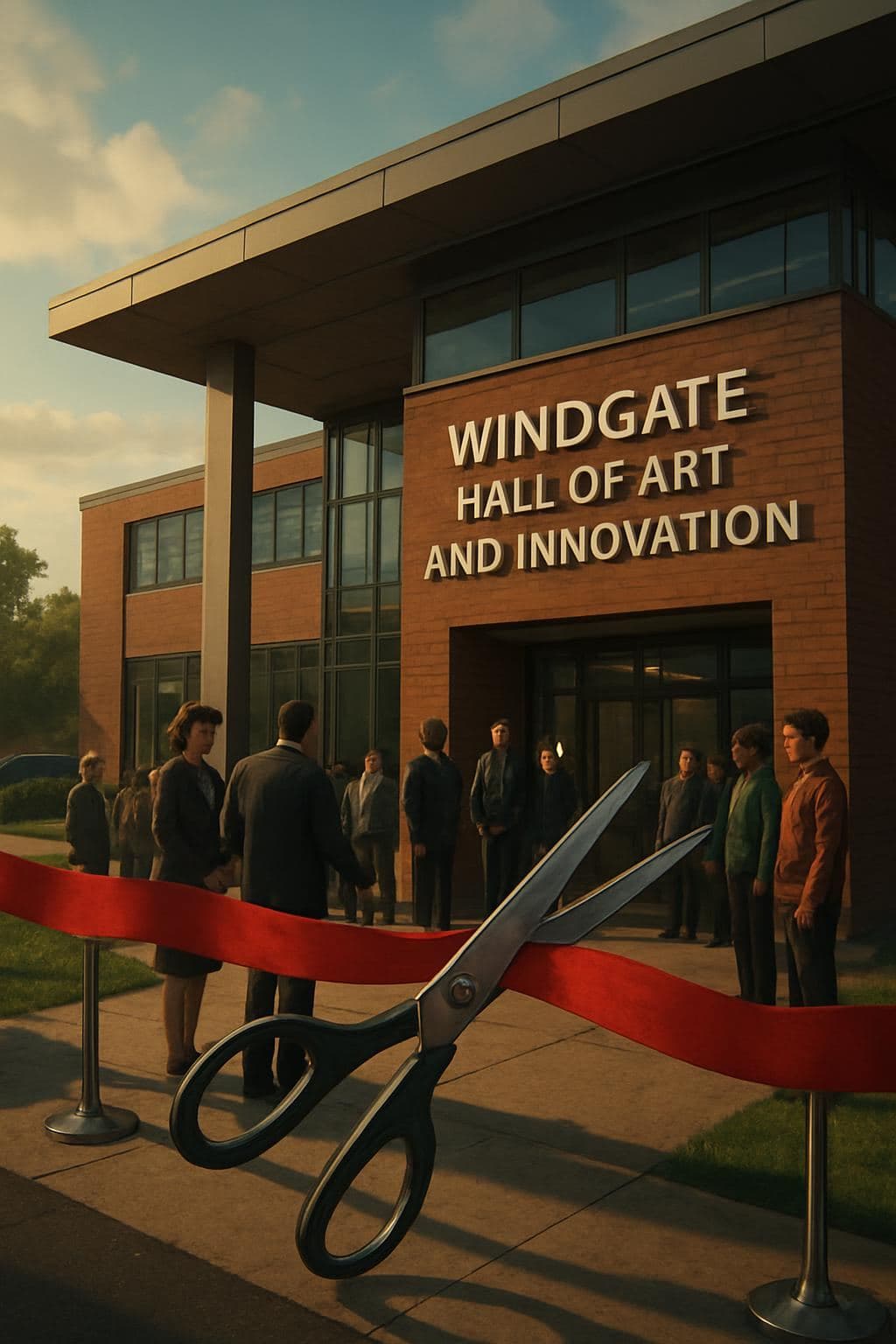
JONESBORO – Arkansas State University has officially unveiled the $25 million Windgate Hall of Art and Innovation, a state-of-the-art facility designed to bring students from Art + Design, Engineering, and Computer Science together to collaborate on innovative, interdisciplinary projects.
Dr. Katherine Baker, chair of the Art + Design Department, emphasized the building’s role in fostering creativity across traditionally distinct disciplines. “From its conception, the Windgate Hall was imagined as a space where seemingly disparate disciplines could come together to produce something new,” Baker said. “A key for Art + Design is creativity, and we see this skill as similarly integral to what happens in Engineering and Computer Science.”
A ribbon-cutting ceremony to mark the opening of the facility is scheduled for 2 p.m. on Friday, September 11, at the A-State campus. The event will also serve as the centerpiece of the Art + Design Alumni Reunion, taking place September 11–12. Reunion activities include building tours, workshops, panel discussions, and social events leading up to the Red Wolves’ first home football game of the season. All reunion activities are free to attend, but advance registration is encouraged.
The Windgate Hall was fully funded by the Windgate Foundation, which made a record-breaking $25 million donation to A-State. The gift includes $20 million for construction and $5 million for long-term maintenance. The foundation, the university’s largest single benefactor in its 115-year history, has contributed over $40 million in endowments.
The new facility features open, flexible studio spaces, cutting-edge technological equipment, and collaborative learning environments. One highlight is the “project studio,” a light-filled lab equipped with tools such as virtual reality (VR) systems and 3D printers, designed to support hands-on, forward-thinking projects.
Dr. YeonSang Hwang, interim dean of the College of Engineering and Computer Science, emphasized the building’s potential to enhance the educational experience. “Students will find themselves in a well-prepared space surrounded by enthusiastic faculty and staff,” Hwang said. “We expect the project studio to become an alluring spot for prospective students, showcasing how the complete cycle of design works before their own eyes.”
In addition to studios and labs, the building includes a gallery space for student exhibitions and visiting artists, as well as outdoor areas designed to inspire creativity. Dr. Rachel Baillot, assistant professor of photography, noted that the green terrace and gardens incorporate plants that can be used to create natural dyes, deepening the connection to Arkansas’s natural beauty.
Dr. Calvin White Jr., A-State’s interim chancellor, expressed pride in the new facility’s potential to prepare students for careers in creative industries. “Windgate Hall reinforces our commitment to providing students with learning experiences that prepare them to succeed in an increasingly interconnected world,” White said. “By bringing together art, design, engineering, and computer science in one collaborative environment, we are creating new opportunities for creativity, research, and innovation.”
This fall, the building will host interdisciplinary courses, starting with introductory classes for freshmen and progressing through advanced coursework, including capstone projects. Faculty members are already planning to expand the use of the building’s facilities with new courses, collaborative projects, and additional equipment, such as robotics tools.
Windgate Hall is part of a growing arts complex at A-State that includes the Windgate Center for Three-Dimensional Arts, which opened in 2021. This connection enhances opportunities for students to explore hands-on disciplines such as woodworking and ceramics.
Caitlan Smith, an art history instructor, highlighted the department’s ongoing commitment to engaging the public through community-focused events like the annual Delta Print Symposium and the Halloween Art Bash. “One of the goals of the department is to become the epicenter for the art community in our region, and the new building will be a leap forward,” Smith said.
Julia Wintner, director of the Bradbury Art Museum, emphasized the building’s potential to serve as a bridge between the university and the broader community. “This remarkable new facility will create unprecedented opportunities for collaboration among artists, engineers, and computer scientists, among others,” Wintner said.
Dr. White concluded by praising the Windgate Foundation’s transformative impact on the university and the region. “We are grateful for their enduring partnership and their commitment to expanding educational opportunities across our state,” he said.