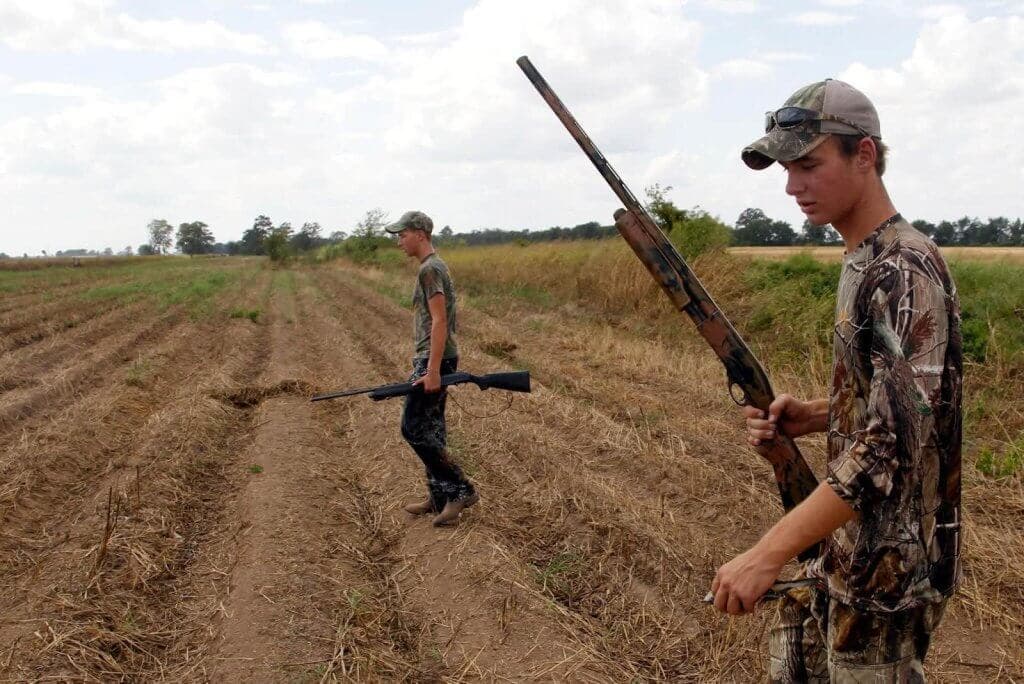
With dove season approaching and waterfowl season on the horizon, hunters in Arkansas are being reminded to inspect their fields to ensure compliance with federal baiting regulations. The Arkansas Game and Fish Commission (AGFC) advises that hunting in baited areas is illegal and could lead to fines and other penalties.
Under federal law, an area is considered baited if salt, grain, or other feed has been placed, exposed, deposited, distributed, or scattered to attract migratory game birds. Even after bait is removed, the area must remain undisturbed for a minimum of 10 days before it becomes lawful to hunt there.
Regulations for dove hunting allow hunting in areas where grains have been scattered during normal agricultural operations, such as top-sowing or disking of crops. Hunters may also legally hunt over standing crops, manipulated natural vegetation, and fields where livestock have fed on standing crops. However, the rules for waterfowl hunting are more restrictive. It is illegal to hunt waterfowl over unharvested crops that have been manipulated, such as by rolling or mowing, before flooding. Waterfowl hunting is only allowed over natural vegetation or crops left standing due to poor quality or other agricultural reasons, provided no manipulation occurred before flooding.
Arkansas hunters are also reminded to avoid hunting waterfowl with lead shot, which is prohibited for that activity. Hunters using dual-purpose fields for both dove and waterfowl hunting must be particularly cautious to ensure that fields legally prepared for dove hunting, such as those mowed or disked, are not mistakenly used for waterfowl hunting in violation of regulations.
Top-sowing wheat as a cover crop is a common practice among Arkansas hunters. AGFC confirms that this practice can remain lawful as long as planting rates do not exceed normal agricultural guidelines. Hunters can consult the University of Arkansas Cooperative Extension Service for detailed planting rate recommendations. Their website, www.uada.edu, or a visit to their local extension office can provide further information on compliant agricultural practices.
For hunters utilizing pay-to-hunt fields, it is vital to confirm that the area has been prepared in accordance with hunting laws. The AGFC suggests several precautions, including contacting landowners for written assurances that no bait has been present within the past 10 days, inspecting the fields for any sign of bait, and paying attention to areas with unusually high bird concentrations or freshly plowed surfaces that may conceal grain.
Hunters can find additional resources, including public dove hunting field information, by visiting www.agfc.com/dove.
Following these guidelines ensures that hunters can safely and legally enjoy the upcoming dove and waterfowl hunting seasons in Arkansas.